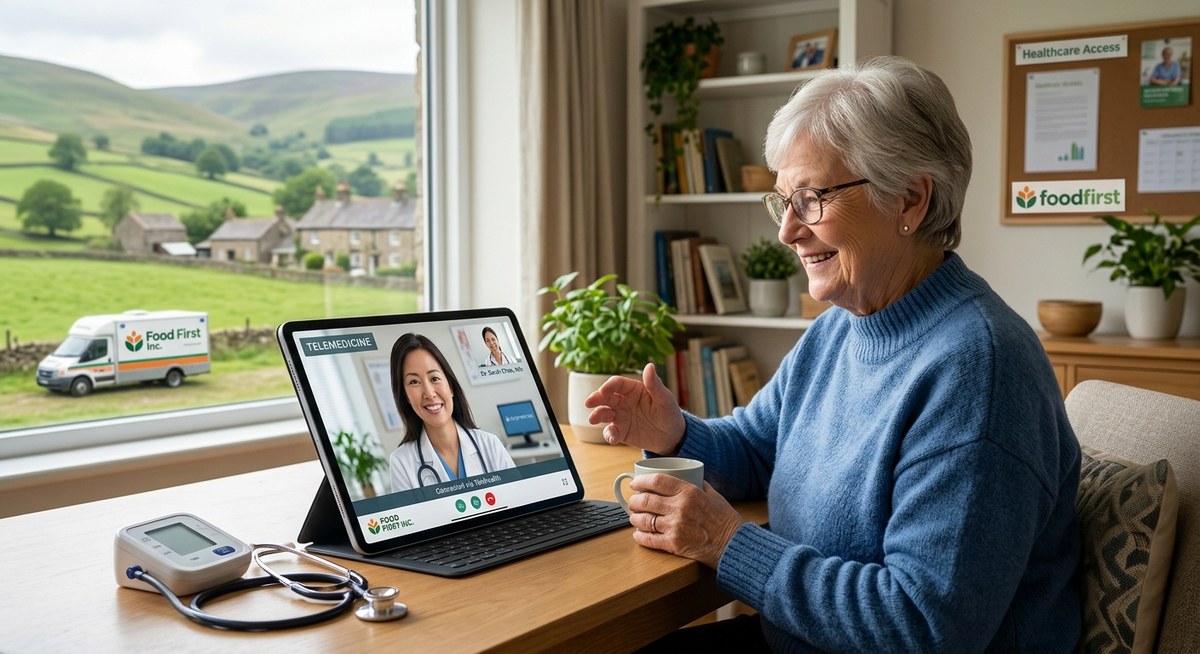
Why Telemedicine Is Closing the Healthcare Gap for Rural Communities in 2026
For decades, rural communities in the United States have faced a frustrating reality. The nearest hospital might be an hour away. The only primary care doctor in the county is retiring, and no one is coming to replace them. Specialists feel like a myth. But 2026 is shaping up to be a turning point. Telemedicine is no longer just a backup plan for bad weather or a pandemic year. It has become a permanent, powerful bridge connecting rural families to the healthcare they deserve. And the data is finally backing up the hope.
Telemedicine is dramatically reducing barriers for rural patients in 2026 by cutting travel time, expanding specialist access, and lowering costs. This article covers the latest federal policies, real world success stories, and a practical roadmap for healthcare administrators. You will learn how to implement or improve a telehealth program that truly serves underserved areas.
The Rural Healthcare Reality in 2026
Let us look at the numbers. According to the latest federal reports, over 60 million Americans live in rural areas. Yet only about 10 percent of physicians practice there. That gap has created what experts call healthcare deserts. In these areas, a simple checkup can become an all day ordeal involving lost wages, expensive gas, and missed school time.
The situation is especially harsh for mental health and chronic disease management. A patient with diabetes in rural Montana might need to drive three hours round trip to see an endocrinologist. A teenager struggling with anxiety might have zero local options for a therapist. These are not edge cases. They are everyday life for millions.
Telemedicine is changing that equation. In 2026, broadband access has improved significantly thanks to federal infrastructure investments. More rural homes now have the internet speed needed for a stable video call. And state medical boards have largely removed the old restrictions that prevented doctors from treating patients across state lines.
How Telemedicine Specifically Addresses Rural Disparities
Telemedicine does not just offer convenience. It directly attacks the root causes of poor health outcomes in rural America. Here is how.
Cutting Travel Time and Associated Costs
The biggest barrier to care in rural areas is distance. A 2025 study from the University of Iowa found that rural patients saved an average of 98 minutes per visit when using telehealth instead of driving to a clinic. That time adds up. For a farmer during harvest season or a single parent working two jobs, those 98 minutes can be the difference between getting care and skipping it.
Telemedicine also saves money. Less gas, fewer missed work hours, and reduced need for childcare. For low income families, these savings can be life changing.
Expanding Access to Specialists
Rural hospitals often struggle to recruit and retain specialists. A cardiologist, neurologist, or oncologist may only visit once a month or not at all. Telemedicine allows a patient in rural Kansas to see a specialist at a major medical center in Kansas City without leaving their living room.
This is especially critical for stroke care. Telestroke networks now allow rural emergency rooms to connect with neurologists in real time. That immediate consultation can save brain tissue and lives.
Improving Chronic Disease Management
Conditions like diabetes, hypertension, and heart failure require regular monitoring. In rural areas, patients often go without checkups until something goes wrong. Remote patient monitoring devices, paired with video check ins, allow care teams to track blood pressure, blood sugar, and weight from afar. They can catch problems early and adjust medications without requiring a clinic visit.
“We have seen a 40 percent reduction in hospital readmissions for heart failure patients enrolled in our telehealth program,” says Dr. Maria Santos, director of rural health innovation at a Midwestern health system. “The patients feel supported. They are not alone in managing their condition.”
The Role of Policy and Funding in 2026
None of this progress happens by accident. Policy changes have been the engine driving telemedicine rural healthcare access 2026 forward.
The Consolidated Appropriations Act of 2023 extended many Medicare telehealth flexibilities through 2024 and 2025. In 2026, several of those flexibilities have been made permanent. Medicare now covers telehealth for mental health, substance use disorder treatment, and routine follow up visits from home. The originating site requirement, which once forced patients to travel to a clinic for a telehealth visit, has been eliminated for most services.
State level policies have also evolved. More than 30 states have joined the Interstate Medical Licensure Compact, making it easier for doctors to see patients across state lines. This is a game changer for rural areas near state borders. A patient in rural West Virginia can now see a specialist in Ohio without complex licensing hurdles.
Funding is flowing too. The Federal Communications Commission’s Rural Health Care program allocated over $600 million in 2025 to support broadband and telehealth infrastructure. That money is helping small clinics buy the equipment they need.
A Practical Roadmap for Healthcare Administrators
If you are a healthcare administrator looking to improve access in your rural community, here is a clear process to follow.
-
Assess your community’s specific needs. Survey patients and local leaders. Identify the top three conditions or services that are hardest to access. Is it mental health? Cardiology? Pediatric specialty care? Let the data guide you.
-
Audit your current technology. Check your broadband capacity. Make sure your electronic health record system integrates with a telehealth platform. Staff training is just as important as hardware.
-
Partner with a larger health system or specialty group. You do not need to build everything from scratch. Many academic medical centers and large hospital networks already have telehealth programs looking for rural partners. Reach out.
-
Establish clear workflows for virtual care. Decide which visits are appropriate for telehealth. Create standard protocols for check ins, follow ups, and remote monitoring. Make sure your front desk staff can schedule and guide patients through the process.
-
Promote the service within the community. Hold town halls. Put flyers in the local grocery store. Use the local radio station. Many rural patients are still unaware that telemedicine is available and covered by their insurance.
Common Mistakes to Avoid
Even well intentioned telehealth programs can stumble. Here is a table showing common pitfalls and how to avoid them.
| Common Mistake | Why It Happens | How to Fix It |
|---|---|---|
| Poor internet access assumed | Leaders assume all homes have broadband | Survey patients; offer hybrid options like clinic based telehealth kiosks |
| No training for older patients | Staff forget that digital literacy varies | Provide one on one setup help and simple printed guides |
| Ignoring language barriers | Programs only offer English | Use interpreter services and bilingual providers for visits |
| Overcomplicating the technology | Platforms with too many features confuse users | Choose a simple, reliable platform and test it with real patients |
| Forgetting follow up care | A single visit without a plan leads to poor outcomes | Schedule the next check in before the call ends; use reminders |
Tools and Technologies Making a Difference in 2026
The tech stack for rural telemedicine has matured. Here are some of the most effective tools being used right now.
- Remote patient monitoring devices. Blood pressure cuffs, glucose monitors, and pulse oximeters that sync with a smartphone or tablet. Data flows directly to the care team.
- Store and forward platforms. For dermatology or eye exams, patients or local nurses can take photos and send them to a specialist for review. No real time video needed.
- Asynchronous messaging. Secure text based check ins allow patients to report symptoms and get advice without scheduling a full appointment.
- Mobile health units with built in telehealth. Vans equipped with exam rooms and high speed satellite internet bring care to the most remote locations. A nurse on board can connect patients to a doctor hundreds of miles away.
For a deeper look at how technology is reshaping access, read our piece on how technology is revolutionizing healthcare access in underserved communities by 2026.
Measuring Success: What Good Looks Like
How do you know if your telemedicine program is actually closing the gap? Look at these metrics.
- Reduction in no show rates. If fewer patients are missing appointments, the program is working.
- Shorter wait times for specialist referrals. A patient should be seen within days, not months.
- Improved chronic disease markers. Are blood pressure and A1c levels improving in your telehealth cohort?
- Patient satisfaction scores. Ask patients directly if they feel heard and cared for.
- Decreased emergency room utilization. Rural ERs are often used for non emergencies because primary care is hard to access. Telemedicine should reduce that burden.
Building Partnerships for Lasting Impact
No single clinic can solve the rural healthcare crisis alone. Partnerships are essential.
Community health centers can collaborate with local libraries to offer telehealth stations. Schools can host virtual mental health counseling for students. Faith based organizations can help spread the word and even host mobile health events.
Food First has long understood that health and hunger are connected. A patient managing diabetes needs both medical care and access to nutritious food. Our work on building resilient food systems to end global hunger shows how addressing social determinants creates stronger communities. When telemedicine connects a patient to a doctor, and a food program connects them to healthy meals, the whole person gets supported.
Consider also the role of community health workers. These trusted local advocates can help patients navigate the telehealth system, set up devices, and follow through on care plans. Learn more about their impact in our article on how community health workers are transforming healthcare access in underserved areas.
What the Future Holds for Telemedicine in Rural America
The momentum is strong. By the end of 2026, experts predict that over 70 percent of rural hospitals will offer some form of telehealth service. Artificial intelligence tools are starting to assist with triage and scheduling, making programs more efficient. And the push for value based care rewards systems that keep patients healthy at home rather than treating them in expensive hospital beds.
But challenges remain. Internet access is still not universal. Some rural areas rely on satellite connections that can be unreliable. And there is a persistent digital divide among older adults. Addressing these issues will require continued investment and creative problem solving.
A Shared Responsibility for Health Equity
Telemedicine is not a magic wand. It is a tool. And like any tool, its impact depends on how we use it. When deployed thoughtfully, with attention to community needs and real world barriers, it can be one of the most effective ways to close the healthcare gap for rural America.
For healthcare administrators, the message is clear. Start now. Even a small pilot program can build momentum. For policymakers, keep pushing for permanent funding and interstate licensing reforms. For community advocates, keep raising your voice. Your neighbors deserve care that is close to home.
If you are looking for more ways to support underserved communities, check out our guide on 5 proven strategies to expand healthcare access in underserved communities. And if you want to see how mobile health units are making a difference in 2026, read about how mobile health units are improving healthcare access for rural America in 2026.
The gap between rural and urban healthcare has felt impossible for too long. But 2026 is the year we finally have the tools, the funding, and the will to close it. Telemedicine is the bridge. Let us walk across it together.