How Pharmacy Deserts Are Driving Health Inequity in Rural Towns
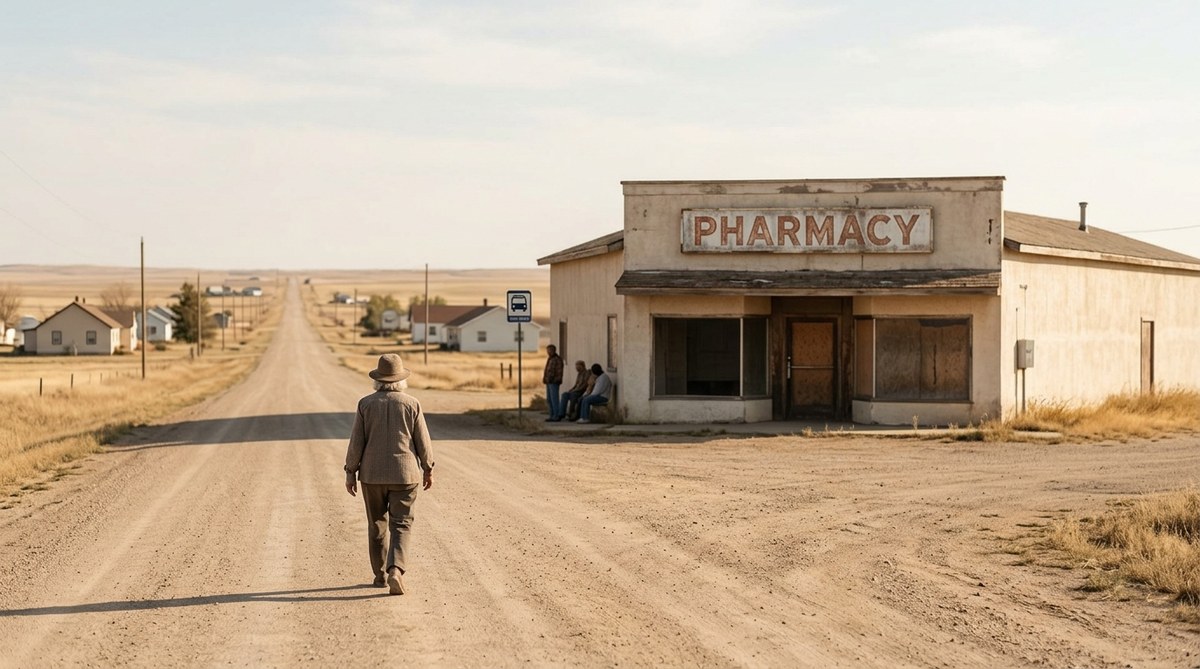
Picture a town of 3,000 people where the closest pharmacy sits 45 minutes away down a two-lane highway. That is not a hypothetical for millions of Americans. It is their daily reality. When a pharmacist closes shop or a chain pulls out of a rural strip mall, the nearest prescription counter can vanish overnight. That gap does not just create inconvenience. It creates a measurable, dangerous form of health inequity that public health researchers call a pharmacy desert. These deserts force people with chronic conditions to choose between skipping doses and driving through snow or darkness to fill a prescription. And for many rural towns, that choice repeats itself every month.
Pharmacy deserts are not just a retail problem. They are a public health crisis that deepens rural health inequity by limiting access to life saving medications. When a town loses its only pharmacy, residents face longer travel times, higher costs, and worse health outcomes. Understanding this link is the first step toward real solutions.
What Exactly Is a Pharmacy Desert?
Researchers define a pharmacy desert as a community where residents must travel more than 10 miles to reach a retail pharmacy. In some rural counties, that distance stretches to 30 or 40 miles. The term borrows from the more familiar concept of a food desert, but the stakes are often higher. Missing a meal is uncomfortable. Missing a dose of insulin or a blood pressure medication can be life threatening.
The United States has seen a steady decline in independent pharmacies over the last decade. Rural areas lose them at a higher rate than cities. When a small town pharmacy closes, it rarely gets replaced. Chains favor population density and higher prescription volume. That leaves entire zip codes without a single place to fill a prescription.
How Pharmacy Deserts Create Health Inequity
Health inequity means differences in health outcomes that are avoidable and unfair. Pharmacy deserts are a textbook case. People in rural towns already face higher rates of chronic disease, older average age, and lower income. Add a pharmacy desert, and the situation gets worse fast.
Here are the main ways pharmacy deserts drive rural health inequity:
- Medication non-adherence increases. When a 30 minute drive is required for every refill, people skip doses or stop taking medications altogether.
- Emergency room visits rise. Unmanaged chronic conditions lead to preventable crises that end up in the ER, often at higher cost to the patient and the system.
- Health literacy suffers. Without a local pharmacist to ask questions, patients lose a trusted source of medication guidance.
- Prescription abandonment spikes. A patient gets a script from a distant doctor, cannot fill it locally, and simply gives up.
“If you cannot get your medication, everything else falls apart. We see patients with diabetes who end up in the hospital because they could not get their insulin refilled on time. That is not a personal failure. That is a systemic failure.” — Dr. Maria Santos, rural health researcher
The Domino Effect on Chronic Disease Management
Chronic diseases like diabetes, hypertension, and heart disease require consistent medication. A pharmacy desert interrupts that consistency. Consider a 65 year old woman in rural Kansas who has high blood pressure. Her local pharmacy closes. Now she must drive 25 miles each way for a monthly refill. She cannot drive at night because of her vision. Her adult child works during the day. She starts rationing her pills to stretch the supply.
This is not a rare story. It plays out in thousands of households across rural America. The result is higher rates of uncontrolled hypertension, more strokes, and more amputations from unmanaged diabetes. The pharmacy desert does not cause the disease, but it makes managing the disease nearly impossible.
Who Is Most Affected?
Pharmacy deserts do not hit everyone equally. Certain groups bear the heaviest burden.
| Population Group | Specific Challenge | Resulting Health Impact |
|---|---|---|
| Older adults | Limited mobility, no access to a car | Higher rates of medication skipping |
| Low income families | Cannot afford gas or time off work for long pharmacy trips | Increased ER visits for preventable conditions |
| People with disabilities | Physical barriers to travel, reliance on others for transport | Delayed refills, worse disease control |
| Non English speaking residents | Fewer pharmacy staff who can communicate in their language | Medication errors, lower adherence |
This table shows a pattern. The people who already face the most barriers to good health are the same people who suffer most when a pharmacy closes.
The Economic Cost of a Pharmacy Desert
Health inequity has a price tag. When rural patients cannot access medications, they get sicker. Sicker patients cost more. The health system pays for hospitalizations, ambulance rides, and specialist visits that could have been avoided with a simple monthly refill.
A 2025 study from the Rural Health Research Center found that counties with pharmacy deserts had 18 percent higher Medicare spending per beneficiary compared to counties with adequate pharmacy access. Most of that extra spending went to emergency and inpatient care. The math is clear. Investing in pharmacy access saves money over time, but the upfront costs and low profit margins keep pharmacies out of rural areas.
Why Pharmacies Close in Rural Towns
Understanding the root causes helps advocates find solutions. The reasons are not mysterious.
- Low prescription volume. Rural populations are smaller, so pharmacies fill fewer scripts. The profit margin on each prescription is thin, and volume is needed to stay afloat.
- Reimbursement cuts. Pharmacy benefit managers (PBMs) negotiate lower reimbursement rates. Independent pharmacies struggle to survive when they lose money on every generic prescription they fill.
- Workforce shortages. Pharmacists and pharmacy technicians are harder to recruit in remote areas. Many prefer urban or suburban settings.
- Chain store consolidation. Large chains close underperforming locations without regard for community need. A town that loses a CVS or Walgreens often has no backup.
These forces combine to create a cycle. The pharmacy closes, residents leave to be closer to services, the population shrinks further, and the next town over becomes more vulnerable.
What Solutions Are Working in 2026
The problem is serious, but it is not hopeless. Communities and policymakers are testing several approaches that show promise.
Telepharmacy and Remote Dispensing
Telepharmacy allows a pharmacist at a central location to supervise medication dispensing at a remote site via video link. A trained technician on the ground handles the physical prescription. This model has expanded in states like North Dakota and Montana. It keeps a pharmacy presence in small towns without requiring a full time pharmacist on site.
Mobile Pharmacy Units
Some organizations are putting pharmacies on wheels. A mobile pharmacy van visits rural towns on a set schedule, much like a bookmobile. Patients can pick up refills, get flu shots, and ask questions. The model works best when combined with a local clinic or community center.
Collaborative Practice Agreements
These agreements allow pharmacists to adjust medications or order lab tests under a protocol with a physician. In a pharmacy desert, this authority can keep patients on track without needing a separate doctor visit. States like Washington and Oregon have expanded these agreements in 2026.
Community Health Worker Integration
Community health workers can serve as a bridge between patients and distant pharmacies. They help with prescription delivery, insurance paperwork, and medication education. Programs that train local residents for this role have shown strong results in rural Kentucky and West Virginia.
For more on how community based roles are closing healthcare gaps, read about how community health workers are transforming healthcare access in underserved areas.
How Researchers and Advocates Can Take Action
If you are a public health researcher, a rural healthcare advocate, or a journalist covering this issue, here is a practical process for making a difference.
- Map the deserts. Use pharmacy location data and census information to identify underserved areas. Share the maps with local health departments and media.
- Interview affected residents. Numbers tell part of the story. Personal stories about skipped doses and long drives make the issue real for policymakers.
- Target state legislation. Many solutions require changes to pharmacy regulations or PBM oversight. Advocacy groups have had success pushing for transparency laws and telepharmacy expansion.
- Pilot a mobile or telepharmacy program. Start small with one county. Measure outcomes like medication adherence and hospital visits. Use the data to apply for grants.
- Build partnerships. Connect with food banks, senior centers, and faith organizations. These groups already serve the same populations and can help distribute medications or information.
For journalists looking for a strong angle, consider how mobile health units are improving healthcare access for rural America in 2026. These units often include pharmacy services and make for compelling feature stories.
A Missed Connection: Pharmacy Deserts and Food Deserts
Pharmacy deserts and food deserts often overlap. The same rural towns that lack a grocery store also lack a pharmacy. This double burden creates a severe health equity challenge. A person with diabetes needs both healthy food and consistent medication. If both are hard to get, the disease spirals.
Organizations like Food First Inc. recognize this connection. When a community cannot access food or medicine, the result is the same. Sicker people, higher costs, and lost potential. The fight against pharmacy deserts is part of a larger fight for health equity in rural America. You can learn more about how innovative strategies to combat hunger in vulnerable communities are being paired with healthcare access initiatives to create comprehensive support.
Measuring Progress: What Good Looks Like
How do you know if a solution is working? Here are the metrics that matter.
- Pharmacy closure rate. Is the number of rural pharmacy closures slowing or reversing?
- Average travel time to a pharmacy. Has the distance decreased in targeted areas?
- Medication adherence rates. Are more patients picking up refills on time?
- Hospitalization rates for chronic conditions. Are fewer people ending up in the ER for diabetes or hypertension?
- Patient satisfaction. Do residents feel they can get their medications without a major burden?
Tracking these numbers over time turns anecdotal stories into evidence that can drive policy change.
The Role of Policy in 2026
Several federal and state bills introduced in 2026 aim to address pharmacy deserts. The Rural Pharmacy Access Act proposes grants for independent pharmacies in underserved areas. The PBM Transparency Act would require pharmacy benefit managers to disclose their reimbursement rates. Both bills have bipartisan support but face opposition from industry groups.
At the state level, legislatures in Kansas, Mississippi, and Maine have passed laws allowing pharmacists to prescribe certain medications for chronic conditions. This reduces the need for a separate doctor visit and makes it easier for patients to stay on treatment.
Advocates should track these bills and support the ones that match their local needs. A phone call to a state representative can do more than a hundred social media posts.
Why This Matters for Journalists
Journalists covering rural health have a powerful story to tell. Pharmacy deserts are not abstract. They affect real people with real names and real struggles. A well reported article can shift public opinion and push lawmakers to act.
When writing about this topic, focus on the human element. Describe the 70 year old veteran who drives two hours for his heart medication. Quote the single mother who chooses between gas money and her son’s asthma inhaler. These stories make the data come alive.
For deeper context on the broader picture of healthcare access, check out 5 proven strategies to expand healthcare access in underserved communities. It offers a framework that journalists and advocates can use to connect the dots.
A Path Forward for Rural Towns
Pharmacy deserts are not inevitable. They are the result of market forces and policy choices. That means they can be reversed with different choices. Communities that organize, advocate, and pilot new models are already seeing results.
The key is to start where you are. If you live in a rural town, talk to your neighbors about their medication struggles. If you work in public health, include pharmacy access in your community health assessments. If you are a journalist, tell the story with clarity and compassion.
Every prescription left unfilled is a health outcome made worse. Every pharmacy that stays open is a lifeline. The work of closing pharmacy deserts is the work of building health equity. And it starts with understanding the problem, naming it clearly, and refusing to accept it as normal.
For more resources on how community led projects are transforming health outcomes in vulnerable regions, see how community-led projects transform social impact in vulnerable regions.
The next time you hear about a pharmacy closing in a small town, remember what it really means. It means longer drives, skipped doses, and preventable illness. It means a community left to fend for itself. But it also means an opportunity for advocates, researchers, and journalists to step in and demand better. The solutions exist. The only question is whether we have the will to use them.