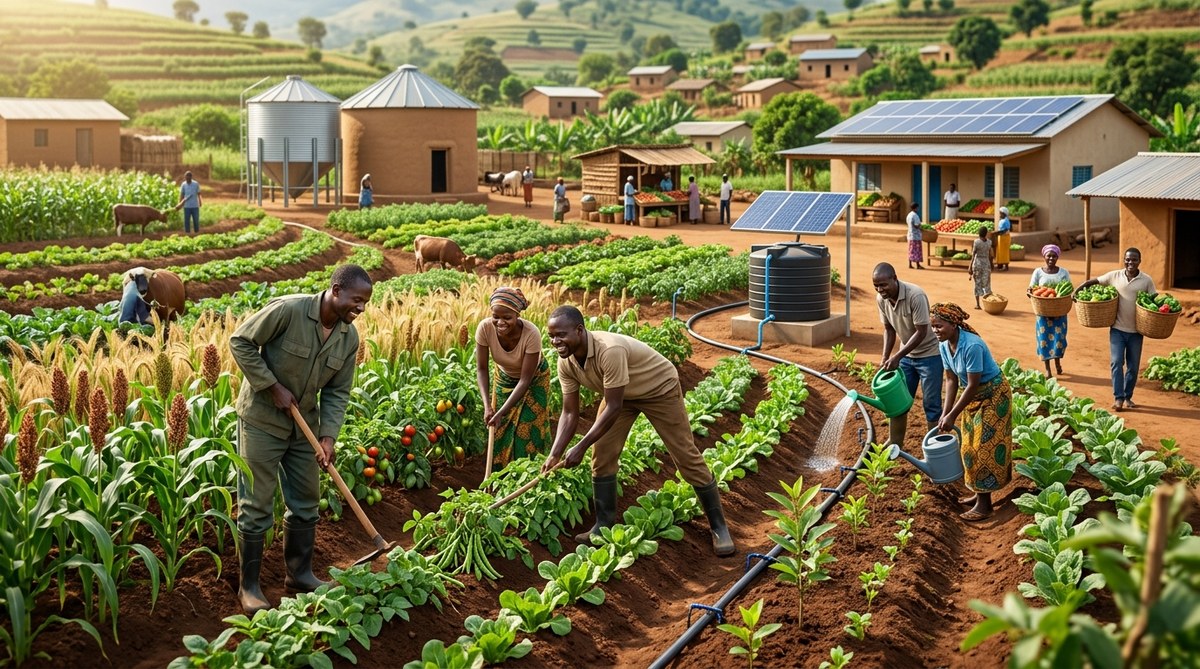
Building Resilient Food Systems to End Global Hunger
Building resilient food systems is vital in the fight against global hunger. As climate change, population growth, and economic challenges intensify, our food supply chains face unprecedented threats. Creating systems that can withstand shocks and adapt to changing conditions is no longer optional—it’s a necessity. By understanding what makes a food system resilient and implementing targeted strategies, we can ensure everyone has access to safe, nutritious food today and in the future.
Building resilient food systems involves diversifying production, strengthening local supply chains, adopting sustainable practices, and fostering collaboration among stakeholders. These steps can effectively reduce hunger and prepare communities for future challenges.
What does it mean to build resilient food systems?
Resilient food systems are those that can endure and recover from shocks such as climate disasters, economic downturns, or conflict. They are designed to be flexible, inclusive, and sustainable. Such systems prioritize diversity in crops and livestock, local production, and equitable access to resources. They also embrace innovative technologies and policies that support long-term food security.
A resilient system doesn’t just react to crises—it anticipates them. It minimizes vulnerabilities and enhances capacity to adapt. This approach is essential to ending global hunger, especially in vulnerable regions where traditional systems often falter under stress.
How to develop resilient food systems in practice
Creating resilient food systems requires a strategic, multi-layered approach. Here are key steps to consider:
-
Diversify food production
Relying on a small number of crops or livestock makes systems fragile. Promoting a variety of crops suited to local conditions reduces risk and boosts nutrition. For example, farmers can plant different types of grains, vegetables, and legumes to buffer against pests, droughts, or market fluctuations. -
Strengthen local supply chains
Local markets and food hubs reduce dependence on distant supply routes that can be disrupted. Supporting smallholder farmers, investing in infrastructure, and fostering community-based distribution networks help communities stay fed during crises. -
Adopt sustainable farming practices
Soil health, water efficiency, and climate-smart agriculture are key. Techniques like crop rotation, conservation tillage, and integrated pest management improve resilience by maintaining ecosystem balance and reducing resource dependency.
Techniques and common pitfalls
| Techniques | What to Avoid |
|---|---|
| Crop diversification | Monoculture farming |
| Water harvesting | Over-irrigation |
| Use of drought-resistant crops | Relying solely on traditional varieties |
| Community seed banks | Dependence on external seed sources |
“Building resilient food systems is about creating networks that can absorb shocks and still deliver food security. It is a continuous process of adaptation and innovation,” emphasizes Dr. Maria Lopez, an expert in sustainable agriculture.
The role of technology and innovation
Modern technology offers powerful tools to reinforce food system resilience. Precision agriculture, satellite monitoring, and climate modeling help farmers make informed decisions. Mobile platforms can connect smallholders to markets and resources. Data-driven approaches identify vulnerabilities and guide investments.
However, technology alone isn’t enough. It must be accessible, affordable, and appropriate for local contexts. Combining traditional knowledge with new innovations fosters systems that are both resilient and culturally relevant.
Addressing challenges and avoiding common mistakes
Building resilient food systems is complex. Mistakes can undermine progress. Here are some frequent errors:
- Overlooking local knowledge and practices.
- Focusing solely on productivity without sustainability.
- Ignoring social inequalities that restrict access to resources.
- Underinvesting in infrastructure and education.
A balanced approach considers ecological, social, and economic factors. It involves stakeholders at all levels—from farmers to policymakers.
| Technique | Mistake to Avoid |
|---|---|
| Promoting monocultures | Ignoring ecological diversity |
| Relying on external inputs | Neglecting local resource management |
| Top-down policy making | Marginalizing community voices |
| Ignoring gender and social equity | Excluding vulnerable groups |
How collaboration drives success
Building resilient food systems requires cooperation. Governments, NGOs, farmers, scientists, and consumers all have roles. Policies should incentivize sustainable practices and support smallholders. International partnerships can facilitate knowledge sharing and resource mobilization.
For example, initiatives that connect farmers with markets reduce post-harvest losses and improve incomes. Sharing successful models across regions accelerates resilience-building efforts.
Practical steps for policymakers and researchers
Policymakers can foster resilience through:
- Investing in rural infrastructure and market access.
- Supporting research and extension services.
- Creating safety nets for vulnerable populations.
- Enacting policies that promote sustainable agriculture.
Researchers should focus on:
- Developing climate-resilient crop varieties.
- Studying local adaptation strategies.
- Evaluating the social impacts of interventions.
- Facilitating participatory approaches with communities.
Why building resilient food systems is crucial now
Global challenges demand urgent action. The interconnectedness of climate change, conflict, and economic instability continues to threaten food security. In some regions, shocks happen frequently, making resilience a critical goal.
Investing in resilient systems yields multiple benefits: improved nutrition, economic stability, environmental health, and social equity. It ensures that future generations inherit systems capable of feeding everyone, no matter what crises arise.
“Resilience is not just about bouncing back but bouncing forward—creating systems that are better prepared for the uncertainties ahead,” notes Dr. James Patel, a climate adaptation specialist.
How you can contribute to building resilient food systems
Whether you’re a researcher, policymaker, student, or community member, your actions matter. Support initiatives that promote sustainable farming, advocate for policies that prioritize resilience, and educate others about the importance of diverse and adaptive food systems.
Get involved in local projects, volunteer, or pursue studies in sustainable agriculture. Sharing knowledge and fostering collaboration can help accelerate progress toward ending hunger.
Building hope through resilient food systems
Creating resilient food systems is a journey that combines innovation, tradition, and cooperation. It requires commitment from all sectors and a shared vision for a world where no one goes hungry. By supporting sustainable practices and inclusive policies, we can lay the foundation for a future where food security is a reality for everyone.
Remember, resilience isn’t built overnight. It grows from continuous effort, community engagement, and adaptive learning. Together, we can make a meaningful difference in ending global hunger.
Cultivating a resilient future for all
As we look ahead, the importance of resilient food systems becomes even clearer. They are the backbone of global stability and health. Embracing diversity, fostering collaboration, and investing in sustainable innovations are keys to overcoming the complex challenges of today and tomorrow.
Your role, no matter how small, can contribute to this vital transformation. By staying informed, advocating for change, and supporting resilient practices, you help shape a world where everyone has access to nourishing food, regardless of circumstances.