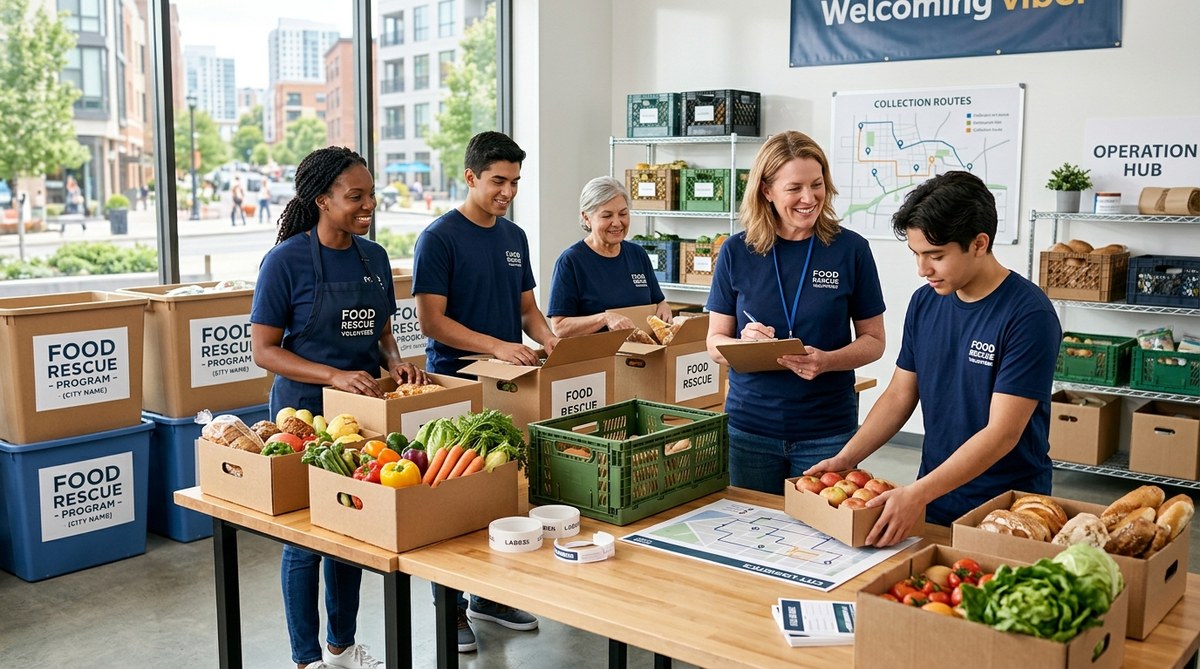
How to Start a Food Rescue Program in Your City
Every year in the United States, supermarkets, restaurants, and farms discard millions of pounds of perfectly good food. At the same time, one in eight families struggles to put meals on the table. That gap is where food rescue programs step in. If you have ever looked at a dumpster behind a grocery store and thought “this should be on someone’s plate instead,” you are ready to start a food rescue program in your city. The good news? You do not need a huge budget or a professional staff. You just need a clear plan, a few dedicated people, and the willingness to ask for help.
Starting a food rescue program fights hunger and reduces waste in your community. This guide walks you through every stage, from assessing local needs and building partnerships to managing logistics and scaling your impact. You will learn practical steps, avoid common pitfalls, and gain confidence to launch a program that feeds people, not landfills. With a solid plan, your city can truly become a model for food equity and lasting change for everyone.
Why Food Rescue Matters in 2026
Food waste is not just a environmental issue. It is a hunger issue. The USDA estimates that between 30 and 40 percent of the food supply in America goes to waste. Meanwhile, food banks across the country report that demand for services has risen sharply since 2023. A food rescue program sits right at the intersection of these two problems. It takes surplus food that would otherwise be thrown away and gets it to people who need it.
Cities like Austin, Portland, and New York have shown that food rescue works at scale. But you do not need to be a big city to make a difference. Small towns and suburban communities are launching successful programs every year. The key is matching supply with demand. If you know where the food is and who needs it, you can build a system that moves it efficiently.
Your Five Step Launch Plan
Here is the practical framework for starting your own food rescue program. Each step builds on the last, so follow them in order.
-
Assess your local food landscape. Start by mapping the food sources in your area. Which grocery stores, bakeries, restaurants, or farms have surplus? Talk to their managers. Most food businesses hate throwing away product. They just need a reliable way to donate it. At the same time, identify the organizations already serving people in need. Shelters, after school programs, senior centers, and churches are natural partners. You can learn more about how community gardens and local food networks are already making an impact by reading about how community gardens are tackling food deserts across America.
-
Build a core team of three to five people. You cannot do this alone. Recruit a small group that includes someone with organizational skills, someone who can drive a vehicle, and someone who understands food safety basics. This team will handle the early planning, pickups, and deliveries. As your program grows, you can add more volunteers. But start small. A tight team that trusts each other is better than a large group with no structure.
-
Secure your first donation partner. Pick one grocery store or restaurant and ask for a formal commitment. Start with a simple agreement that specifies what they will donate, how often you will pick up, and who handles what. Most businesses want to help but need clarity. Make it easy for them. Offer to provide receipts for tax purposes. Show them your food safety plan. Once you have one partner working well, use that relationship as a model to recruit others. For more ideas on building these connections, check out innovative strategies to combat hunger in vulnerable communities.
-
Set up your logistics and storage. You need a vehicle for pickups and a place to sort and store food. A van or SUV with fold down seats works for most small programs. For storage, partner with a church, community center, or commercial kitchen that has refrigerator and freezer space. Create a schedule. Tuesday and Thursday pickups are common because grocery stores often clear shelves before new shipments arrive. Keep a simple spreadsheet or use a free app to track what you collect and where it goes.
-
Establish distribution channels. Decide how the food reaches people. You can deliver directly to shelters and meal programs, host a community pantry, or set up a mobile distribution at a central location. Many programs use a combination of these methods. The most important thing is consistency. If you say you will be at a certain spot on Wednesday at 3 PM, show up every Wednesday at 3 PM. Trust is the currency of food rescue.
Common Mistakes to Avoid
Even well intentioned programs can stumble. Here are the most frequent pitfalls and how to sidestep them.
| Mistake | How to Avoid It |
|---|---|
| Trying to do too much too soon | Start with one donor and one recipient. Master that route before adding more. |
| Ignoring food safety training | Require every volunteer to complete a certified food handler course. It is inexpensive and protects everyone. |
| Poor communication with donors | Send a weekly email update to your donors. Tell them how much food was rescued and who received it. They will stay engaged. |
| No backup plan for volunteers | Always have a substitute driver and a substitute sorter. If one person gets sick, the program should not stop. |
| Skipping liability coverage | Talk to a lawyer about liability insurance or state Good Samaritan protections for food donors. Most states offer legal coverage for food rescue programs. |
Building a Reliable Volunteer Network
Volunteers are the heart of any food rescue program. But finding good ones takes intention. Here are proven strategies that work.
- Recruit locally. Post flyers at coffee shops, libraries, and community boards. Use local Facebook groups and Nextdoor. People want to help their neighbors.
- Make it easy to sign up. Use a simple online form that asks for name, email, phone, and availability. Do not require a long application.
- Create specific roles. Some volunteers love driving. Others prefer sorting and packing. Match tasks to interests.
- Show appreciation often. A thank you note, a monthly pizza night, or a simple shout out on social media goes a long way.
- Train every volunteer on food safety. This is non negotiable. A 30 minute session with a food safety video and a quiz is enough for most roles.
“The best volunteers are the ones who feel valued. We call our drivers ‘food rescue heroes’ and we mean it. When people see the impact of their work firsthand, they stay for years.” – Maria Torres, founder of Austin Food Rescue
Navigating Food Safety and Liability
Food safety is the number one concern for new organizers. The good news is that the rules are straightforward. Perishable foods must be kept at safe temperatures. Cold food stays cold. Hot food stays hot. Transport everything in clean containers. Label all items with the date they were received. If something looks or smells off, throw it out. That is the golden rule: when in doubt, toss it out.
Liability is simpler than most people think. The Bill Emerson Good Samaritan Food Donation Act protects food donors and nonprofit organizations from civil and criminal liability when they donate food in good faith. Every state also has its own version of this law. You can also learn from how community led food security programs are transforming lives worldwide to see how other groups handle these requirements.
Tracking Success and Scaling Up
Once your program is running smoothly, start measuring your impact. Number of pounds rescued. Number of meals provided. Number of people served. These numbers tell a story. Share them with your donors, volunteers, and the community. A simple monthly report with a photo and a few stats keeps everyone motivated.
When you are ready to grow, look for new donor types. Farmers markets, wedding venues, corporate cafeterias, and food processors all have surplus. Each new partner expands your reach. You can also explore harnessing technology to improve food distribution in developing countries for ideas that apply to local systems too.
Your First Rescue Is Closer Than You Think
Starting a food rescue program does not require permission from anyone. It requires action. Pick one grocery store. Call them tomorrow. Ask if they have food they currently throw away and whether they would let you pick it up. Most will say yes. From that first handoff, everything else will start to fall into place.
The need in your community is real. The food is already there. You are the missing link between waste and nourishment. Take the first step today. Your neighbors are counting on you.