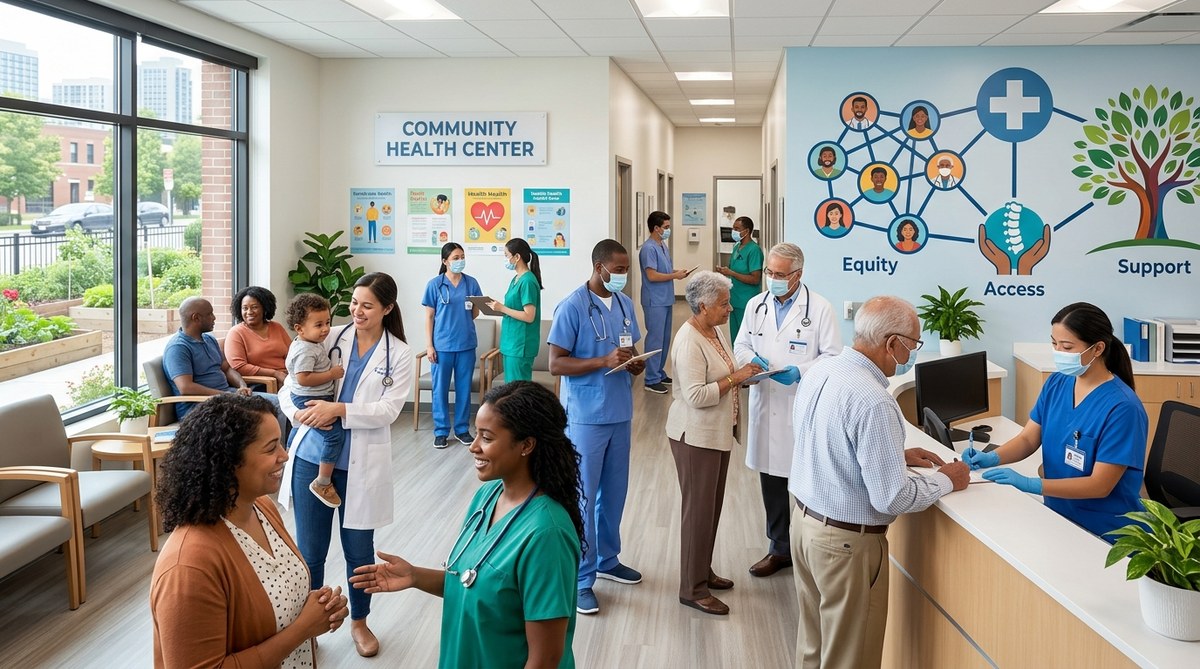
In a country as wealthy as the United States, no one should have to choose between seeing a doctor and putting food on the table. Yet millions of Americans still face that impossible decision every year. Community health centers are quietly rewriting that story. They are not just clinics; they are lifelines for people who have been locked out of the traditional healthcare system. From rural towns to bustling urban neighborhoods, these centers deliver care that is both affordable and respectful. They treat the whole person, not just the symptoms. And they do it with a model that prioritizes equity over profit.
Community health centers are essential for closing the healthcare gap in America. They provide sliding fee scales, offer comprehensive services in one location, and employ culturally competent staff. By reaching populations that others overlook, these centers reduce emergency room visits, lower chronic disease rates, and save taxpayer money. Supporting them means investing in a fairer, healthier future for everyone.
## What Makes Community Health Centers Different
Traditional doctor offices often turn away uninsured patients or require huge upfront payments. Hospitals can feel intimidating and impersonal. Community health centers turn that model upside down. They operate under a federal mandate to serve everyone regardless of insurance status or ability to pay. That simple principle makes them a powerful force for **community health centers equitable access**.
Most health centers are located in areas designated as medically underserved. They have long hours, including evenings and weekends. Many offer transportation assistance or mobile services. They also integrate behavioral health, dental care, and pharmacy services under one roof. This wraparound approach means a single mother can get a checkup for her child, fill a prescription, and talk to a counselor all in one visit.
### The Numbers Behind the Mission
Let’s talk data. In 2026, nearly 30 million patients rely on health centers across the country. More than 60% are people of color. Roughly one in five live in a household where English is not the primary language. And about half are covered by Medicaid or CHIP. Yet health centers consistently deliver care that matches or exceeds the quality of private practices. They also generate significant savings for the broader system by reducing unnecessary specialty referrals and hospitalizations.
> “Health centers are the most cost effective primary care delivery model we have,” says Dr. Amara Obi, a public health researcher at the University of North Carolina. “They prove that when you remove financial and cultural barriers, people get the preventive care they need. That keeps them healthier and out of the emergency room.”
## How Community Health Centers Drive Equitable Access
Equitable access means more than just opening the doors. It means designing services that meet people where they are. Community health centers do this through a handful of practical strategies.
1. **Sliding fee scales based on income.** No one is turned away for being broke. Patients pay what they can afford, often as little as 20 dollars. This alone removes the biggest barrier to care.
2. **Culturally and linguistically appropriate care.** Staff reflect the communities they serve. Interpreters are available in dozens of languages. Materials are written at a fifth grade reading level. This builds trust and improves health literacy.
3. **Outreach and enrollment assistance.** Many centers employ community health workers who help patients sign up for Medicaid, SNAP, or other benefits. They also follow up with patients who miss appointments, reducing gaps in care.
These actions don’t just sound good. They produce real results. Studies show that health center patients have lower rates of diabetes complications, fewer avoidable hospitalizations, and better blood pressure control compared to uninsured patients who rely on emergency rooms.
### A Closer Look at Common Barriers
Even with the best intentions, health centers face real obstacles. The table below outlines three major challenges and how the centers tackle them.
| Barrier | How Health Centers Respond |
|—
| **Funding instability** | Federal grants provide a base, but centers diversify revenue through Medicaid reimbursements, private grants, and community donations. Many partner with local hospitals to share costs. |
| **Workforce shortages** | They invest in residency training programs, use telehealth to extend specialist reach, and offer loan repayment to attract clinicians. |
| **Patient transportation** | Centers operate mobile clinics, contract with ride sharing services, or provide bus passes. Some even offer same day virtual visits to cut travel needs. |
The creativity shown by health center leaders is remarkable. They know that if a patient can’t get to the clinic, the clinic must come to the patient.
## Why They Matter More Than Ever in 2026
The pandemic exposed deep cracks in the U.S. healthcare system. But health centers were already bridging those cracks. During the height of COVID 19, they administered millions of tests and vaccines to people who might otherwise have been missed. Now, as the nation grapples with rising chronic disease rates and a mental health crisis, these centers are more vital than ever.
Policymakers are starting to pay attention. In 2026, several states are expanding Medicaid to cover more low wage workers. That directly boosts health center revenue. At the same time, federal initiatives are funding new sites in rural and frontier areas. But funding alone isn’t enough. We need a broader recognition that **community health centers equitable access** is not a side issue. It is central to any serious effort to improve public health.
### What Researchers and Advocates Can Do
If you are a policy researcher or an advocate, your voice matters. Here are a few ways to support this model:
– **Include health center performance data in your reports.** Show lawmakers the return on investment.
– **Push for policies that expand the health center workforce.** Loan forgiveness and training programs are critical.
– **Share stories from patients and providers.** Numbers tell part of the story, but human experiences move hearts and votes.
For a deeper dive into how local partnerships close healthcare gaps, check out this article about [3 ways local partnerships are closing healthcare gaps worldwide](https://foodfirstinc.com/3-ways-local-partnerships-are-closing-healthcare-gaps-worldwide/). You might also appreciate the insights in [how community health workers are transforming healthcare access in underserved areas](https://foodfirstinc.com/how-community-health-workers-are-transforming-healthcare-access-in-underserved-areas/).
## Building a Future Where Everyone Gets the Care They Deserve
The path to health equity is not mysterious. It runs through the waiting rooms of the nation’s nearly 1,400 community health centers. These centers prove that accessible, affordable, and dignified care is possible. They are not a second best option. They are a model worth scaling.
Whether you are a researcher writing a policy brief, an advocate lobbying for funding, or someone who simply wants to understand how a fairer healthcare system can work, take a close look at what health centers are doing. Then help spread the word. Because when a clinic in a small town or a crowded city block offers quality care to anyone who walks in, it does more than heal bodies. It restores faith in the idea that healthcare is a human right, not a privilege.