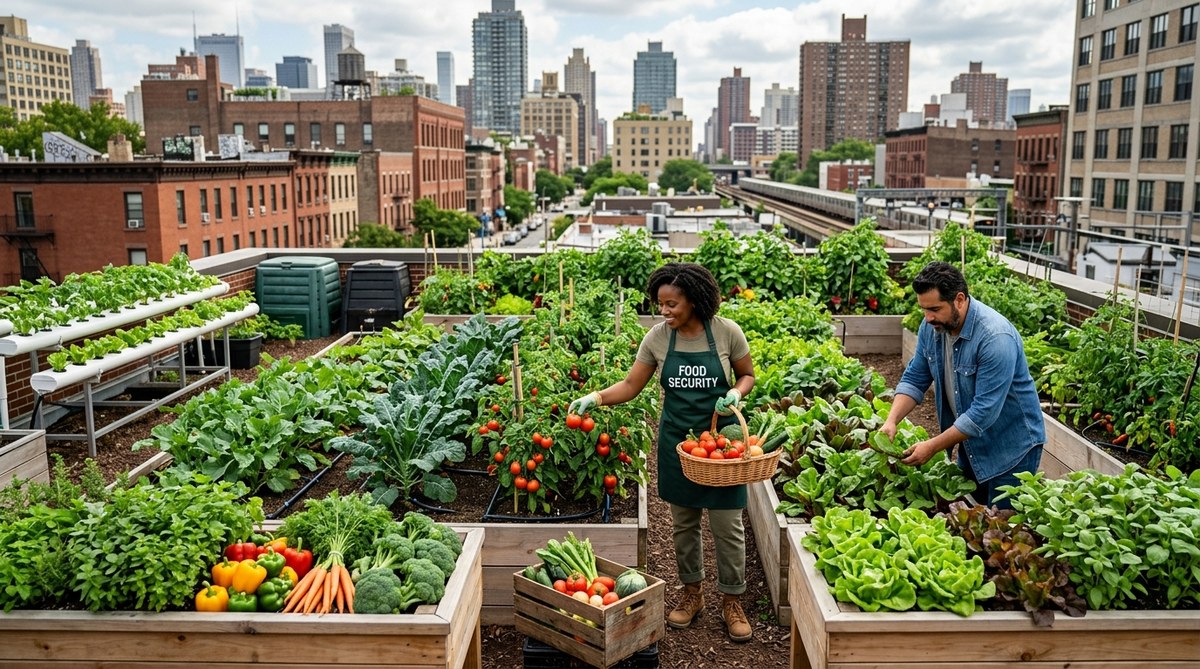
Can Urban Agriculture Solve the Food Desert Crisis?
The closest supermarket is two miles away, but the corner store on your block sells only processed snacks, sugary drinks, and expired milk. That is the reality for 23.5 million Americans who live in food deserts. These neighborhoods lack access to affordable, nutritious food. For years, the problem seemed too big to solve. But a quiet revolution is happening in vacant lots, on rooftops, and in schoolyards. Urban agriculture is planting roots where grocery stores refuse to go. The question is not whether it can help. The question is how much of a difference it can really make.
Urban agriculture cannot single-handedly erase every food desert, but it is a powerful tool for increasing fresh food access, building community resilience, and shifting local food systems. Success depends on thoughtful planning, long-term investment, and partnerships with residents. When done right, it turns scarcity into abundance and neighbors into food producers.
Why Food Deserts Still Exist in 2026
Food deserts are not accidents. They are the result of decades of redlining, disinvestment, and supermarket chains pulling out of low-income neighborhoods. In 2026, the situation remains stubborn. Many communities still rely on convenience stores that stock almost no fresh produce. Public transportation is unreliable, and car ownership is low. The USDA defines a food desert as a low-income area where at least 33% of the population lives more than one mile from a supermarket. In rural areas, that distance jumps to ten miles.
But here is the crucial point: distance is only part of the problem. Even when a store opens nearby, affordability and cultural preference matter. A full produce section means nothing if families cannot afford the prices or if the vegetables do not match their cooking traditions. Urban agriculture addresses both distance and dignity. It puts food literally in the backyard of the people who need it most.
How Urban Agriculture Changes the Equation
Urban agriculture covers a wide range of practices: community gardens, rooftop farms, vertical farms, hydroponic greenhouses, and even backyard chicken coops. These projects do more than grow tomatoes. They create local jobs, reduce stormwater runoff, and bring neighbors together. For food deserts, the most immediate benefit is fresh produce within walking distance. A well run community garden can yield hundreds of pounds of vegetables per season. That is not enough to feed a whole neighborhood, but it provides a consistent supply of leafy greens, peppers, and herbs.
More important, urban agriculture shifts power. Residents decide what to plant. They learn skills they can pass on. They build relationships with each other and with local institutions. Over time, these small projects can influence larger food policies. Several cities have already changed zoning laws to allow farming in residential areas. Others have created land trusts to protect community gardens from development. These changes are exactly what building resilient food systems looks like at the local level.
Real World Success Stories
Across the United States, urban agriculture is proving itself in food deserts. Here are a few examples that show the range of what is possible:
-
Detroit, Michigan: The city has more than 1,500 community gardens and urban farms. Organizations like Keep Growing Detroit distribute seeds and seedlings to residents. In 2026, the network produced over 400,000 pounds of fresh food. Most of it stayed in the neighborhoods where it was grown.
-
Milwaukee, Wisconsin: Growing Power (now operating under new leadership) transformed a two acre plot into a year-round farm that employs local teens and supplies farmers markets in low-income areas. Their hoop houses allow growing even in harsh winters.
-
New York City: The GreenThumb program supports more than 550 community gardens across all five boroughs. In the Bronx, a food desert hotspot, gardens have become vital sources of collard greens, okra, and other culturally relevant crops.
-
Los Angeles, California: The city’s Urban Agriculture Incentive Zone gives property tax breaks to landowners who allow vacant lots to be used for farming. This policy has unlocked dozens of new growing spaces in South LA and other underserved areas.
These examples show that community-led food security programs are not just theoretical. They work on the ground.
Practical Steps to Start an Urban Agriculture Project in a Food Desert
If you are an urban planner, activist, or organizer looking to bring urban agriculture to a food desert, follow these steps. They come from lessons learned in cities across the country.
-
Assess the neighborhood. Talk to residents before you plan anything. Hold meetings at local churches, schools, or community centers. Ask what foods they miss, what skills they have, and what kind of space they want. A garden that nobody asked for will not survive.
-
Find suitable land. Look for vacant lots, rooftops, schoolyards, or even strips along sidewalks. Check with the city to confirm ownership and zoning. Many cities have land bank programs that can transfer ownership or provide leases.
-
Build partnerships. You cannot do this alone. Partner with a local nonprofit, a church, a school, or a health clinic. They can provide volunteers, funding, and credibility. Also connect with the nearest agricultural extension office for soil testing and growing advice.
-
Design for community needs. Make sure the layout includes accessible raised beds for elderly residents and space for children to learn. Include a water source, compost bins, and a tool shed. Plan for a mix of annual vegetables and perennial fruits.
-
Secure funding. Look for grants from the USDA, local food policy councils, and private foundations. Many cities now have food equity funds specifically for urban agriculture. Crowdfunding and donation drives can also work.
-
Train and manage. Offer free workshops on planting, harvesting, and cooking. Create a simple schedule for watering and weeding. Appoint a garden committee to take ownership and resolve conflicts.
-
Evaluate and scale. Track how much food is grown, how many people participate, and what impact it has on diet. Use that data to apply for more funding and to replicate the model in other blocks.
For more detailed guidance on turning these steps into a long-term strategy, check out how to turn food deserts into food oases: a step-by-step guide.
Comparing Urban Agriculture Models: Strengths and Weaknesses
Not every type of urban agriculture fits every food desert. The table below compares common approaches.
| Model | Best For | Common Mistakes |
|---|---|---|
| Community garden | Building social ties, low cost | Neglecting leadership transition, poor soil prep |
| Rooftop farm | Dense downtown areas, commercial partnerships | High initial cost, structural weight limits |
| Vertical farm (indoor) | Year-round production, controlled environment | High energy use, expensive equipment, limited crop diversity |
| Hydroponic greenhouse | Fast growing greens, steady income | Technical skills required, water and nutrient management |
| Edible landscaping (trees, shrubs) | Long-term yield, low maintenance | Slow to mature, theft risk, pruning knowledge needed |
| Market garden (larger lot) | Selling produce, job creation | Need business plan, market access, more labor |
Each model has its place. The key is matching the approach to the community’s capacity and goals. For instance, a vertical farming operation might work well in a city like Chicago but may be overkill for a small neighborhood with plenty of vacant land.
Avoiding the Most Common Pitfalls
Even well intentioned projects can fail. Here is advice from experienced practitioners to help you avoid the usual traps.
“The biggest mistake I see is people starting a garden without talking to the neighbors first. They assume everyone wants kale, but the community may prefer collards, peppers, or callaloo. Listen before you plant. Then the garden becomes theirs, not yours.”
Miriam Santos, community organizer, Southside Urban Farm Project, Chicago
Other common mistakes include:
- Not testing the soil for lead contamination. Urban soil can be polluted. Raised beds with clean soil are safer.
- Underestimating water access. You need a reliable water source. Rain barrels help but are not enough for dry spells.
- Ignoring maintenance after the first season. Gardens need weeding, mulching, and replanting. A volunteer schedule is essential.
- Focusing only on production. Urban agriculture also builds community. If you neglect the social aspect, the garden will lose its heart.
For more strategies on avoiding these issues, look at 8 proven strategies to strengthen food security in urban communities.
From Food Deserts to Food Sovereignty
Urban agriculture alone cannot replace the need for grocery stores, affordable fresh food supply chains, and living wages. But it can help transform a food desert into a food oasis. The difference is subtle but important. A food desert is a place where healthy food is absent. A food oasis is a neighborhood where residents have the power to grow, buy, and eat nutritious food on their own terms.
That shift from passive consumer to active producer is what makes urban agriculture so powerful. It is not just about calories. It is about culture, dignity, and self determination. When a child bites into a tomato they helped grow, they see food differently. When a grandmother teaches her grandkids how to plant okra, tradition lives on. When a vacant lot becomes a vibrant garden, the whole block feels safer.
A Practical, Hopeful Future
Urban agriculture will not solve every food desert by next year. But it is already making a difference in hundreds of neighborhoods across the United States. For urban planners, start by mapping your city’s vacant lots and surveying residents about their food needs. For activists, connect with existing gardens in your area and offer support. For researchers, study what works and share those findings. For community organizers, bring people together around a shared love of fresh food.
Every garden starts with one seed. Every food oasis starts with one committed group of people. The evidence is clear: urban agriculture can be a real answer for food deserts. The question now is whether we will plant the seeds together.