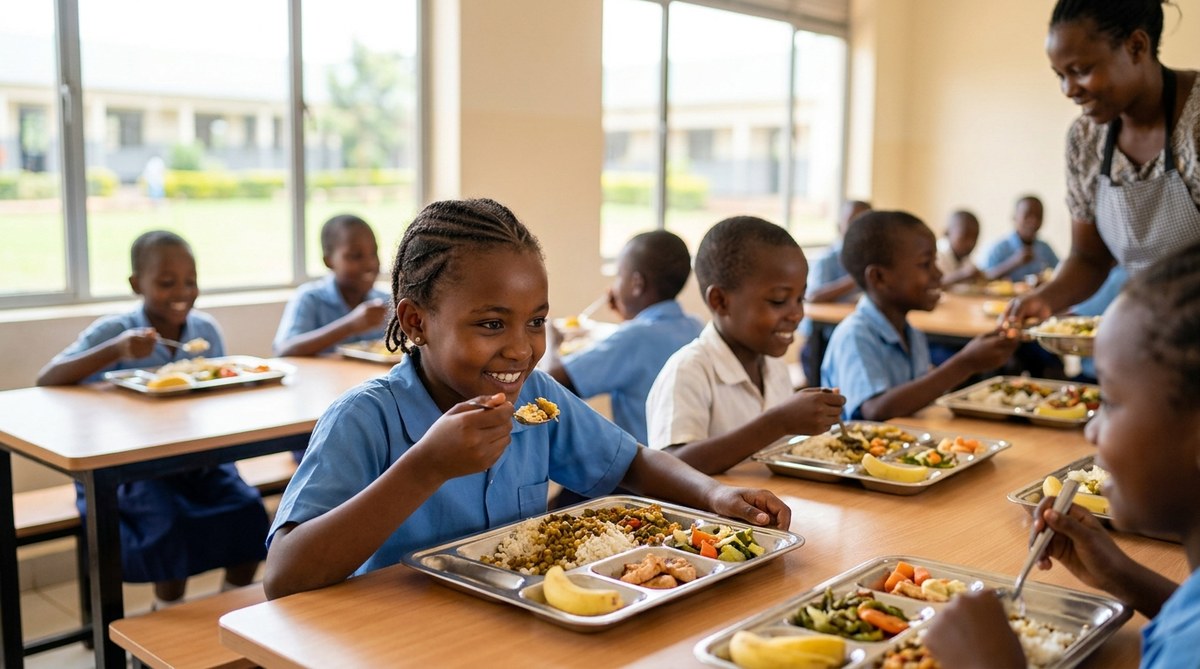
Why School Meal Programs Are Essential for Breaking the Cycle of Poverty
We talk a lot about poverty as a trap. It wraps itself around families, repeating the same story generation after generation. Limited resources mean limited chances. Limited chances mean limited resources. But the most effective tools are often the simplest. A reliable, nutritious school meal is exactly that tool. By 2026, the research is undeniable: school meal programs are one of the most powerful levers we have to disrupt this cycle. They do not just fill stomachs. They fuel futures, stabilize family budgets, and build a concrete bridge out of poverty for millions of children and their communities.
School meals do much more than just feed hungry children. They act as a powerful catalyst for breaking the multigenerational cycle of poverty. By directly boosting health, education outcomes, and local economies, these proven programs offer an exceptionally high return on investment. When children eat well, they learn better, earn more as adults, and ultimately help lift their entire community out of poverty. It is a proven, cost-effective strategy for systemic and lasting change.
The Powerful Link Between School Meals and Lifelong Opportunity
When a child is hungry, their brain focuses on survival, not schoolwork. Hunger directly impacts a child’s ability to concentrate, solve problems, and remember what they learned the day before. School meals provide the essential fuel for cognitive development and classroom focus. Iron, zinc, iodine, and protein are not just nutrients; they are the building blocks of a capable, productive adult mind. Without them, a child falls behind before they even get started.
But the effect goes far beyond test scores. For families living in poverty, sending a child to school can be a real financial sacrifice. Sometimes that child’s labor is needed at home or to earn money. A guaranteed meal at school changes that math. It becomes a powerful incentive. Sending kids to school saves the family money and time. This single shift creates the first break in the poverty cycle. By keeping children in the classroom, we are building the skilled workforce and informed citizens of tomorrow. This is a cornerstone of many innovative strategies to break the cycle of poverty in vulnerable communities, and it starts with breakfast and lunch.
The Economic Ripple Effect You Do Not See
The impact of a school meal does not stop at the cafeteria door. It spreads outwards to the entire household and local economy. Think about the parent, often a mother, who no longer has to worry about the cost of lunch money. She has more time to work, more energy to care for her other children, and a little more money in her pocket. That is a direct reduction in financial stress.
Then there is the local economy. Many successful school meal programs source their food from local farmers. This creates a stable, predictable market for small-scale agriculture. Farmers can plan their planting seasons, earn a steady income, and invest in their own farms. This links nutrition directly to local economic growth. It is a form of economic stimulus that strengthens food systems from the ground up. When you pair this with other economic tools, like how community-driven microfinance initiatives are transforming poverty reduction, you create a powerful network of support that prevents families from slipping back into poverty.
Three Specific Ways School Meals Disrupt the Poverty Cycle
Here is a clear look at the mechanics of how a simple meal creates lasting change.
- Improves Human Capital and Future Earnings: Malnutrition in early childhood causes permanent damage. It leads to stunted growth and impaired brain development. School meals, especially when fortified, provide the critical nutrients that directly improve a child’s IQ, physical health, and stamina. This translates directly into higher productivity and earning potential later in life. A healthier child grows into a healthier, more capable adult who can command a better wage.
- Increases Educational Attainment and Breaks the Labor Trap: Hunger is the biggest driver of school absenteeism. A hungry child gets sick more often. A stressed child is more likely to drop out to help their family. School meal programs that offer breakfast and lunch dramatically boost attendance rates and reduce drop-out rates, particularly for girls. Every additional year of schooling a child completes is linked to a roughly 10% increase in their future annual income.
- Acts as a Critical Safety Net During Crises: When a family faces a disaster, a drought, or an economic downturn, school meals become a lifeline. They provide a guaranteed source of nutrition that prevents a temporary crisis from turning into permanent poverty. This safety net keeps children in school and out of dangerous situations like child labor or early marriage. It is the most effective way to stabilize a vulnerable community facing hardship.
Overcoming Hurdles: A Look at Common Program Challenges
Even the best planned programs can face serious obstacles. Recognizing these challenges helps us build stronger, more resilient systems. Here is a look at the most common issues and practical solutions.
| Challenge | How It Hurts the Poverty Cycle | Proven Solution |
|---|---|---|
| Unstable Funding | When funding stops, children drop out of school and families lose their safety net. The progress made is reversed. | Advocate for multiyear government budgets and look for dedicated tax revenue streams to lock in funding. |
| Poor Supply Chains | Food arrives spoiled or doesn’t arrive at all. The program loses trust and fails to deliver nutrition. | Invest in local sourcing. Buy directly from nearby farmers to shorten the supply chain and reduce waste. |
| Low Nutritional Quality | A meal full of empty calories fills a belly but does not build a brain. The long-term benefits are lost. | Set strict nutritional standards. Partner with dietitians to design menus that include fruits, vegetables, and protein. |
Practical Steps for Advocates, Educators, and Policymakers
You do not need to wait for a national mandate to make a difference. Here are actionable steps you can take starting today.
- Start with your own data. Look at the current program in your local schools. Who is missing out? What are the barriers to enrollment? Often, the families who need the program the most are the ones not signed up.
- Build a strong coalition. This is not a solo fight. Partner with teachers, parents, local farmers, and health professionals. A unified voice is much harder for policymakers to ignore.
- Push for universal meal policies. Programs that offer free meals to every student remove the stigma of poverty and the administrative nightmare of verifying income. They are more efficient and reach more hungry kids.
- Connect the classroom to the farm. Support farm-to-school initiatives. These programs provide fresh, healthy ingredients and support the local agricultural economy at the same time. It is a win for students and farmers.
- Scale what works. Look at successful models in other districts or countries and adapt them to your local context. We can accelerate progress by sharing top strategies for scaling up education access to fight poverty globally.
What the Research Tells Us
This is not just theory. The evidence is strong and consistent across dozens of countries.
“School meals are perhaps the most effective social safety net and human capital investment we have. They ensure that a child’s starting point in life does not determine their future. By investing a relatively small amount per child, we generate massive returns in health, education, and economic productivity that last a lifetime and cross generations.” – From a 2025 World Food Programme brief on school feeding.
This quote sums up the core truth. The return on investment for school meals is incredibly high. It is one of the few interventions that is both a short-term safety net and a long-term investment in human potential.
A Simple Roadmap for Getting Started
Ready to take action? Here is a simple four step process to help you use the power of school meals to break the poverty cycle in your own area.
- Identify the Gap: Find out which schools in your community do not have a solid breakfast or lunch program. Talk to the principals. Ask the parents. Find out where the need is greatest.
- Connect with Local Leaders: Go to the school board meeting. Talk to the PTA. Contact your local food bank. Understand the specific obstacles. Is it funding? Is it kitchen equipment? Is it stigma?
- Gather Your Resources: Look for federal grants like the Community Eligibility Provision. Look for state funding. Partner with local non-profits. Even small, consistent donations can have a huge impact when pooled together.
- Track the Results and Advocate: Once a program is in place, monitor it. Are attendance rates going up? Are teachers reporting better focus? Use this real-world data to push for permanent, well-funded programs that can withstand political changes.
The Path Forward: Building a Cycle of Opportunity
The phrase “school meals break poverty cycle” is not just a slogan. It is a documented, proven reality. It works because it addresses the root cause of the trap. It gives a child the fuel they need to learn. It gives a family the relief they need to save. It gives a community the economic boost it needs to grow. These three things are deeply connected. When we invest in one, we strengthen the others. By working together at the local, state, and national level, we can ensure that every child has access to the nutrition they need to thrive. The goal is not just to feed a child for a day. It is to feed their potential for a lifetime. Let us build a movement that turns a single meal into a future filled with opportunity and breaks the cycle of poverty for good.