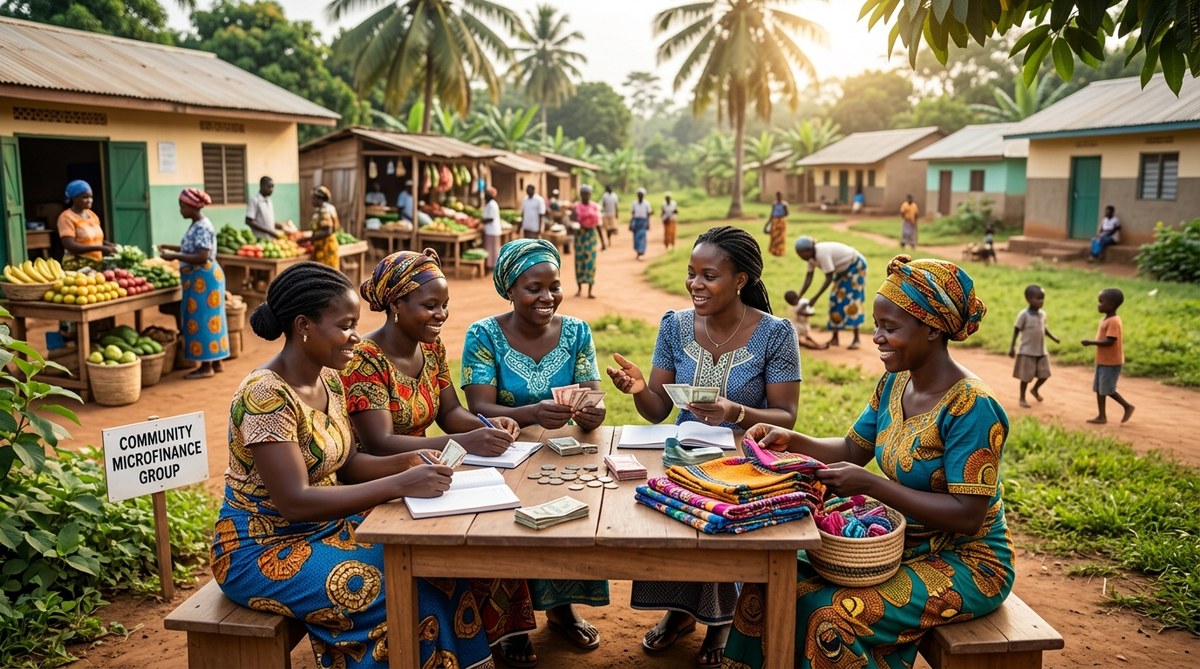
How Community-Driven Microfinance Initiatives Are Transforming Poverty Reduction
Community-driven microfinance initiatives are making waves in the fight against poverty. Unlike traditional financial systems, these programs focus on empowering communities from within. They harness local knowledge, foster trust, and create tailored solutions that address specific needs. By putting decision-making in the hands of community members, these microfinance efforts are proving to be more effective, sustainable, and inclusive. For researchers, policymakers, and development professionals, understanding this approach opens new pathways to create lasting change.
Community-driven microfinance empowers local populations by involving them directly in financial decision-making. This grassroots approach fosters trust, enhances sustainability, and leads to more effective poverty reduction through tailored solutions rooted in local context.
The power of community involvement in microfinance
Community-driven microfinance turns traditional banking on its head. Instead of relying solely on external lenders and top-down policies, it emphasizes local participation. Communities identify their most pressing needs and design financial products suited to their unique circumstances. This approach builds a sense of ownership and accountability, making it easier to sustain and scale initiatives.
Why community-led models work better
Many microfinance programs have struggled with high default rates and limited outreach. When communities are involved from the start, they are more likely to take responsibility for repayment and support. Trust is a critical factor. Local leaders or groups act as intermediaries, bridging the gap between formal financial institutions and community members. This trust fosters a culture of repayment and mutual support.
Examples of successful community-driven microfinance projects
One notable example is the Grameen Bank in Bangladesh. It pioneered the concept of group lending, where small groups of borrowers are collectively responsible for loans. This method encourages peer support and accountability. In Kenya, village savings and loan associations (VSLAs) have empowered women and marginalized groups to manage their finances and invest in small businesses.
How community-based microfinance reduces poverty
Empowering communities through microfinance has tangible impacts on poverty reduction. It enables the creation of small businesses, improves household income, and enhances social cohesion. When local people control financial resources, they can address their own challenges more effectively.
Practical steps to implement community-driven microfinance
- Engage local stakeholders: Identify community leaders, groups, and organizations willing to participate.
- Assess local needs: Conduct participatory appraisals to understand what financial services are most needed.
- Design tailored financial products: Create loans, savings, or insurance schemes that fit local contexts.
- Build capacity: Train community members in financial management and governance.
- Establish transparent governance: Set clear rules and accountability mechanisms.
- Monitor and adapt: Regularly evaluate the program and make improvements based on feedback.
Essential features of effective community microfinance
- Inclusivity: Reaching marginalized groups, women, and youth.
- Flexibility: Adapting to changing community needs.
- Local ownership: Ensuring communities have control over funds and decisions.
- Sustainability: Creating models that can operate without continuous external support.
Common pitfalls and how to avoid them
| Technique | Mistake to Avoid |
|---|---|
| Rigid loan terms | Ignoring local capacity to repay |
| Top-down design | Excluding community input |
| Over-reliance on external funding | Failing to build local ownership |
| Neglecting social dynamics | Ignoring gender or cultural factors |
“The success of community-driven microfinance depends on genuine local participation, trust, and adaptability. When communities feel ownership, they invest their time and effort into making projects work.” — Development expert Maria Lopez
Techniques that boost community microfinance effectiveness
- Participatory planning: Involving community members in designing financial tools.
- Group lending models: Using peer accountability to reduce default risk.
- Local management committees: Empowering community groups to oversee funds.
- Integrating non-financial support: Providing training, education, and mentorship.
Common mistakes that hinder progress
- Imposing external solutions without local input.
- Ignoring social or gender dynamics.
- Overlooking the importance of transparent governance.
- Relying solely on loans without complementary support.
How to strengthen community microfinance programs
| Technique | Mistake to Avoid |
|---|---|
| Regular community meetings | Lack of ongoing engagement |
| Gender-sensitive approaches | Marginalizing women or youth |
| Clear accountability systems | Ambiguous roles and responsibilities |
| Complementary training | Focusing only on finance without soft skills |
The future of community-driven microfinance in poverty alleviation
As the global development community shifts towards inclusive and sustainable solutions, community-driven microfinance stands out as a promising approach. Digital technology can expand reach, allowing even remote communities to access financial services. Mobile banking platforms, for example, are transforming how local populations save, borrow, and invest.
Innovative techniques shaping the future
- Digital microfinance platforms: Connecting communities with broader markets.
- Blockchain-based systems: Ensuring transparency and security.
- Social impact bonds: Funding community projects based on outcomes.
- Integrated development programs: Combining financial services with health, education, and infrastructure support.
Important considerations for scaling up
- Maintain local ownership and participation.
- Ensure technology is accessible and user-friendly.
- Promote gender equality and inclusivity.
- Build partnerships between local organizations, governments, and international agencies.
“Harnessing technology while preserving local control can accelerate the impact of community-driven microfinance. It’s about blending innovation with tradition.” — Global development strategist James Carter
Moving forward with community-driven microfinance
Community-driven microfinance offers a pathway to more inclusive and effective poverty reduction. By centering local voices and fostering ownership, these initiatives build resilience and promote sustainable development. For professionals working in the field, integrating community participation into financial programs can lead to more meaningful and lasting change.
Practical application begins with listening and understanding local contexts. Designing flexible, inclusive, and transparent financial models ensures that communities are not just recipients but active architects of their economic futures. Embracing this approach can unlock the potential within communities to lift themselves out of poverty and build brighter, more resilient lives.
Cultivating resilient communities through local finance
Fostering community-driven microfinance is more than just offering financial tools—it’s about empowering people to shape their own destinies. When local populations are involved in decision-making and governance, they become stakeholders in their success. This sense of ownership fuels motivation, trust, and long-term sustainability.
By prioritizing community participation, development professionals can create programs that truly resonate with local needs. This approach not only enhances the impact of microfinance initiatives but also contributes to building resilient communities capable of weathering future challenges. With thoughtful design and ongoing engagement, community-driven microfinance can be a catalyst for meaningful change across the globe.