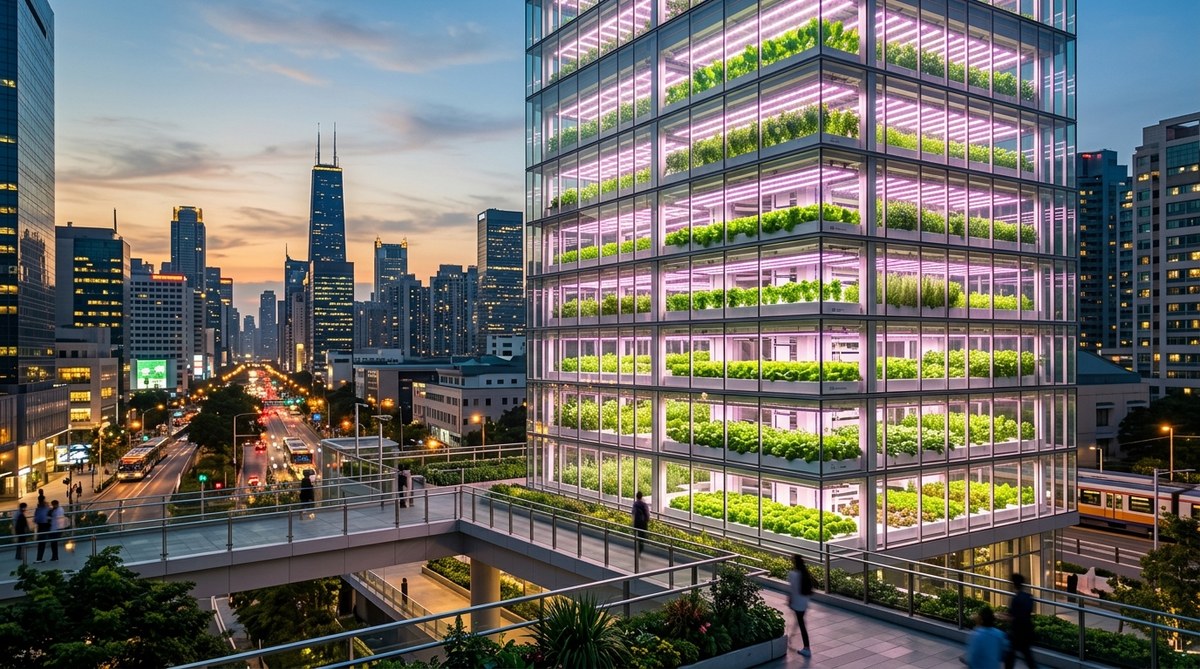
Can Vertical Farming End Hunger in Cities by 2026?
Picture a leafy greens farm tucked inside a repurposed parking garage in downtown Chicago. LED lights hum softly. Racks of basil and kale grow without soil, using 90% less water than a traditional field. The produce is harvested in the morning and sold at a neighborhood farmers market by lunch. For the residents of that food desert, this vertical farm feels like a lifeline. But can these high-tech towers really put a dent in the 18 million U.S. households that faced food insecurity last year? And more pointedly, can vertical farming end hunger in cities by 2026?
Vertical farming offers a compelling piece of the urban food puzzle, but it is not a silver bullet for hunger. In 2026, the most effective approach combines indoor agriculture with community food sovereignty, affordable distribution, and systemic anti-hunger programs. When deployed thoughtfully, vertical farms can boost fresh food access, create local jobs, and shorten supply chains. But without addressing economic access and equity, they risk becoming luxury projects that serve the well-fed.
What Vertical Farming Brings to the Table
Vertical farming stacks crops in layers, using controlled environments to grow year round. The promise is seductive: fresh greens in the middle of winter, zero pesticide runoff, and a fraction of the land required by conventional agriculture. For cities that rely on trucked-in produce from thousands of miles away, a local vertical farm can feel like a revolution.
In 2026, the technology has matured. Sensors adjust light spectrums, humidity, and nutrients automatically. Energy costs have dropped thanks to more efficient LEDs and integration with renewable grids. Companies like Plenty, AeroFarms, and Bowery have expanded into midsize markets. Yet the question remains: does this translate into less hunger?
The Hard Limits: Why Vertical Farms Won’t Feed Everyone Tomorrow
Let’s be honest. Vertical farming is expensive to build and operate. A single facility can cost tens of millions of dollars. The crops that grow best are leafy greens, herbs, and microgreens. Staple crops like wheat, rice, beans, and corn are not viable at scale. That means a vertical farm cannot replace a grocery store or a food pantry’s dry goods section.
Moreover, the produce it grows is often priced at a premium. A head of lettuce from a vertical farm might cost $3.99, while a field-grown head is $1.50. For a family on a tight budget, the cheaper option wins every time. If vertical farming is going to reduce food insecurity, the output needs to reach the people who need it most, not just the shoppers at Whole Foods.
How Vertical Farming Can Help Address Food Insecurity
So where does vertical farming fit into the fight against hunger? It works best as part of a broader strategy. Here are three ways it can make a tangible difference:
-
Locating farms inside food deserts. When a vertical farm opens in a neighborhood with no grocery store, fresh produce becomes available within walking distance. Nonprofits and community health centers can partner to distribute the harvest at subsidized prices or via food box programs.
-
Growing high-value, nutrient-dense crops. Spinach, kale, Swiss chard, and herbs pack vitamins and minerals that are often lacking in emergency food supplies. A vertical farm can supply these to school lunch programs, hospital cafeterias, and senior centers.
-
Creating green jobs with livable wages. The farms hire local technicians, harvesters, and managers. Good jobs improve household income, which directly reduces food insecurity. For example, a vertical farm in Newark, New Jersey, employs over 100 people from the surrounding community and provides health insurance and paid leave.
A Comparison of Approaches: Vertical vs. Traditional Urban Agriculture
To understand where vertical farming fits, let’s compare it with other urban food strategies.
| Approach | Cost per square foot | Crops grown | Best for | Main limitation |
|---|---|---|---|---|
| Vertical farm (indoor) | Very high ($200+) | Leafy greens, herbs, microgreens | Year round production in dense cities | Energy use, high starting cost |
| Community garden (outdoor) | Low ($5-$10) | Vegetables, fruits, flowers | Low cost fresh food, community building | Seasonal, requires land |
| Rooftop greenhouse | Moderate ($50-$100) | Tomatoes, peppers, greens | Moderate yield with natural light | Structural requirements, weight limits |
| Hydroponic shipping container | Medium ($30-$60) | Lettuce, strawberries | Flexible placement, small footprint | Limited volume, maintenance |
The table shows that no single method is a cure all. Vertical farms excel at producing fresh greens in any season, but they are not a replacement for a well-maintained community garden that grows summer squash and beans.
“The most effective urban food projects are the ones that listen to the community first. A vertical farm will fail if it tries to dictate what people should eat. It succeeds when it asks, ‘What do you need?’ and then grows that. Food security is not just about calories. It is about dignity and choice.” – Dr. Angela Rodriguez, urban agriculture researcher at the University of California, Davis
Practical Steps for Integrating Vertical Farming into Anti-Hunger Work
If you are a sustainability advocate or a local policymaker wondering how to make vertical farming serve food-insecure populations, here are actionable steps to consider.
- Partner with food banks and pantries. Negotiate a bulk discount or a donation agreement. Some farms already donate a percentage of their harvest to local pantries in exchange for tax credits or community good will.
- Accept SNAP/EBT and nutrition incentives. Vertical farm stands at farmers markets can double the value of SNAP dollars through programs like Double Up Food Bucks. That makes the premium produce suddenly affordable.
-
Develop a sliding scale pricing model. Charge full price to shoppers who can afford it and use the revenue to fund subsidized boxes for low-income families. This cross-subsidy model works in many food co-ops.
-
Offer farm tours and workshops. When people understand how the food is grown, they trust it more. Schools, after school programs, and senior centers can arrange field trips. Education builds long term demand for healthy food.
-
Integrate with existing hunger relief networks. Instead of operating in isolation, vertical farms can coordinate with organizations that already distribute food. For example, a farm in Atlanta supplies fresh greens to a network of 50 mobile food pantries across the metro area.
Why 2026 Feels Like a Pivotal Year
Several trends converged in 2026. Federal funding for urban agriculture through the USDA’s Office of Urban Agriculture and Innovative Production has increased. More cities have passed zoning ordinances that encourage indoor farming. And the public is more aware of supply chain fragility after the disruptions of the early 2020s.
Yet hunger remains stubbornly high. Inflation has cooled, but grocery prices are still elevated in many areas. The lesson from 2026 is that technology alone is insufficient. We need both the engineering to grow food and the social infrastructure to deliver it to every table.
That is where organizations like Food First come in. Programs that combine local food production with community advocacy, education, and direct assistance are the ones that actually move the needle. Vertical farms can be a gleaming tool in that toolbox, but they are not the toolbox itself.
Building a Food System Where No One Is Left Behind
If you are researching vertical farming as a solution to food insecurity, you are asking the right questions. The answer is nuanced. Vertical farms can end hunger in cities only if we pair them with deliberate policies that ensure affordability, access, and community ownership. They work best when they are not owned by distant investors but by the neighborhoods they serve.
To see how other innovative strategies are making a real difference, you can read about innovative strategies to combat hunger in vulnerable communities. Or learn how building resilient food systems to end global hunger takes more than just new technology. And if you are looking for models that put communities first, check out stories on empowering local food initiatives to end hunger worldwide.
The next time you walk past a gleaming vertical farm in your city, ask who gets to eat from it. The answer will tell you whether it is a solution or just a symbol. Let’s work to make sure it is the former.
A Future Worth Growing Toward
In 2026, we have the tools to grow fresh food in the most unlikely places. We have the knowledge to do it sustainably. But ending hunger in cities depends on something simpler: the will to share what we grow. Vertical farming can be part of that story, especially when it is rooted in equity and community voice. So plant a seed, support a local farm, and push your city to use every available resource to make sure no neighbor goes to bed hungry. The harvest will be richer for it.