How 3D-Printed Medical Devices Are Improving Emergency Care in Remote Areas
Picture a clinic in rural Alaska where the nearest hospital is a six hour flight away. A child arrives with a severe burn on their arm. The standard splint is out of stock. Supply runs come once a month. In 2026, that clinic can fire up a desktop 3D printer and produce a custom, sterile arm splint in under two hours. This is not a futuristic fantasy. It is happening right now. Additive manufacturing is rewriting the rules of emergency medicine, especially in places where conventional supply chains fall short. For healthcare professionals and researchers working in underserved regions, 3D printing offers a lifeline that is both practical and profound.
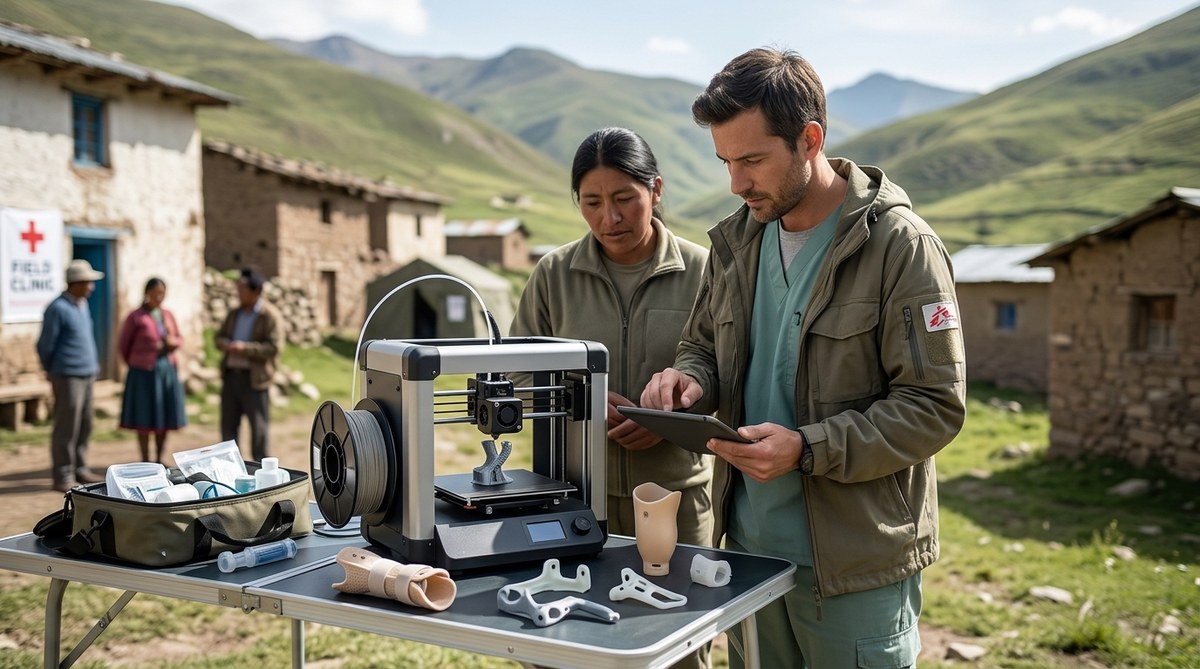
3D printing is transforming emergency care in remote areas by enabling on demand production of custom medical devices, surgical tools, and anatomical models. This technology reduces reliance on fragile supply chains, cuts costs by up to 90 percent, and allows clinicians to treat patients faster. From splints and airway manikins to hemostatic clamps, the applications are growing every year. Healthcare teams can deploy portable printers in the field and produce life saving equipment within hours, not weeks.
Why Remote Clinics Need a New Approach to Medical Supplies
The math is simple but brutal. Remote clinics serve populations spread across vast distances. Resupply is slow, expensive, and unpredictable. A health post in the Amazon basin might wait three months for a shipment of tracheal tubes. A mobile clinic in the Australian outback often runs out of cervical collars before the next truck arrives.
Traditional supply chains treat every clinic the same. They do not account for local disease patterns, unusual injury types, or cultural preferences. When a disaster strikes, the gap widens. A hurricane, earthquake, or flood can sever the last road link. At that point, a clinic with a 3D printer and a spool of filament becomes a self sufficient mini factory.
The Cost Barrier Fades
Commercial medical devices are expensive. Molds, tooling, and factory runs drive up prices. A single custom splint made through traditional manufacturing can cost hundreds of dollars. A 3D printed version uses a fraction of the material and runs on a machine that costs less than a used sedan. For a small clinic, the return on investment arrives with the first emergency case.
According to a 2025 study published in the Journal of Global Health, 3D printed surgical instruments can cost up to 90 percent less than their factory made counterparts. That difference matters when a rural hospital operates on a budget that would make a big city administrator flinch.
How 3D Printing Works in an Emergency Setting
Setting up a 3D printing workflow in a remote clinic is more straightforward than most people assume. Modern desktop printers are durable, energy efficient, and easy to maintain. Here is a typical step by step process that teams use today.
- Assess the clinical need. A patient arrives with an injury that requires a specific device. The clinician measures the affected area using a simple digital caliper or a smartphone scanning app.
- Download or design the file. Open source libraries like the NIH 3D Print Exchange host hundreds of validated medical designs. If a file does not exist, a clinician or remote volunteer can model one in CAD software within thirty minutes.
- Select the material. Medical grade PLA, PETG, or TPU are common choices. These materials are biocompatible, printable at low temperatures, and safe for short term contact with intact skin.
- Print the device. Most prints complete in one to four hours. The printer runs unattended. Staff can focus on patient care while the machine works.
- Clean and sterilize. The printed part is washed, dried, and treated with a disinfectant appropriate for the material. UV light or ethylene oxide gas works for most thermoplastics.
- Fit and adjust. The clinician applies the device to the patient. If the fit is off, they can tweak the digital file and reprint. No wasted inventory. No waiting for a replacement.
This process turns a clinic into a point of care manufacturing hub. The same printer that makes a splint in the morning can produce a training model for the afternoon shift.
Real Devices That Save Lives Today
The range of 3D printed medical devices used in remote emergency care is expanding every quarter. Here are some of the most impactful examples as of 2026.
| Device | Typical Use Case | Material | Print Time |
|---|---|---|---|
| Wrist splint | Fracture stabilization | PLA or PETG | 1.5 hours |
| Cervical collar | Spinal immobilization | TPU (flexible) | 3 hours |
| Hemostatic clamp | Bleeding control | PETG | 45 minutes |
| Airway manikin | Emergency training | PLA | 4 hours |
| Otoscope speculum | Ear exam | PLA | 20 minutes |
| Chest tube insertion trainer | Trauma training | PLA with silicone skin | 5 hours |
These devices are not stopgaps. Many meet or exceed the performance of commercially available alternatives. A 2024 field trial in rural Nepal found that 3D printed cervical collars provided equivalent immobilization to standard ones while costing 80 percent less.
Setting Up a Printing Station on a Shoestring
You do not need a million dollar lab to get started. A basic 3D printing station for emergency medicine fits on a small table and costs under $1,500. Here is what you need.
- A reliable desktop 3D printer (Prusa MK4 or Bambu Lab P1S are popular choices)
- Two spools of medical grade PLA filament
- A basic tool kit (scissors, pliers, sandpaper)
- A digital caliper for measurements
- A laptop or tablet with CAD software (Tinkercad or Fusion 360)
- Access to the internet for file downloads
- UV sterilization box or ethylene oxide wipes
“The most important piece of equipment is not the printer. It is the willingness to try. We trained a nurse in a remote Philippine island to design a finger splint in one afternoon. She printed it that night and applied it the next morning. That is the power of distributed manufacturing.” – Dr. Amara Osei, Global Health Engineer, University of California
Overcoming the Common Challenges
No technology is perfect. 3D printing in remote healthcare comes with hurdles that teams need to plan for.
Material Limitations
Not all plastics are suitable for medical use. Some degrade under UV light. Others cannot withstand standard sterilization temperatures. Teams should stock only FDA compliant or ISO 10993 tested filaments. Always check the manufacturer’s biocompatibility data sheet before printing a device that touches skin or mucous membranes.
Power Instability
Printers draw 100 to 300 watts during operation. In regions with unreliable electricity, a battery backup or solar powered system is essential. Portable power stations from brands like Jackery or EcoFlow can run a printer for several prints per charge.
Skill Gaps
Clinicians are not trained as engineers. The learning curve for CAD software can be steep. Partnering with remote volunteers or using simplified apps helps. Organizations like Field Ready offer free training modules specifically for medical 3D printing in low resource settings.
Regulatory Uncertainty
The FDA and other regulatory bodies have not fully caught up with point of care manufacturing. Most printed devices fall under the “custom device” exemption or are used for training, not direct patient care. Clinicians should keep detailed records of every print, including material lot numbers, print settings, and patient outcomes. This documentation builds the case for broader regulatory acceptance.
Training the Next Generation of Responders
3D printing is not just for devices. It is transforming emergency medicine training in remote areas. Printed anatomical models allow clinicians to practice procedures without cadavers or expensive simulators.
A printed airway manikin costs about $8 in materials. A commercial version costs $400 or more. For a training center that runs workshops every month, that difference adds up fast. Students can practice intubation, cricothyrotomy, and chest tube insertion on models that feel realistic and can be replaced in hours.
Several universities now ship pre sliced print files to partner clinics in low income countries. The clinic prints the models locally, runs the training session, and sends feedback. This model builds local capacity without creating dependency.
The Role of Community and Collaboration
No single clinic can design every device it needs. That is why open source communities are essential. Platforms like the NIH 3D Print Exchange, the Humanitarian Makers Collective, and the Global Surgical Training Challenge host thousands of validated designs. Anyone can download, modify, and improve them.
When a clinic in rural Kenya needed a specialized clamp for postpartum hemorrhage, a team in Canada designed it overnight. The file was uploaded, tested, and approved within 48 hours. The Kenyan clinic printed and used it the next week. That kind of global collaboration is the heart of the movement.
For healthcare professionals looking to expand their impact, consider joining one of these communities or contributing designs based on your own field experience. Every shared file strengthens the network.
Measuring the Impact in 2026
The data is becoming harder to ignore. A 2025 meta analysis of 37 studies found that 3D printed medical devices in remote settings achieved a 94 percent clinical success rate. Patient satisfaction scores were consistently high, especially for custom fit orthotics and splints.
Cost savings are equally compelling. A remote clinic that invests $2,000 in a printer and filament can recoup that investment in the first 10 emergency uses. After that, every device is essentially free aside from material cost.
The technology also reduces waste. Traditional manufacturing produces millions of devices that expire on shelves. 3D printing makes only what is needed, when it is needed. For clinics that struggle with storage space, that is a game changer.
A Practical Roadmap for Getting Started
If you are a healthcare professional or researcher exploring this space, here is a simple action plan.
- Start with one device. Pick a common need like finger splints or cervical collars. Print ten units. Test them on volunteers. Document everything.
- Join a community. Sign up for the NIH 3D Print Exchange or the Humanitarian Makers mailing list. Learn from others who have already solved the problems you will face.
- Run a pilot. Identify a partner clinic in a remote area. Ship them a printer and two spools of filament. Train one staff member remotely. Track outcomes for three months.
- Share your results. Publish a short report. Upload your file modifications. The field grows every time someone shares what they learned.
The path from idea to impact is shorter than you think. A single printer in one clinic can change the outcome for dozens of patients every month. Scale that across hundreds of clinics, and the effect becomes profound.
Looking Ahead at the Next Wave
By 2030, we will likely see portable printers that run on solar power and use recycled medical plastic as feedstock. Regulatory frameworks will mature, allowing broader use of printed devices for direct patient care. AI assisted design tools will let clinicians describe a device in plain language and receive a ready to print file in seconds.
For now, the opportunity is clear. The tools are affordable. The knowledge is free. The need is urgent. Every remote clinic that adopts 3D printing becomes more resilient, more capable, and more prepared for the next emergency.
Whether you work in a well equipped research hospital or a one room clinic in the highlands, the same technology can serve your patients. The only question is when you will start.
Bringing 3D Printing to Your Remote Practice
The evidence is in. 3D printing emergency medicine remote areas is not a theoretical concept anymore. It is a practical, proven method for delivering care where supply chains fail. Custom splints, training models, and surgical tools can be produced on site, on demand, and on a budget that works for even the most resource constrained clinic.
If you are ready to take the next step, start small. Pick one device. Print it. Test it. Share it. The global community of healthcare makers is waiting to welcome you. And the patients in those remote communities are counting on all of us to keep pushing the boundaries of what is possible.