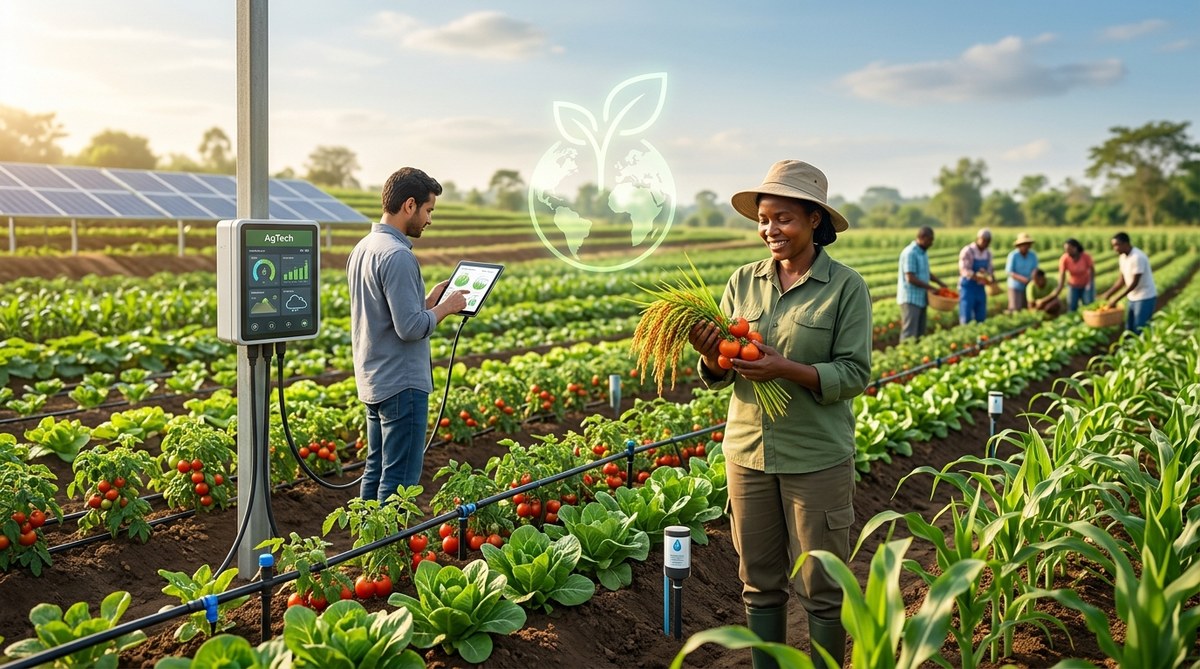
Can Climate-Smart Farming Solve World Hunger by 2026?
The clock is ticking. By 2026, global hunger numbers could either drop dramatically or climb past 800 million. Climate change is the wildcard. Heat waves, floods, and droughts are making traditional farming less reliable every year. But a growing movement believes we can flip the script. Climate-smart agriculture, or CSA, is not a silver bullet. It is a set of practices that boost yields, protect the environment, and help farmers adapt to a hotter planet. The question is whether it can scale fast enough to solve world hunger. The answer, according to the latest evidence, is cautiously optimistic. If we combine smart farming with stronger food systems and targeted aid, 2026 could be a turning point.
Climate-smart agriculture alone cannot end world hunger by 2026, but it is a critical piece of the puzzle. When paired with community-led food programs, better distribution networks, and policy reforms, CSA can significantly reduce hunger. The focus must be on scaling proven techniques, investing in smallholder farmers, and ensuring that resilience reaches the most vulnerable communities first.
What Is Climate-Smart Agriculture?
Climate-smart agriculture is a framework, not a single technology. The Food and Agriculture Organization defines it around three pillars: sustainably increasing productivity, adapting to climate change, and reducing greenhouse gas emissions wherever possible. In practice, it looks like cover cropping, improved water management, drought tolerant seeds, agroforestry, and precision farming techniques. It is context specific. A farmer in sub Saharan Africa needs different tools than a grower in the American Midwest. But the goal is the same: produce more food on the same land while building resilience.
How Climate-Smart Farming Directly Addresses Hunger
Hunger is not just about a lack of calories. It is about access, stability, and nutrition. Climate smart practices tackle all three.
- Higher yields on degraded land: Techniques like intercropping and conservation agriculture can double yields on marginal soils.
- Reduced crop losses: Early warning systems and resilient varieties cut losses from droughts and floods.
- Improved nutrition: Diverse planting (vegetables, legumes, fruit trees) provides a more balanced diet than monocultures.
- Lower input costs: Using less synthetic fertilizer and pesticide saves money for smallholder families.
- Stable incomes: When farms survive climate shocks, families do not fall into hunger cycles.
A 2025 study from the World Bank found that CSA adoption in ten African countries reduced food insecurity by 19 percent over two seasons. That is not theoretical. It is happening.
Three Practical Steps to Implement Climate Smart Agriculture
For development professionals and policy researchers, here is a straightforward process to scale CSA in vulnerable regions.
-
Assess local climate risks and farming systems. You cannot prescribe a solution without understanding what farmers face. Start with participatory mapping of rainfall patterns, soil health, and common pests. Involve farmers in every step.
-
Select a bundle of practices that fit the context. Do not just hand out drought tolerant seeds. Pair them with water harvesting techniques, training on planting dates, and access to weather data. The bundle should also include nutrition crops, like cowpea or amaranth, to address dietary gaps.
-
Create an enabling environment. Farmers need more than knowledge. They need credit to buy seeds, storage to keep harvests, and markets to sell surplus. Work with local cooperatives, microfinance institutions, and transport providers. Without this support, even the best techniques will not reduce hunger.
For more on the community side, check out community-led food security programs that integrate CSA with local governance.
A Closer Look at Techniques and Common Pitfalls
Not every climate smart practice works everywhere. Below is a table that matches techniques to common challenges and notes where programs often go wrong.
| CSA Technique | Best Fit For | Common Mistake |
|---|---|---|
| Drought tolerant maize | Semi arid zones with 400 700mm rainfall | Assuming it needs no water at all; still requires one or two well timed rains |
| Agroforestry (planting trees in fields) | Deforested slopes, coffee and cocoa regions | Planting only exotic species instead of native trees that support local ecosystems |
| Alternate wetting and drying (rice) | Irrigated rice paddies in Asia | Cutting water too early, which stresses the plant and reduces yield |
| Cover cropping | Temperate and humid tropics | Not terminating the cover crop in time, which competes with the main crop |
| Solar powered drip irrigation | Areas with abundant sun but scarce water | Skipping training on maintenance; pumps break within months |
Notice a pattern? The sticky mistakes are usually about adaptation and training, not the tools themselves. Farmers need ongoing support, not a one time handout.
Expert Advice on Scaling CSA
Dr. Esther Ngumbi, an entomologist and food security researcher at the University of Illinois, puts it plainly:
“Climate smart agriculture is not a luxury for rich countries. It is survival for smallholder farmers. The technologies work, but we have to stop treating them as pilot projects. Governments and donors must commit to at least a decade of sustained investment in farmer training, seed systems, and local research. Otherwise, we will keep reinventing the wheel and hunger will persist.”
Her point echoes what many field practitioners see: short term projects often create a brief improvement, then fade. To solve hunger by 2026, we need policy that locks in these practices for the long haul.
Real World Progress in 2026
Several countries are already showing what is possible. In Ethiopia, the climate resilient green economy strategy has trained over 5 million farmers in conservation agriculture and watershed management since 2022. Maize yields in those areas are 30 percent higher than in non participant zones. In Bangladesh, floating gardens and salt tolerant rice varieties have allowed communities in the delta to keep growing food despite rising sea levels. And in the United States, the USDA’s climate smart commodities pilot is paying farmers to adopt practices like no till and cover cropping, with early data showing a measurable boost in soil carbon and water retention.
But scaling remains uneven. Funding for CSA in low income countries still falls short by billions of dollars per year. That is where organizations like Food First step in, connecting donors with vetted projects that deliver meals and training on the ground. If you want to see how technology can also play a role, read about harnessing technology to improve food distribution in developing countries.
Building a Hunger Free Future Starts Now
Climate smart agriculture is not a magic wand. It cannot fix broken supply chains, corrupt governance, or armed conflict. But it is one of the most powerful tools we have to stabilize food production in a warming world. The evidence from 2025 and early 2026 shows that when CSA is deployed with intention, it reduces hunger, improves nutrition, and gives farmers a fighting chance.
For researchers and advocates, the priority is clear: push for policies that fund long term training, reward soil health, and support women farmers (who grow most of the food in many hungry regions). For development professionals, focus on bundling practices, building local markets, and measuring impact. And for everyone reading this, remember that ending hunger is not a distant dream. It is a choice. We have the practices, the data, and the know how. What we need now is the will to use them at scale.