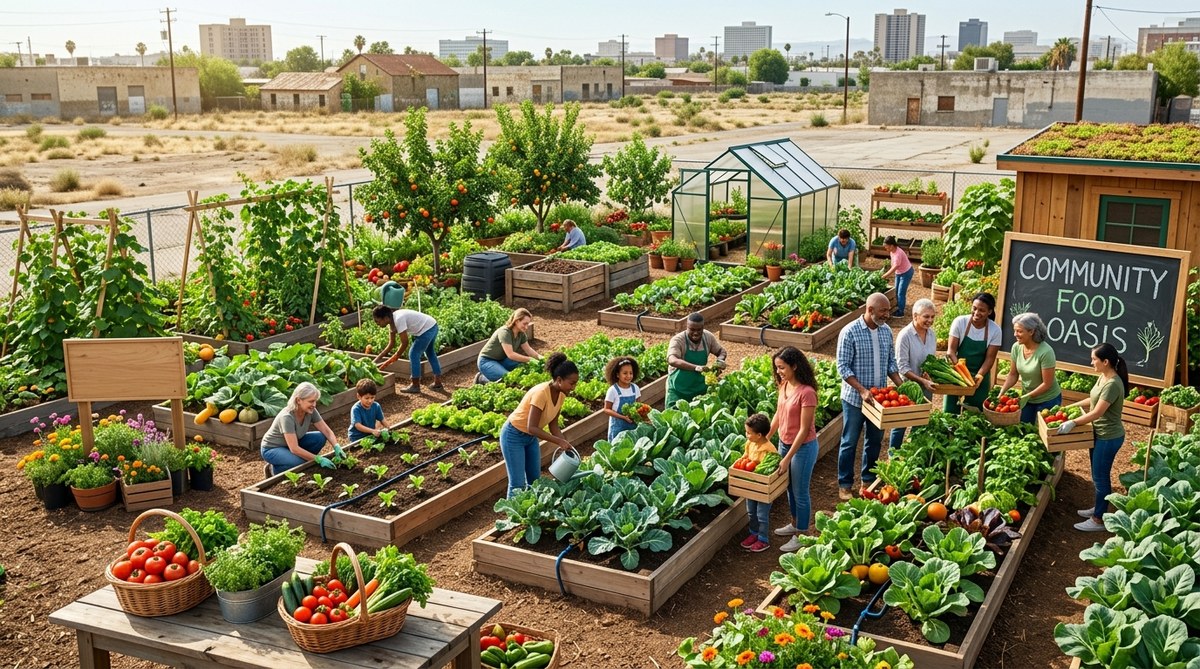
How to Turn Food Deserts into Food Oases: A Step-by-Step Guide
Picture a neighborhood where the closest grocery store is two bus rides away. The corner bodega sells chips, soda, and canned goods, but fresh apples or spinach are nowhere to be found. This is a food desert, a reality for millions across the United States. But it doesn’t have to stay that way. Across the country, communities are flipping the script. They are turning these nutritionally barren areas into actual food oases where fresh, affordable, and culturally relevant food is accessible. In 2026, the movement is accelerating. This guide gives you a clear path from vision to reality.
Turning a food desert into a food oasis requires more than adding a grocery store. You need community buy in, smart logistics, policy changes, and local food production. The process follows six stages: assess, engage, plan, activate, sustain, and scale. Every step builds long term food sovereignty.
What a Real Food Oasis Looks Like
A food oasis isn’t just a place with a supermarket. It’s a web of solutions. Think farmers markets that accept SNAP, community gardens in vacant lots, mobile markets that stop at senior centers, and corner stores that stock produce from local farms. It’s also about dignity. People choose their food, not the other way around.
Before you start, you need to understand the problem. A true food desert is defined by low income and limited access to nutritious food within a mile in urban areas or 10 miles in rural zones. But the official USDA definition misses nuance. Existing data often overlooks cultural food preferences, store hours, and transportation barriers. You have to look deeper.
Step by Step: How to Turn Food Deserts Into Food Oases
Here is a practical six step process. Each step builds on the last. You can adapt the order based on your community’s readiness.
1. Map the Reality, Not Just the Statistics
Start with a community food assessment. Do not rely only on government data. Walk the neighborhood. Count what is actually available in each store. Talk to residents about what they want to eat and where they currently shop. Use the USDA’s Food Access Research Atlas as a baseline, but pair it with a local survey.
Important questions to ask:
- Which bus routes connect people to food sources?
- How many fresh produce items are within a 15 minute walk?
- What are the top cultural foods people miss?
- How many households rely on SNAP or WIC?
Publish your findings. Transparency builds trust.
2. Build a Coalition That Looks Like the Community
You cannot fix a food desert alone. Gather residents, local business owners, health clinics, schools, faith groups, and the local government. This coalition should reflect the racial and economic diversity of the area. Resist the urge to lead from the top.
Instead, empower a resident steering committee. They will tell you what has been tried before and why it failed. Listen carefully.
3. Pick the Right Interventions for Your Context
There is no one size fits all solution. Use the table below to match strategies to common barriers.
| Barrier | Effective Solution | Mistake to Avoid |
|---|---|---|
| No grocery store within a mile | Small format grocery or co op | Assuming a big box store will open |
| Poor public transit | Mobile market or ride share voucher program | Focusing only on store location |
| Lack of cooking skills | Free nutrition classes at community center | Ignoring skill gaps and expecting change overnight |
| High food prices | Double SNAP value at farmers market | Asking people to pay full price for local produce |
| Limited land for gardens | Raised beds in schoolyards or church property | Overlooking permit rules for vacant land |
| Low demand for produce | Taste tests, cooking demos, community supported ag | Assuming demand is absent instead of untapped |
4. Secure Funding and Policy Support
Money makes the plan real. Apply for USDA grants like the Healthy Food Financing Initiative or the Gus Schumacher Nutrition Incentive Program. Also look at city level food policy councils. Many cities have food access funds or land use incentives for urban agriculture.
On the policy side, push for zoning changes that allow community gardens in residential areas. Remove restrictive licensing for mobile food vendors. In 2026, more than 30 cities have adopted food equity ordinances that prioritize new grocery stores in underserved tracts. Align your plan with those laws.
5. Launch with a Signature Project
Do not try to do everything at once. Pick one visible project that builds momentum. A pop up farmers market in a vacant lot is a great starter. Or a corner store conversion where you help a small shop add fresh produce and a refrigerator.
Make sure the project is co designed with the community. If residents want tropical fruits or specific spices, stock them. Celebrate the opening with a block party. Invite local media. Show that change is possible.
6. Track Outcomes and Iterate
Set clear metrics. Track pounds of fresh food sold, number of new SNAP customers, household satisfaction surveys, and health indicators. Report progress quarterly to the coalition.
When something is not working, adjust. Maybe the market hours are wrong. Maybe the store needs better signage. Keep experimenting. An oasis is a living system, not a monument.
Common Pitfalls That Stall Progress
I have seen ambitious programs fail for the same reasons year after year. Here are three traps and how to sidestep them.
Trap 1: The supply side fantasy. Many planners assume that if you build a grocery store, people will come. But if the store sells expensive organic kale that nobody knows how to cook, it will sit on the shelf. You must also address demand through education, pricing, and cultural relevance.
Trap 2: Ignoring the existing food landscape. Corner stores and fast food restaurants are already there. Instead of competing, partner with them. Help a corner store owner upgrade their refrigerator. Give them a loan to buy a walk in cooler. That relationship is already trusted.
Trap 3: Short term funding, long term expectations. Grants often run for one to three years. But changing a food system takes five to ten years. Build a sustainability plan from day one. Create a nonprofit, a co op, or a community land trust that can own assets and generate ongoing revenue.
“You can’t parachute a solution into a community. You have to walk alongside people for years. The most successful food oasis in my city took seven years to become self sustaining. Patience is a strategy.”
— Maria Herrera, Director of Food Equity, Detroit Food Policy Council
Tools and Technology You Can Use in 2026
The toolkit for food oasis creation has grown significantly. You can use GIS mapping software to layer store locations, income levels, and bus routes. Mobile apps allow SNAP recipients to order fresh groceries online and pick them up at schools or clinics. Indoor vertical farming units are now affordable enough for a church basement.
For smaller cities, a community solar powered greenhouse can supply greens year round. Start up costs have dropped by 40 percent since 2023. Check out our guide on how community gardens are tackling food deserts across America for a deeper look at that model.
Moving From Pilot Program to Systemic Change
A single oasis is a win. But the goal is to change the whole system. That means advocating for statewide policies. In 2026, Illinois and New York passed laws requiring all new supermarket developments over a certain size to include a community benefit agreement that funds local food access. California expanded its Healthy Stores program to 200 rural communities.
You can replicate these wins. Build relationships with your state department of agriculture. Attend the annual conference of the National Food Access Network. Learn from peers.
Also, think about the next generation. School meals are a huge opportunity. If kids eat healthy at school, they become advocates at home. Programs that combine school gardens with cafeteria sourcing create a pipeline for local produce. Our article on why school meal programs are essential for breaking the cycle of poverty explains how.
Your First Step This Week
You do not need a grant or a city council seat to start. Your first step is simple: have a conversation with three neighbors who live in the food desert. Ask them what they would eat if it were easy to get. Write down their answers.
That one conversation will teach you more than any report. Then share what you learn with a local community organization. From there, the coalition begins. The path from desert to oasis is paved with relationships, small wins, and steady commitment.
This guide is part of our ongoing series on food sovereignty. For more actionable frameworks, read about building resilient food systems to end global hunger.