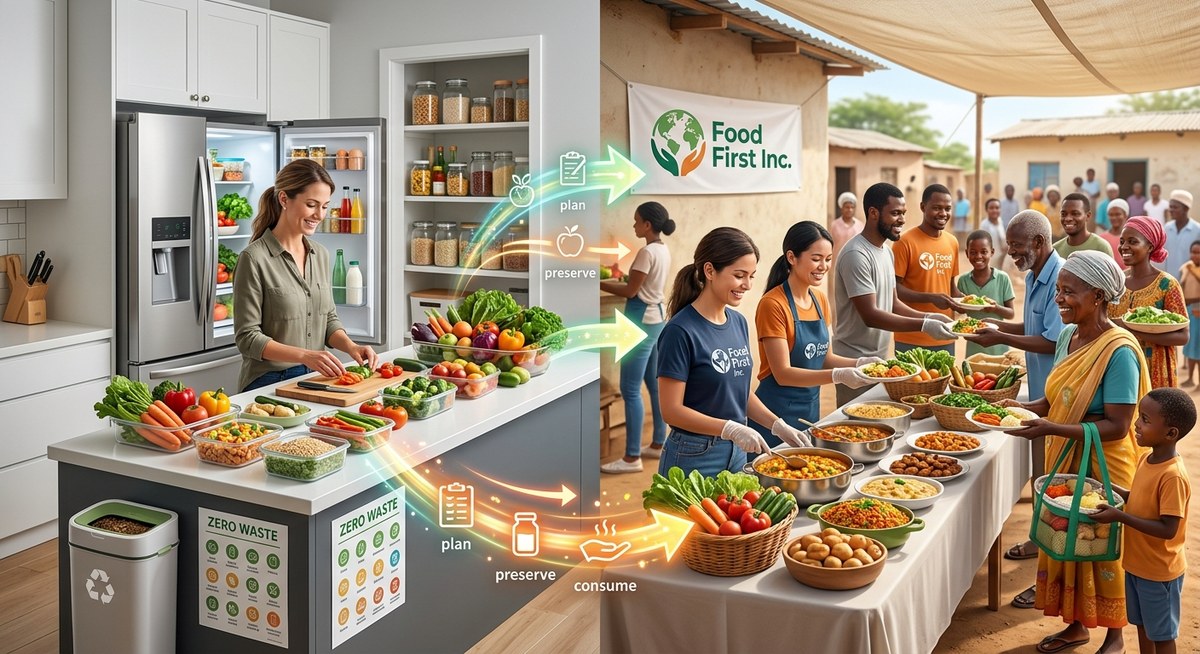
How to Reduce Food Waste and Feed Millions: A Practical Guide
Every year, Americans throw away enough food to fill 140 football stadiums. That waste happens in homes, restaurants, grocery stores, and farms. At the same time, one in eight families struggles to put meals on the table. The link between food waste and hunger is clear. The good news is that you can help close that gap. This guide shows you exactly how to reduce food waste in your own kitchen, at your business, or through policy change. Small shifts add up to big results. Let’s walk through them together.
Reducing food waste doesn’t require a complete lifestyle overhaul. Start with better planning: shop with a list, store produce correctly, and treat leftovers as ingredients. For businesses, a waste audit reveals quick savings. At the policy level, supporting food recovery programs and composting infrastructure can redirect millions of meals. Every action, no matter how small, keeps food out of landfills and on tables.
Understanding the Scale of Food Waste
Food waste is a huge problem. In the United States, 30 to 40 percent of the food supply ends up as waste. That is roughly 80 million tons each year. The financial cost? Over $400 billion annually. And the environmental impact is just as heavy. When food decomposes in landfills, it releases methane, a potent greenhouse gas. If food waste were a country, it would be the third largest emitter of greenhouse gases after the United States and China.
But there is a flip side. Every pound of food saved is a pound that can feed someone in need. Organizations across the country are working to bridge that gap. Programs like community-led food security programs are showing that local action can have global reach. And you do not need to be a nonprofit director to make a difference.
Practical Steps for Households: A 7 Day Plan
You can start reducing waste tonight. Here is a numbered list of seven steps that work for any household. Try one each day this week.
-
Shop with a list and stick to it. Plan meals for the week. Write down exactly what you need. Buy only those items. This simple habit cuts impulse buys and overstocking.
-
Store food so it lasts longer. Many fruits and vegetables belong in the fridge, but some (like bananas, tomatoes, and potatoes) do better on the counter. Keep ethylene producing fruits (apples, avocados) away from sensitive produce (leafy greens, berries). Use airtight containers for opened packages.
-
Understand date labels. “Sell by,” “use by,” and “best before” dates are not federal safety standards except for infant formula. Most foods are still safe to eat past that date if stored properly. Use your senses: look, smell, taste. Do not throw away food just because the date passed.
-
Turn leftovers into new meals. Leftover roasted vegetables become soup. Stale bread becomes croutons or breadcrumbs. Cooked rice becomes fried rice. Think of leftovers as ingredients, not trash. Freeze portions that you cannot eat within three days.
-
Compost fruit and vegetable scraps. Even with the best planning, some scraps are unavoidable. Composting keeps them out of the landfill and creates nutrient rich soil for your garden. If you do not have space, check for municipal composting programs.
-
Donate non perishable items you won’t use. Canned goods, unopened pasta, and other shelf stable foods that you bought but never touched can go to a local food bank. Many pantries welcome donations year round.
-
Track your waste for a week. Write down what you throw away. Is it produce that went bad? Leftovers that sat too long? The pattern will show you where to adjust. Once you see the weak spot, you can fix it.
What Businesses and Restaurants Can Do
If you run a restaurant, grocery store, or cafeteria, your food waste adds up fast. But you can turn that waste into savings and community impact. Here are actions that leading businesses are using today:
- Conduct a waste audit. Sort your trash for a few days and weigh what gets thrown out. Identify the biggest sources: prep waste, plate waste, spoilage. Focus on the top three categories first.
- Partner with food recovery organizations. Many nonprofits will pick up unsold, edible food and deliver it to shelters and soup kitchens. This keeps food out of dumpsters and helps your community.
- Train staff on proper storage and portion control. Teach line cooks to trim vegetables efficiently. Train servers to ask about portion sizes. Small changes in handling reduce spoilage.
- Adjust menu portions and offerings. Offer half sizes or flexible sides. Use the same ingredient in multiple dishes to avoid leftovers. Track which menu items generate the most waste and modify them.
- Accept imperfect produce. “Ugly” fruits and vegetables are just as nutritious. Use them in soups, sauces, or smoothies. Some suppliers now sell discounted “wonky” boxes.
- Implement FIFO (first in, first out). Rotate stock so older items are used before newer ones. This is a simple rule that can cut spoilage by 20 percent or more.
For more inspiration, read about innovative strategies to combat hunger in vulnerable communities. Many of those solutions rely on businesses and food suppliers working together.
Common Mistakes vs. Best Practices
A quick reference table can help you spot where you might be wasting food without realizing it.
| Common Mistake | Best Practice | Impact |
|---|---|---|
| Buying in bulk without a plan | Only buy bulk for items you use often and can store properly | Saves money and reduces spoilage |
| Storing all produce in the fridge | Separate fruits that ripen after picking (e.g., avocados) from those that don’t | Extends shelf life by days or weeks |
| Throwing away vegetable peels and stems | Use peels for stock, stems for stir fries | Turns waste into flavor |
| Ignoring the freezer for leftovers | Freeze leftovers in single serving portions | Prevents forgotten food from going bad |
| Not donating food that is still edible | Contact a local food bank or use an app like Food Rescue | Feeds people and reduces landfill methane |
Expert Advice: A Food Recovery Specialist Weighs In
We spoke with Maria Torres, a food recovery coordinator at a regional food bank who has worked in hunger relief for over a decade. Her advice is grounded in real world experience.
“The biggest barrier I see is not knowing where to start. People think they have to do everything at once. But the truth is, if you just start paying attention to what you throw away, you naturally begin to waste less. I tell families to pick one meal per week that is completely made from leftovers. That one habit can cut household waste by 20 percent or more. And for businesses? Don’t let good food go to waste because you are afraid of liability. The Bill Emerson Good Samaritan Food Donation Act protects you. Please donate.”
Her message is clear: start small, stay consistent, and don’t let perfectionism get in the way.
Systemic Changes: Policies and Community Efforts
Individual action matters, but real change also needs policy support. Here are three systemic shifts that can accelerate progress:
- National date labeling reform. Congress is currently reviewing the Food Date Labeling Act, which would standardize date labels to reduce consumer confusion. If passed, it could prevent millions of tons of unnecessary waste.
- Expanded composting infrastructure. Many cities still lack curbside compost pickup. Investing in composting facilities and collection programs can divert food scraps from landfills.
- Tax incentives for food donations. Some states already offer tax credits for businesses that donate unsold food. Expanding these incentives nationwide could encourage more companies to participate.
Communities are also taking matters into their own hands. Programs like empowering local food initiatives to end hunger worldwide show how grassroots groups can create food recovery networks that work. When people band together, they can rescue food that would otherwise be wasted and get it to those who need it most.
Your First Step to a Zero Waste Kitchen
You have the tools. Now it is time to act. Pick one habit from the household list and try it today. Maybe it is making a shopping list before your next grocery run. Maybe it is freezing tonight’s leftovers. Every meal you save is a small victory. Over time, those victories stack up.
And if you are a business owner or policymaker, use the ideas here as a starting point. Talk to your team. Run a waste audit. Reach out to a local food bank. The resources exist. The only missing piece is the decision to start.
Together, we can change the story of food waste. One meal at a time.