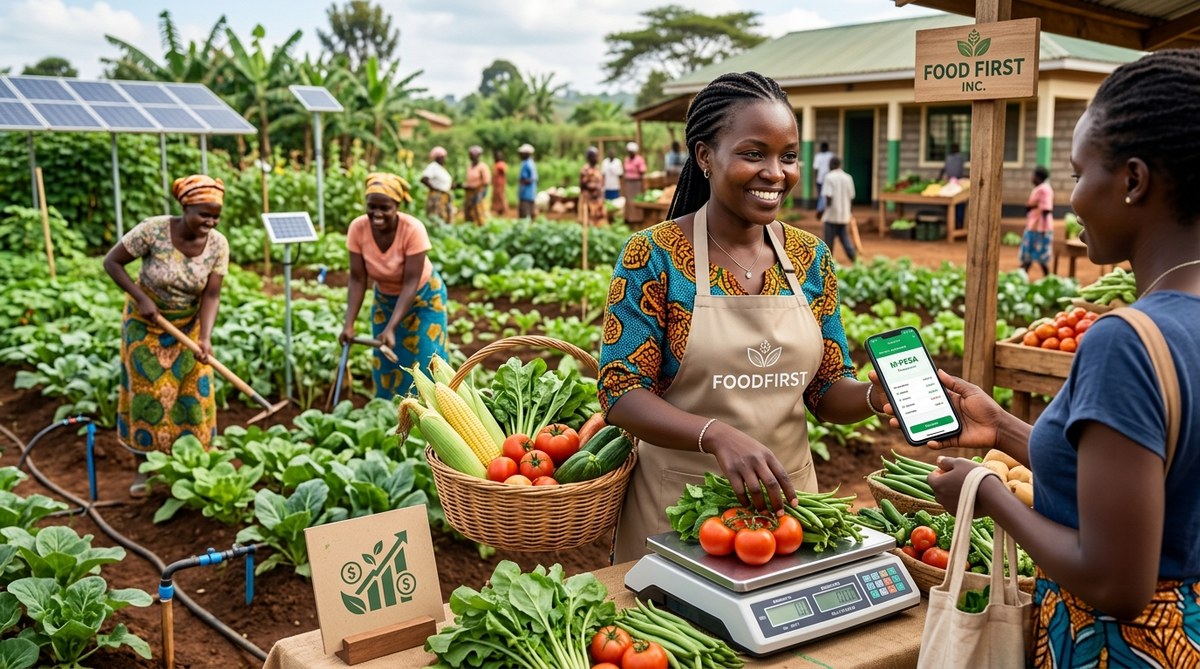
The Surprising Link Between Food Security and Women’s Economic Empowerment in 2026
For decades, development programs treated hunger as a technical problem. They focused on crop yields, irrigation systems, and supply chains. Those things matter. But they missed a deeper truth. When women gain economic power, entire communities eat better. The connection between women’s economic empowerment and food security is not a side note. It is the main story. In 2026, as climate pressures and conflict continue to strain global food systems, understanding this link is more urgent than ever.
Women’s economic empowerment is a direct driver of household and community food security. When women control income, they invest more in nutrition, education, and local agriculture. This article presents the evidence, outlines three practical pathways for program design, and offers a clear framework for measuring impact. It is written for policy researchers and program officers who need actionable, evidence-based strategies.
Why Income in Women’s Hands Changes Food Systems
The data is consistent across continents. A woman who earns her own income spends it differently than a man in the same household. She prioritizes food, healthcare, and children’s education. A 2023 study from the World Bank found that when women control household budgets, spending on food increases by up to 24 percent. That is not a small shift. It is a structural change in how resources flow.
This pattern holds true in rural farming communities and urban slums alike. In Ethiopia, women who participated in savings groups were 40 percent more likely to have enough food year-round. In Bangladesh, female garment workers send a higher share of their wages home for food than their male coworkers. The pattern is not cultural. It is economic. When women have agency over money, hunger recedes.
For policy researchers, this means that any food security strategy that ignores gender dynamics is incomplete. For NGO program officers, it means that microloans and business training for women are not just empowerment tools. They are hunger-fighting tools.
The Three Pathways That Connect Empowerment to Food Security
The relationship between women’s economic empowerment and food security works through three interconnected pathways. Understanding these helps program designers target their resources more effectively.
-
Direct investment in household nutrition. Women with income buy more diverse and nutritious food. They purchase fruits, vegetables, and protein sources that reduce stunting and micronutrient deficiencies. This is not about more calories. It is about better calories.
-
Increased agricultural productivity. When women farmers have access to credit, land rights, and training, their yields rise. The Food and Agriculture Organization estimates that closing the gender gap in agricultural productivity could reduce the number of hungry people by 100 to 150 million. That is a staggering number. It comes from something as simple as letting women buy seeds and fertilizer.
-
Strengthened community resilience. Women with economic power become decision-makers in their communities. They join local councils, influence market prices, and advocate for better infrastructure. This shifts the entire food system toward greater equity and stability.
These pathways are not theoretical. They are visible in programs run by organizations like Food First. Our work in shows that when women lead, food distribution becomes more fair and more consistent.
What Works: A Practical Framework for Program Design
Not all interventions are equal. Some approaches consistently outperform others. The table below breaks down effective strategies versus common mistakes.
| Strategy | How It Works | Why It Works |
|---|---|---|
| Direct cash transfers to women | Funds go into her account, not her husband’s | She controls spending decisions |
| Savings and loan groups for women | Group accountability and peer support | Builds financial literacy and trust |
| Land rights and tenure security for women | Legal ownership of farmland | Increases investment in soil and crops |
| Common Mistake | What It Does | Why It Fails |
| Training men to “share” decisions | Leaves power structures unchanged | Men often ignore training |
| Giving resources to the household head | Resources get diverted | Women rarely see the money |
| One-time training without follow-up | Skills fade without practice | No lasting behavior change |
The lesson is clear. Programs must put resources directly into women’s hands. Intermediaries and male gatekeepers dilute the impact.
Measuring What Matters: Key Indicators for Researchers
If you are writing a grant proposal or designing an evaluation, you need specific metrics. The following indicators are widely accepted by development economists and are used in major global surveys like the Demographic and Health Surveys.
- Women’s control over income. Not just whether she earns money, but whether she decides how to spend it.
- Dietary diversity score. A simple count of food groups consumed by women and children in the last 24 hours.
- Time spent on unpaid care work. Women with economic power often hire help, freeing time for income generation.
- Women’s membership in agricultural cooperatives or market groups. A proxy for economic agency.
- Household food expenditure share. The percentage of total spending that goes to food.
These indicators allow you to track change over time. They also help you compare across programs and regions.
A Step-by-Step Process for Program Officers
If you are building a new program or retrofitting an existing one, follow this numbered process. It is based on lessons from successful projects in sub-Saharan Africa and South Asia.
-
Conduct a gender audit of your current food security program. Identify where women are excluded from decision-making, credit access, or land ownership. Map the gaps.
-
Design interventions that transfer resources directly to women. This could be cash, seeds, livestock, or training. Avoid male intermediaries wherever possible.
-
Pair economic support with nutrition education. Income alone is not enough. Women need to know which foods provide the best nutrition for their families.
-
Build peer networks and savings groups. Women learn best from each other. Groups provide accountability and emotional support.
-
Track the right indicators from day one. Use the metrics listed above. Collect baseline data before the program starts.
-
Adjust based on feedback. Hold regular listening sessions with participants. Ask what is working and what is not. Be willing to change course.
This process is not rigid. It is a starting point. Adapt it to your local context.
Why This Link Is Critical in 2026
The world is facing a perfect storm. Climate change is disrupting harvests. Conflict is displacing millions. Supply chains remain fragile. In this environment, the most effective investments are those that strengthen the entire system. Women’s economic empowerment does that.
When women are economically secure, they invest in their children’s nutrition. Those children grow up healthier and more productive. They break the cycle of poverty. This is not a distant hope. It is happening right now in programs across the globe.
For development economists, this means that food security models must include gender variables. For NGO program officers, it means that empowerment programs are not a separate silo. They are central to ending hunger.
“We have spent decades trying to feed hungry people. It is time to invest in the people who feed the world. Women are the backbone of food systems. When we support them, everyone eats.” — Dr. Agnes Oloo, Senior Researcher, Food First
What to Do with This Information
If you are writing a grant proposal, use the indicators and pathways in this article as your framework. Cite the data on women’s spending patterns and agricultural productivity gains. Show funders that you understand the evidence.
If you are designing a program, start with the step-by-step process above. Conduct a gender audit. Build direct transfer mechanisms. Track the right metrics.
If you are a researcher, dig into the data. Look at how women’s control over income correlates with child stunting rates in your region. Publish your findings. Add to the evidence base.
The link between women’s economic empowerment and food security is not surprising. It is logical. It is also underfunded and understudied. That is changing. You can be part of that change.
The Path Forward for Policy and Practice
The evidence is clear. The pathways are known. The tools exist. What is missing is political will and consistent funding. In 2026, we have an opportunity to shift the conversation. Instead of asking “how do we feed people,” we can ask “how do we empower the people who feed their communities.”
That shift starts with you. Whether you are writing a report, designing a grant, or running a program, you can center women’s economic power. You can build food security from the ground up.
For more on how community-led approaches are transforming lives, read about If you are interested in the role of technology in food distribution, see And for a deeper look at breaking the cycle of poverty, visit
The link between women’s economic empowerment and food security is not a theory. It is a proven strategy. Use it.