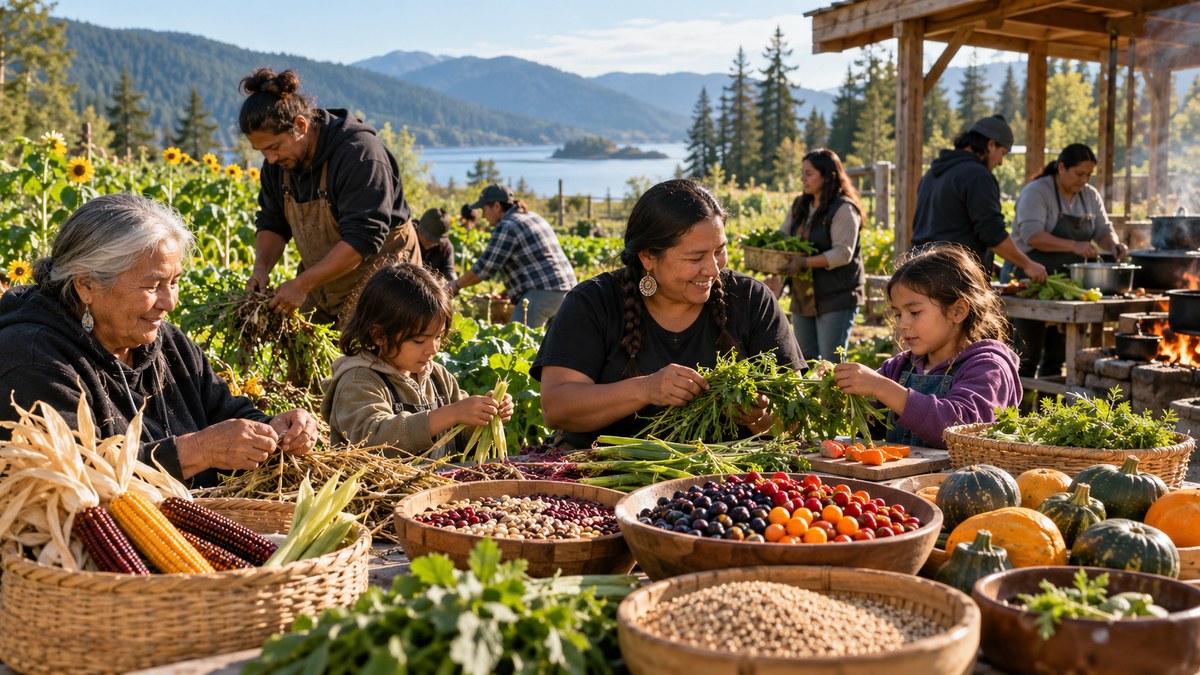
How Food Sovereignty Is Giving Indigenous Communities Control Over Their Own Nutrition in 2026
For decades, food aid programs treated Native communities as passive recipients. Boxes of shelf-stable milk, canned vegetables, and white flour arrived on reservations, often with little regard for traditional diets or local agriculture. The result was a public health crisis. Rates of diabetes, heart disease, and obesity soared. But in 2026, a powerful shift is underway. Indigenous communities across the United States are rejecting the old model of food charity. They are building their own food systems based on ancient knowledge, modern science, and a radical idea: that a community should control its own nutrition.
Indigenous food sovereignty is not just about growing traditional crops. It is about political power, land rights, and cultural survival. In 2026, tribes are using seed banks, food policy councils, and youth education programs to reclaim control. This shift reduces diet-related disease, strengthens local economies, and restores relationships with the land. For advocates and researchers, the movement offers a replicable model of community-led nutrition.
What Makes Food Sovereignty Different from Food Security
Food security means having enough calories to survive. Food sovereignty means having the right to decide what those calories are, where they come from, and how they are produced. For indigenous communities, this distinction is everything.
The mainstream food system often treats Native foods as exotic or irrelevant. Commodity foods shipped to reservations are high in sugar and refined grains. Meanwhile, traditional foods like wild rice, bison, and amaranth are pushed aside. Food sovereignty flips that script. It puts decision-making power back into the hands of tribal councils, elders, and local farmers.
In practice, this looks like the Navajo Nation launching a sheep and wool cooperative. It looks like the Ojibwe restoring wild rice beds in the Great Lakes region. It looks like the Blackfeet Nation rebuilding a buffalo herd on the Montana plains. Each of these projects is a statement of autonomy.
The Four Pillars of Indigenous Food Sovereignty
Researchers often break the movement into four core principles. These pillars help explain why food sovereignty is more effective than traditional aid at improving long-term health outcomes.
| Pillar | What It Means | Common Mistake to Avoid |
|---|---|---|
| Land Rights | Tribes must control the land where food is grown. | Assuming federal trust land is sufficient. Many reservations lack arable soil or water rights. |
| Cultural Knowledge | Traditional seeds, recipes, and harvesting methods are preserved and taught. | Treating traditional knowledge as a museum piece rather than a living practice. |
| Local Decision-Making | Tribal food policy councils set priorities, not outside donors. | Letting grant funders dictate what crops are planted. |
| Economic Independence | Food dollars stay within the community through cooperatives and local markets. | Building a garden without a distribution plan. |
When all four pillars are in place, communities see real change. Diabetes rates drop. Youth are more engaged in school. Local economies grow.
How Communities Are Putting Sovereignty into Practice
The shift from theory to action requires concrete steps. Here is how several tribes are making food sovereignty a reality in 2026.
-
Seed rematriation projects. Seeds are not just genetic material. They carry stories and resilience. The Cherokee Nation, for example, works with seed banks to bring back corn varieties that were nearly lost. These seeds are adapted to local climates and require less water than commercial hybrids.
-
Tribal food policy councils. These councils bring together elders, farmers, health workers, and youth. They write food guidelines for schools, hospitals, and community centers. One council in the Pacific Northwest banned soda from tribal events and replaced it with traditional berry drinks.
-
Youth apprenticeship programs. Teenagers learn to hunt, fish, and farm from elders. They also study food science and business. The goal is to create a new generation of indigenous food leaders who can run farms and food businesses.
-
Landback and agricultural trusts. Some tribes are purchasing ancestral lands that were lost. These lands are placed in conservation trusts and used for sustainable agriculture. The Intertribal Agricultural Council reports that landback purchases for food production have increased by 40% since 2023.
-
Farm-to-school programs. Schools on reservations now source ingredients from tribal farms. Kids eat bison burgers, wild rice bowls, and squash soup. This is not just about nutrition. It is about identity. Children learn that their culture is not a history lesson. It is a living, breathing way of life.
A Common Challenge: Balancing Tradition and Modern Science
Some advocates worry that food sovereignty means rejecting all modern techniques. That is a misunderstanding. The best projects blend old and new.
“We do not have to choose between our grandmother’s garden and a greenhouse. We can have both. The key is who makes the decisions. When our people control the technology, it becomes a tool for liberation, not assimilation.” — Dr. Maria Yellowhorse, indigenous food systems researcher at the University of Arizona
The table below shows how communities are merging traditional wisdom with modern tools.
| Traditional Practice | Modern Adaptation | Result |
|---|---|---|
| Three Sisters planting (corn, beans, squash) | Vertical planting with drip irrigation | Higher yields with less water |
| Seasonal hunting and fishing | Community freezer programs with GPS tracking | Year-round protein access without overharvesting |
| Seed saving | Climate-controlled seed banks with digital cataloging | Crop resilience in drought years |
| Ceremonial food sharing | Mobile app for coordinating community feasts | Reduced food waste and stronger social ties |
Why This Movement Matters for Policy Researchers
For academics and policy advocates, indigenous food sovereignty offers a case study in effective, community-led development. It challenges the assumption that food insecurity is simply a supply problem. In many cases, the problem is not a lack of food. It is a lack of control.
When researchers study these projects, they see lower rates of food insecurity, better mental health outcomes, and stronger community cohesion. The data is clear. Communities that control their own food systems are healthier than those that rely on external aid.
This has implications for federal policy. The 2023 Farm Bill included new provisions for tribal food sovereignty, but implementation has been uneven. Researchers can help by documenting best practices and pushing for funding that goes directly to tribal governments, not just to non-Native nonprofits.
For a deeper look at how community-led programs are reshaping food access, read about how community-led food security programs are transforming lives worldwide.
Practical Steps for Advocates and Researchers
If you want to support indigenous food sovereignty in 2026, here are some actionable steps.
- Listen first. Do not walk into a community with a plan. Ask what they need. Often, the most urgent need is not seeds or land. It is legal support for water rights or funding for a processing facility.
- Amplify indigenous voices. When you write a paper or give a talk, cite indigenous scholars. Invite tribal leaders to speak at conferences. Pay them for their time.
- Redirect funding. If your organization gives grants, prioritize tribes over large NGOs. Smaller grants with fewer strings attached are often more effective.
- Share resources. Seed catalogs, soil testing kits, and food safety training materials are often hard to access on reservations. A simple digital library can make a difference.
For more on how local initiatives are building resilience, check out empowering communities through local support initiatives.
A Look at the Numbers: Why This Approach Works
The evidence for food sovereignty keeps growing. A 2025 study from the Native American Food Sovereignty Alliance tracked 15 tribal food projects over three years. The results were striking.
- Diabetes incidence dropped by 18% among participants.
- Household food spending decreased by 22% because families were growing more of their own food.
- Youth school attendance improved by 12% on days when school lunches featured traditional foods.
- Over 60% of participants reported feeling “more connected” to their culture.
These numbers tell a story that goes beyond nutrition. Food sovereignty is healing. It is restoring relationships between people, land, and identity.
The Path Forward for Food Justice
Indigenous food sovereignty is not a niche issue. It is a blueprint for how any community can reclaim its nutritional autonomy. The principles of local control, cultural respect, and ecological stewardship apply everywhere. Urban neighborhoods, rural towns, and immigrant communities can all learn from this model.
In 2026, the movement is growing. More tribes are starting food businesses. More universities are partnering with tribal colleges. More federal agencies are recognizing tribal food sovereignty as a public health priority. But there is still a long way to go. Many reservations remain food deserts. Many traditional foods are still endangered. Many tribal food councils operate on shoestring budgets.
The work ahead is hard, but it is hopeful. Every seed saved, every buffalo returned to the prairie, every child who eats a school lunch that tastes like home is a victory. Food sovereignty is not a program you deliver to people. It is a power you help them build.
If you are a researcher, write about the successes. If you are a policy advocate, push for tribal control of food funding. If you are a community member, start a conversation with your local tribal council. The next meal is not just fuel. It is a chance to reclaim a future.
For additional insights on building food systems that last, see building resilient food systems to end global hunger. And for a broader look at how technology is improving food access, read about harnessing technology to improve food distribution in developing countries.
How You Can Support Indigenous Food Sovereignty Today
The movement needs allies who understand that support means following, not leading. Here are three ways to help without taking over.
- Buy directly from tribal food producers. Many sell online or at farmers markets. Your purchase puts money into the local economy.
- Donate to tribal-led organizations. Groups like the Native American Food Sovereignty Alliance and the Indigenous Seed Keepers Network do essential work.
- Educate yourself and others. Read books by indigenous authors. Watch documentaries made by Native filmmakers. Share what you learn.
Food sovereignty is a long game. It took generations to disrupt indigenous food systems. It will take generations to restore them. But every step counts. Every garden planted, every seed saved, every policy changed is a step toward a world where all communities have the power to feed themselves on their own terms.
Start where you are. Use what you have. And remember: the goal is not to save anyone. It is to stand beside them as they save themselves.