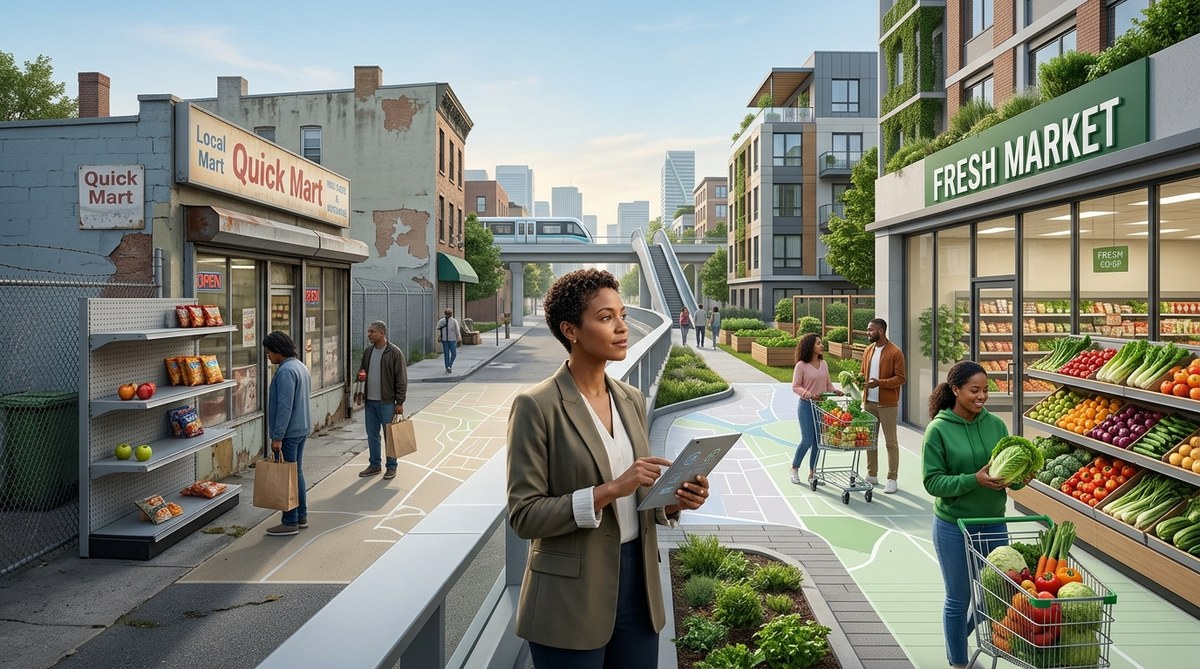
Are Food Apartheid and Food Deserts the Same Thing? A 2026 Reality Check
The terms “food desert” and “food apartheid” both describe places where people struggle to find fresh, affordable food. But they tell very different stories. If you have heard these words used in conversations about grocery stores, community health, or urban planning, you might have wondered if they are just two names for the same problem. They are not. The difference matters a lot, and it changes how we think about solutions.
“Food desert” is a geographic term describing a lack of grocery stores, while “food apartheid” names the systemic racism and policy decisions that create these conditions. In 2026, more activists and scholars prefer “food apartheid” because it points to human choices and structural inequality, not a natural phenomenon. Understanding this shift helps you support more effective community solutions.
Where Did the Term “Food Desert” Come From?
The phrase “food desert” was first used in Scotland in the 1990s. It described neighborhoods where residents had no easy access to nutritious food. The image was clear: a barren landscape where healthy options simply did not grow. The USDA adopted the term officially in the early 2000s. They defined a food desert as a low-income census tract where a significant number of residents live more than one mile from a supermarket in urban areas, or more than ten miles in rural areas.
On the surface, the term seems neutral. It sounds like a problem of distance. But many critics argue that the word “desert” makes the situation feel like a natural disaster. A desert forms because of climate and geography. It just happens. That framing removes human responsibility. It makes the lack of grocery stores look like an accident of nature rather than a result of intentional policy.
Why “Food Apartheid” Is Gaining Ground in 2026
Food justice leader Karen Washington is often credited with popularizing the term “food apartheid.” She argues that the word “desert” does not capture the reality of how these neighborhoods were created. Apartheid is a system of legalized racial segregation and discrimination. By using that word, Washington and others point directly to the laws, redlining practices, and economic disinvestment that stripped communities of grocery stores.
In 2026, the term “food apartheid” is more common among community activists and urban policy students. It shifts the blame from geography to policy. It asks us to look at who made the decisions that led to food insecurity. It also connects the dots between housing discrimination, transportation neglect, and health outcomes.
Here is a comparison to help you see the difference at a glance:
| Aspect | Food Desert | Food Apartheid |
|---|---|---|
| Focus | Geographic distance to stores | Systemic inequality and racism |
| Implied cause | Natural or accidental condition | Intentional policy decisions |
| Solution approach | Build a new grocery store | Address root causes like redlining, wages, and transportation |
| Language tone | Neutral, technical | Political, action-oriented |
| Who uses it | Government agencies, researchers | Community organizers, food justice advocates |
The History of Redlining and Food Access
You cannot understand the food desert vs food apartheid debate without looking at redlining. In the 1930s, the federal government created maps of American cities. They color-coded neighborhoods based on perceived financial risk. Green and blue areas were considered safe investments. Red areas were labeled “hazardous.” Those redlined neighborhoods were almost always Black and immigrant communities.
Banks refused to give mortgages in redlined areas. Property values dropped. Businesses left. Supermarkets followed the money to the suburbs. By the time the 2008 housing crisis hit, these same neighborhoods had even fewer resources. The lack of grocery stores did not happen by chance. It was engineered over decades.
This history is why the term “food apartheid” feels more honest to many people. It names the system that created the problem. A desert is a natural feature. Apartheid is a human-made structure.
How Language Shapes Solutions
The words we use influence the solutions we imagine. If you call an area a “food desert,” the natural fix is to build a grocery store. That sounds simple. But opening a supermarket in a low-income neighborhood is expensive. Profit margins are thin. Many chains are reluctant to invest. Even when a store opens, it might not be affordable for local residents.
If you call the same situation “food apartheid,” the solutions change. You start asking harder questions.
- Why are wages so low that people cannot afford fresh produce?
- Why is public transportation unreliable?
- Why did city planners zone this area for fast food instead of fresh food?
- Who profited from keeping this community under-served?
These questions lead to broader strategies. They connect food access to housing policy, job creation, and community ownership. That is why many activists in 2026 prefer the term “food apartheid.” It forces a bigger conversation.
A Practical Guide to Taking Action
If you are a socially conscious consumer or a community activist, you might feel overwhelmed by the scale of this issue. But you do not have to solve everything at once. Here is a numbered list of steps you can take right now to make a difference in your own city:
- Learn your local food map. Look up the USDA Food Access Research Atlas online. See if your neighborhood or a nearby community is classified as a low-access area. Pay attention to the demographics of those areas.
- Talk to a local food bank or pantry. Ask them what they see on the ground. Volunteers and staff often know exactly which neighborhoods lack fresh food and why. They can tell you if transportation or affordability is the bigger barrier.
- Support a community garden or cooperative. These are not just nice projects. They are acts of food sovereignty. When a community grows its own food, it breaks dependence on distant supply chains. Find one near you and offer your time or donations.
- Contact your city council member. Ask them about zoning laws and grocery store incentives. Many cities offer tax breaks to attract supermarkets to underserved areas. Find out if your city does this and whether it is working.
- Use the term “food apartheid” in public meetings. This may feel small, but language matters. When you use the more accurate term, you shift the conversation from charity to justice. You invite others to think about root causes.
Common Mistakes to Avoid When Discussing This Topic
Even well-meaning people can slip into language that undermines the message. Here is a bulleted list of things to watch out for:
- Saying “those people” when talking about food-insecure communities. This creates an us-versus-them divide. Food apartheid affects all of us as a society.
- Assuming a new grocery store will fix everything. A store is helpful, but it does not solve poverty, low wages, or lack of transportation.
- Using “food desert” and “food apartheid” interchangeably without explaining the difference. If you use both terms, take a moment to clarify why you prefer one over the other.
- Ignoring rural communities. Most conversations focus on cities, but rural food apartheid is just as real. Distance is greater, and public transit is almost nonexistent.
- Forgetting about culture. A store full of expensive organic kale is not a solution if the community wants plantains, collard greens, or tortillas. Food justice must include cultural relevance.
“We need to stop using language that makes inequality sound like a natural disaster. Food apartheid is not a drought. It is a system. And systems can be changed.” – Karen Washington, food justice activist
Where We Go From Here
The shift from “food desert” to “food apartheid” is not just about being politically correct. It is about accuracy. It is about telling the truth about how our cities and rural towns were shaped. In 2026, more young people and policy students are learning this history in college courses on urban planning and food systems. They are graduating with a clearer understanding of the problem.
That understanding leads to better solutions. Instead of asking “How do we get a grocery store here?” we can ask “How do we build community wealth so that people can afford healthy food and own the stores that sell it?” That is a much more powerful question.
If you want to go deeper into this work, you can read about how community-led food security programs are transforming lives worldwide. You might also find inspiration in how community gardens are tackling food deserts across America. And if you are curious about the role of technology, check out 7 breakthrough technologies revolutionizing food security in 2026.
Moving from Awareness to Action
Understanding the difference between food desert and food apartheid is the first step. The next step is showing up. You do not need to be an expert or a politician to make change. You just need to be willing to listen, learn, and use the right words. The next time someone at a community meeting says “food desert,” you can gently offer the term “food apartheid” and explain why it matters. That small act of education can open a door to deeper conversations about justice, history, and the kind of future we want to build together.
Let us build that future with intention. Let us name the system, not just the symptom. And let us keep pushing for a world where every zip code has access to the food that helps people thrive.