6 Cost-Effective Ways to Deliver Chronic Disease Screenings in Food Deserts
For a community health center administrator in a food desert, the math feels impossible. You know that residents in your service area face higher rates of diabetes, hypertension, and heart disease. You also know that many of them cannot easily access a primary care clinic. The gap between need and resources can feel like a canyon. But here is the good news: delivering cost effective chronic disease screenings in food deserts does not require a massive budget or a fleet of expensive mobile units. With some creative partnerships and smart planning, you can meet people where they already are.
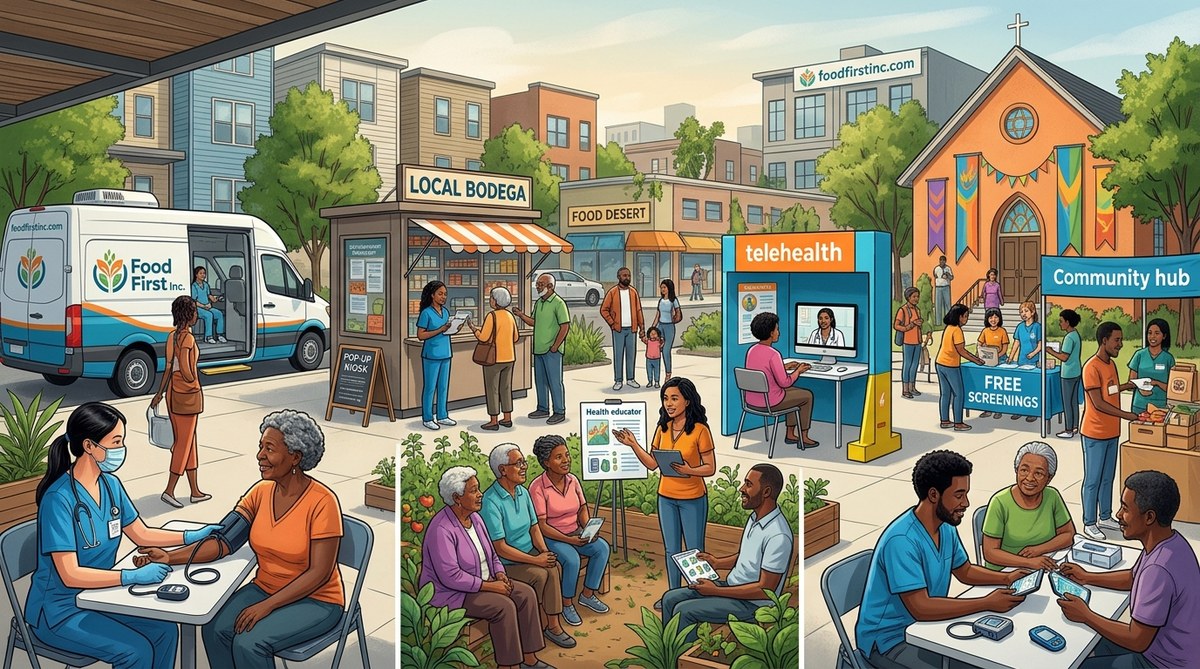
Cost effective chronic disease screenings in food deserts rely on meeting people where they already gather. By partnering with food banks, faith organizations, mobile markets, and community health workers, program managers can screen hundreds of residents for diabetes and hypertension for under ten dollars per person. The key is layering screenings onto existing community touchpoints.
Why Food Deserts Need Targeted Screening Strategies
Food deserts are not just about limited access to fresh produce. They are environments where chronic disease risk runs high. Limited grocery options often mean more reliance on processed foods high in sodium and sugar. Add in transportation barriers and a lack of nearby clinics, and you have a perfect storm for undiagnosed hypertension, prediabetes, and high cholesterol.
The Centers for Disease Control and Prevention reports that people living in food deserts are up to 25 percent more likely to develop type 2 diabetes compared to those in areas with full service grocery stores. That statistic becomes even more stark when you consider that many of these individuals have not seen a doctor in over a year. Screenings that happen outside traditional clinic walls are not a nice to have. They are a necessity.
The Core Challenge: Reaching People Without Adding Cost
The biggest barrier to screening in food deserts is not the price of a glucometer or a blood pressure cuff. It is the cost of finding and engaging patients. Traditional outreach methods like direct mail or phone banking have low response rates and high per person costs. The smarter approach is to embed screenings into places and events that already have high foot traffic.
Below is a comparison of traditional screening approaches versus embedded, cost effective methods.
| Screening Approach | Average Cost Per Person | Reach Per Event | Staffing Needs |
|---|---|---|---|
| Standalone health fair at a rented venue | $18 to $35 | 50 to 150 | 4 to 6 clinical staff |
| Embedded screening at food pantry line | $4 to $9 | 200 to 400 | 2 clinical staff |
| Mobile clinic with dedicated vehicle | $45 to $80 | 60 to 100 | 3 to 5 staff plus driver |
| Community health worker home visit | $12 to $20 | 8 to 12 per day | 1 CHW |
| Screening at faith based meal program | $5 to $10 | 100 to 250 | 2 clinical staff |
The data is clear. The most affordable option is embedding screenings into existing community programs.
Six Cost Effective Strategies That Actually Work
1. Partner with Food Pantries and Food Banks
Food pantries are the front door of food deserts. Families already stand in line for groceries. While they wait, you can offer a blood pressure check or a glucose test. Many food pantries welcome health partners because it adds value for their guests without disrupting operations.
One practical model is the “Screening While You Wait” program. Set up a small table near the check in area. Use a handheld device for blood sugar testing and a simple cuff for blood pressure. The entire process takes under five minutes. For more on how food access and health intersect, see our guide on innovative strategies to combat hunger in vulnerable communities.
2. Use Faith Based Venues for Weekend Screenings
Churches, mosques, and community centers in food deserts often have existing health ministries. These groups already organize blood drives and wellness events. Partner with them to add chronic disease screenings to their calendar.
Faith based venues usually have parking, seating, and volunteer networks. That means your costs drop to nearly zero for space and staffing. The congregation trusts the venue, so turnout is strong. A single Saturday morning screening at a church can serve 150 people for less than ten dollars each.
3. Train Community Health Workers as Screeners
Community health workers (CHWs) are trusted neighbors who already provide health education and resource navigation. Training them to perform basic screenings costs a few hundred dollars per worker. Once trained, a CHW can screen dozens of people during existing home visits or community meetings.
CHWs are especially effective in food deserts because they understand the local barriers. They know which bus routes do not run on Sundays. They know which corner stores sell the cheapest insulin. They build relationships that a traveling nurse cannot replicate. For deeper reading on this model, check out our piece on how community health workers are transforming healthcare access in underserved areas.
4. Piggyback on Mobile Food Markets
Mobile food markets, sometimes called fresh food trucks or farm on wheels programs, bring produce directly to food deserts. These trucks already have a schedule, a driver, and a regular customer base. Adding a screening station to the truck is a low cost win.
The screening station can be as simple as a fold out table and a battery powered blood pressure monitor. As customers wait for their turn to pick up vegetables, they can get a five minute health check. The mobile market operator benefits by offering more value. You benefit by reaching people who rarely visit a clinic.
5. Host Screenings at School Based Events
Schools in food deserts are hubs of activity. Back to school nights, parent teacher conferences, and sports games draw large crowds. Parents are already waiting. Set up a screening table near the sign in area.
School based screenings are especially valuable because they catch adults who are hard to reach through traditional channels. A parent might skip their own checkup but will show up for their child’s soccer game. Offer a free blood pressure check while they wait. The cost is minimal, and the yield is high. For more ideas on reaching families through schools, read about how to leverage school-based health centers to reach underserved children in 2026.
6. Use Point of Care Testing at Senior Meal Sites
Senior centers and congregate meal sites are another natural fit. Older adults in food deserts often rely on these programs for their daily hot meal. Many have not seen a doctor in months. Point of care tests for diabetes and cholesterol can be done with a finger prick and a small analyzer.
These analyzers cost around three hundred dollars and each test strip costs about one dollar. A senior meal site serving 80 people per day can be screened over the course of a week for under one hundred dollars in supplies. The return on investment is enormous when you consider the cost of a single emergency room visit for undiagnosed diabetes.
A Simple Step by Step Process for Launching Your Program
If you are a program manager or center administrator, here is a straightforward process to get started.
-
Map existing community touchpoints. Identify every place where your target population already gathers. Food pantries, churches, schools, senior centers, mobile markets, and laundromats are all good candidates.
-
Reach out to one partner. Pick the venue with the highest traffic and the most welcoming leadership. Ask for a 15 minute meeting to propose a pilot screening event.
-
Start with one screening type. Do not try to offer a full panel of tests on day one. Pick one metric, like blood pressure or blood sugar, and do it well. You can always expand later.
-
Train your staff on low cost devices. Handheld glucometers and automatic blood pressure cuffs are accurate and affordable. Teach your team to use them efficiently so each screening takes under five minutes.
-
Collect basic data. Track how many people you screen, how many are referred for follow up care, and the cost per person. This data will help you secure funding for expansion.
-
Close the referral loop. A screening is only valuable if it leads to care. Have a list of low cost or sliding scale clinics ready to share. Better yet, schedule a follow up appointment on the spot.
“The most effective screening programs in food deserts are the ones that remove friction. If someone has to take two buses to get screened, they probably will not go. But if you put the screening next to the food they already need, they will stop and get checked. It is that simple.”
Dr. Maria Hernandez, Director of Community Health Partnerships, National Rural Health Association
Common Mistakes to Avoid
Even well intentioned programs can stumble. Here are the most common pitfalls and how to avoid them.
| Mistake | Why It Hurts | Better Approach |
|---|---|---|
| Using expensive mobile clinics | High per person cost limits scalability | Embed screenings in existing venues |
| Screening without referral pathways | Patients get numbers but no follow up | Partner with clinics before the event |
| Ignoring language and cultural barriers | Low turnout and mistrust | Hire bilingual CHWs from the community |
| Offering too many tests at once | Long wait times and staff burnout | Start with one or two high impact tests |
| Not collecting contact information | No way to track outcomes | Use a simple consent form with a phone number |
How to Sustain Funding for Ongoing Screenings
The first screening event is often funded by a grant or a one time donation. The challenge is making it sustainable. Here are three ways to keep the program running.
- Billable screening codes. Some states allow CHWs to bill Medicaid for certain preventive screenings. Check your state’s policy on community health worker reimbursement.
- Hospital partnership agreements. Local hospitals often have community benefit dollars that must be spent on preventive care. Approach their community health department with a proposal.
- Philanthropic grants. Foundations focused on diabetes prevention and food access are natural allies. Frame your program as a low cost, high impact intervention.
For more on sustainable funding models, read about 5 innovative funding models that are revolutionizing food aid.
Turning Your First Screening into a Long Term Program
You do not need a perfect plan to start. You need one solid partnership, one screening device, and one afternoon. Run a pilot event at a local food pantry. Screen 50 people. Collect their feedback. Use that success story to approach your next partner.
Each screening is more than a number. It is a chance to catch a condition early, connect someone to care, and build trust in a community that has often been overlooked by the healthcare system. The most cost effective chronic disease screenings in food deserts are not about fancy equipment or big budgets. They are about showing up consistently in the places where people already are.
Building Healthier Communities One Screening at a Time
Food deserts do not have to be health care deserts. With a focused strategy and a willingness to meet people where they live, eat, and gather, you can make a measurable difference in chronic disease detection and prevention. Start small. Measure your impact. Share your results. The model works, and it can scale.
For more ideas on strengthening community health infrastructure, take a look at how community health centers are the backbone of equitable healthcare access. And if you are ready to take the next step, consider joining one of our empowering communities through local support initiatives workshops.
The work is hard, but the path is clear. You have the tools. You have the knowledge. Now go set up that screening table at the food pantry and start saving lives.