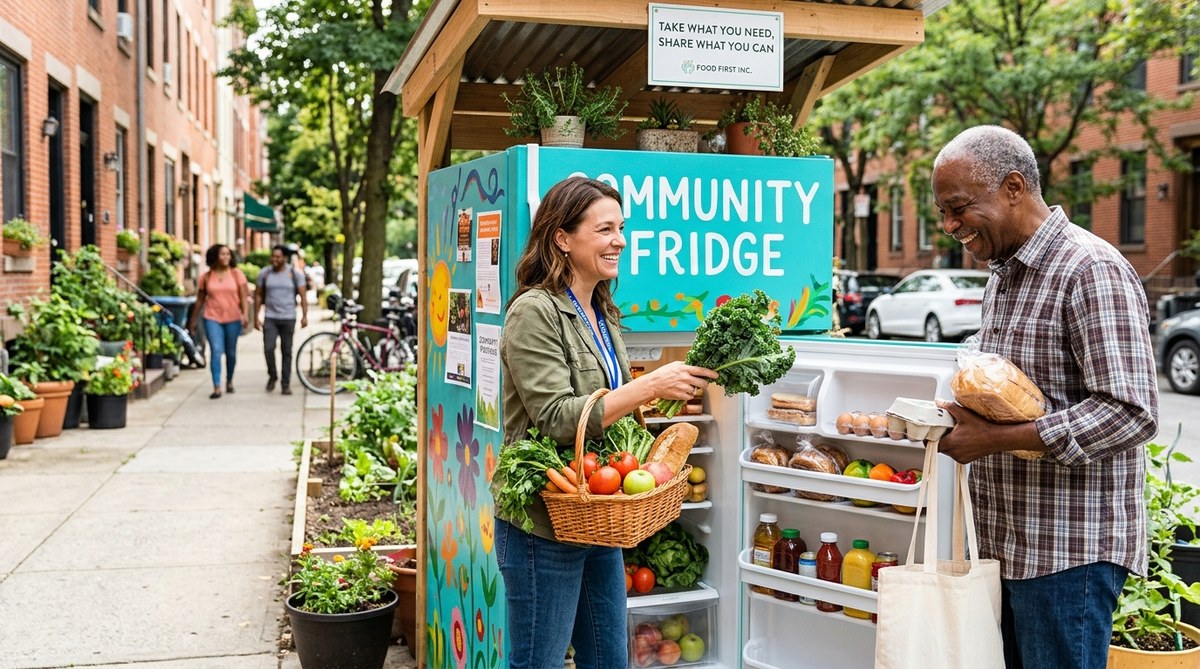
How Community Fridges Are Fighting Food Insecurity One Neighborhood at a Time
You know that feeling when you see a half-full container of takeout in your fridge and wonder if it will just go bad? Now imagine a fridge on a street corner, painted bright colors, stocked with fresh produce and pantry staples. Anyone can take what they need. Anyone can leave what they can spare. That is the simple, powerful idea behind community fridges. Across the United States, these grassroots fridges are quietly solving two problems at once: they cut down on food waste and get nutritious food to neighbors facing hunger. They are not a charity handout. They are mutual aid. And they are spreading fast.
Community fridges are a low-barrier, high-impact tool for fighting food insecurity at the neighborhood level. Unlike food banks, they are open 24/7, require no ID or paperwork, and rely on volunteer care. This guide covers how they work, how to start one, common pitfalls to avoid, and how you can support the movement in your own city.
How a Community Fridge Actually Works
A community fridge is exactly what it sounds like. A refrigerator is placed in a public or semi-public spot. Volunteers stock it with donated food. Neighbors take what they need. No questions asked. Most fridges are painted by local artists, making them a visible sign of solidarity in the neighborhood.
The model is built on trust. People leave extra produce from their gardens, unopened groceries, or prepared meals from local restaurants. Others take home a bag of apples or a carton of eggs. The fridge becomes a living pantry that belongs to everyone.
In 2026, there are thousands of community fridges operating across the country. Cities like New York, Los Angeles, Atlanta, and Detroit have dozens each. But smaller towns are joining the movement too. The key ingredient is not funding. It is neighbors showing up for each other.
Why Community Fridges Matter for Food Insecurity
Food insecurity is not just about hunger. It is about access. Many neighborhoods are food deserts where the closest grocery store is a long bus ride away. A community fridge placed on a corner or outside a community center puts food right where people live.
Here are a few reasons why this model works so well:
- No paperwork. No income verification. No wait times.
- Fresh food, not just shelf-stable items.
- Reduces waste. Restaurants and farms can donate surplus instead of throwing it away.
- Builds community bonds. People meet at the fridge, share recipes, and check on each other.
- Operates 24/7. Shift workers and parents with young kids can access food anytime.
For a deeper look at how local action fits into larger systems, check out our guide on building resilient food systems to end global hunger.
Starting a Community Fridge in Your Neighborhood
Ready to start one? It is more straightforward than you might think. But it does require planning. Here is a step by step process that successful organizers have used.
-
Find your team. You need at least three reliable people. One to manage donations, one to clean the fridge, and one to handle outreach. Start with a small core group.
-
Secure a location. You need permission from a property owner. Local businesses, churches, community centers, and even laundromats often say yes. The spot should be covered from rain and have access to an electrical outlet.
-
Get the fridge. Look for a used, commercial-grade refrigerator. It should have a working thermometer and a lock. Avoid residential fridges. They break down too often.
-
Set ground rules. Post clear signs. No raw meat. No alcohol. No expired food. No glass containers. Keep it simple so everyone knows what is safe to donate.
-
Build a donation network. Contact local grocery stores, bakeries, and farms. Many have surplus they would rather give away than trash. Also ask neighbors to leave extra garden produce.
-
Clean it daily. This is non-negotiable. A dirty fridge gets shut down. Assign a daily cleaner and a backup person.
-
Spread the word. Use social media, flyers, and word of mouth. Let people know the fridge is for everyone. The more people know, the more it gets used and stocked.
For more on grassroots action, read about empowering communities through local support initiatives.
Common Mistakes and How to Avoid Them
Starting a fridge is rewarding, but there are pitfalls. The table below shows the most common mistakes and what to do instead.
| Mistake | Why It Happens | What to Do Instead |
|---|---|---|
| Fridge breaks down within weeks | Using a residential fridge | Invest in a commercial grade fridge. It costs more upfront but lasts years longer. |
| Food spoils because of poor temperature control | No thermometer or daily check | Place a thermometer inside and check it every single day. Keep temp below 40 degrees. |
| Neighbors do not use the fridge | Location is hidden or unwelcoming | Put the fridge in a visible, well lit spot. Paint it with bright colors. Add a sign in multiple languages. |
| Volunteers burn out | Too few people doing all the work | Recruit a rotating schedule. Aim for at least 10 volunteers so no one works more than once a week. |
| Health department issues a violation | No cleaning protocol | Create a written cleaning checklist. Post it on the fridge. Sanitize surfaces daily. |
Avoiding these issues keeps the fridge running smoothly and builds trust with the community and local officials.
How to Support an Existing Fridge
Not everyone can start a fridge. But everyone can help one that already exists. Here are the most impactful ways to support a community fridge near you.
- Drop off food. Stick to fresh produce, unopened packaged goods, and sealed beverages. Avoid homemade meals unless they are clearly labeled and dated.
- Donate money. Many fridges have a Venmo or PayPal for repairs and electricity costs. Even ten dollars helps.
- Volunteer to clean. Spend thirty minutes wiping down shelves and tossing expired items. It is a small task that keeps the fridge safe.
- Share on social media. A simple post with the location and hours helps more people find it.
- Advocate for permits. Some cities require special permits for outdoor fridges. Show up at city council meetings and speak in support of the fridge.
For more on how these efforts connect to larger goals, see how community-led food security programs are transforming lives worldwide.
A Note on Safety and Legality
Community fridges operate in a gray area in some cities. Health departments worry about temperature control and contamination. That is fair. The solution is not to fight regulations. It is to meet them.
Most successful fridges follow these safety rules:
“Treat the fridge like you would your own kitchen. Clean it daily. Check temperatures. Label everything with dates. If you would not feed it to your own family, do not put it in the fridge.” — Maria Gonzalez, founder of the Southside Community Fridge Network in Chicago
If your city asks for a permit, apply for one. If they require a host organization, partner with a local church or nonprofit. Following the rules protects the people you are trying to help.
What Makes a Fridge Sustainable Long Term
A fridge that lasts for years is not a fluke. It is the result of intentional design. Here are the factors that separate short lived projects from lasting ones.
- A dedicated host site. The property owner is committed for the long haul. They do not move or sell the building.
- A steady food supply. Multiple donors. Not just one grocery store. If one source dries up, others fill the gap.
- A rotating volunteer base. Avoid relying on one person. Build a team that can sustain illness, vacations, and life changes.
- Community ownership. When neighbors feel the fridge is theirs, they protect it. They report problems. They stock it. They paint it.
If you want to go deeper on the relationship between local action and systemic change, take a look at innovative strategies to combat hunger in vulnerable communities.
How to Find a Community Fridge Near You
You might be surprised how close one is. Here are a few ways to locate one.
- Search social media for “community fridge” plus your city name. Most fridges have an Instagram or Facebook page.
- Use the Freedge app or website. It maps community fridges across the country.
- Ask at your local food co-op, library, or mutual aid group.
- Walk around your neighborhood. Look for brightly painted refrigerators on sidewalks or in parking lots.
Once you find one, stop by. See how it works. Introduce yourself to a volunteer. You might decide to join the team.
Turning Food Deserts into Food Oases
A single fridge will not end hunger. But it does something just as important. It proves that a community can take care of its own. It turns a food desert into a place where fresh food is visible and accessible. It reminds us that food waste is a design flaw, not a fact of life.
The movement is growing because it works. In 2026, more neighborhoods than ever are choosing mutual aid over waiting for institutional change. They are painting fridges, sharing food, and building a new kind of food system from the ground up.
For a broader look at how these small efforts add up, read about 8 proven strategies to strengthen food security in urban communities.
Your Next Step
You do not need a grant or a nonprofit status to make a difference. You just need a fridge, a few neighbors, and the willingness to try. Start small. Find one other person who cares. Pick a location. Clean it together. Watch what happens.
The fridge will fill up. People will show up. And your neighborhood will become a little more resilient, one shared meal at a time.