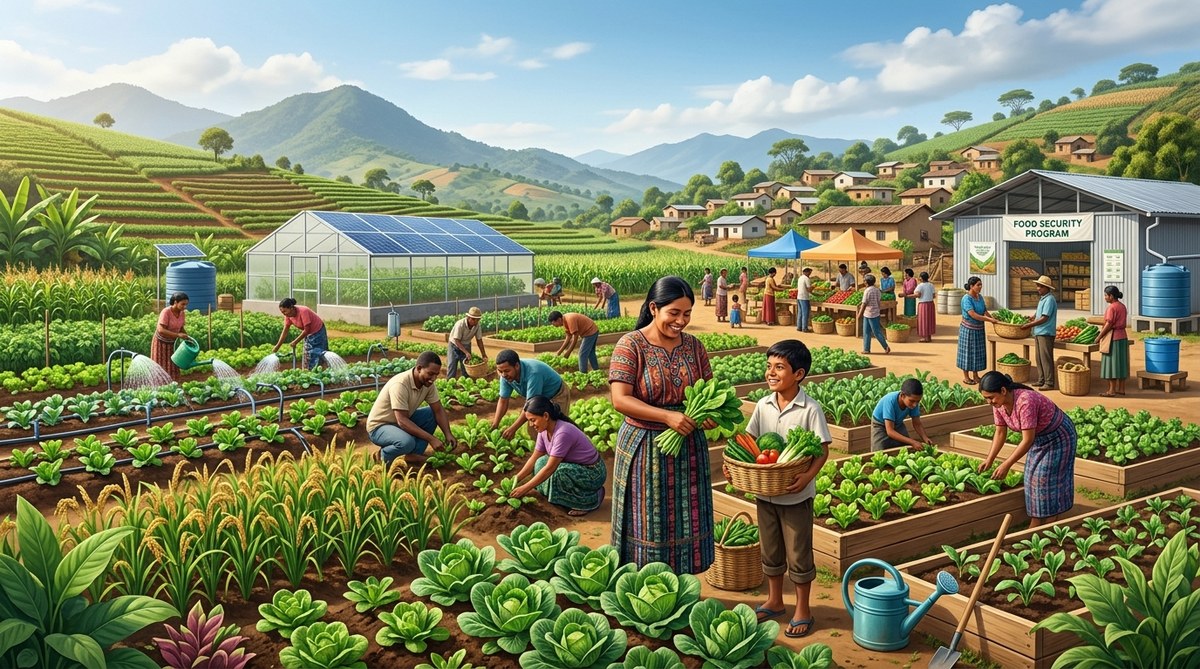
Top Strategies for Ensuring Food Security in Vulnerable Communities by 2026
Building food security in vulnerable communities remains one of the most pressing challenges of the coming years. As climate change, economic disparities, and social upheavals continue to threaten access to nutritious food, developing effective strategies by 2026 is vital. Governments, NGOs, and researchers are now focusing on innovative, sustainable, and community-led approaches that can transform food systems and ensure no one is left behind. This article dives into the most impactful food security strategies for vulnerable communities in 2026, offering practical insights to guide efforts and foster resilience.
By 2026, effective food security strategies for vulnerable communities focus on strengthening local food systems, harnessing technology, empowering communities, and promoting sustainable practices. These approaches foster resilience, reduce dependency on aid, and create lasting change.
Prioritizing Local Food Systems and Urban Agriculture
One of the most promising strategies involves boosting local food production. Encouraging urban farming and community gardens allows residents to grow fresh produce close to where they live. This reduces reliance on distant supply chains, which can be disrupted by climate events or economic crises. Urban agriculture also provides educational opportunities, promotes healthy eating, and strengthens community bonds.
Governments and NGOs are increasingly supporting policies that facilitate access to land, resources, and training for small-scale farmers and urban growers. For example, city-led initiatives that transform vacant lots into productive gardens can quickly improve local food availability. Such projects also help communities adapt to climate change by promoting climate-smart agriculture practices.
Practical Process for Developing Local Food Systems
- Identify underutilized land suitable for urban farming.
- Provide training on sustainable and climate-resilient farming techniques.
- Facilitate access to seeds, tools, and markets for small growers.
Key benefits include:
- Increased access to fresh, nutritious food
- Reduced food deserts
- Enhanced community resilience
Harnessing Technology for Better Food Distribution and Data Collection
Technology plays a crucial role in advancing food security. Digital platforms can optimize food distribution and reduce waste by connecting producers directly with consumers. Mobile apps and data analytics enable tracking of food supply chains, identifying bottlenecks, and ensuring timely responses to shortages.
In 2026, integrating geographic information systems (GIS) and remote sensing data helps policymakers monitor vulnerable areas and allocate resources more effectively. For instance, real-time weather data can inform planting schedules and livestock management. Additionally, blockchain technology provides transparency in food transactions, reducing fraud and ensuring quality.
Techniques to leverage technology effectively
| Technique | Purpose | Common pitfalls |
|---|---|---|
| Mobile data collection | Gather real-time info on food needs | Limited digital literacy among users |
| GIS mapping | Visualize vulnerable communities | Data privacy concerns |
| Blockchain | Secure food supply chain | High implementation costs |
Experts emphasize that technology should complement community knowledge rather than replace it. Building local capacity to use digital tools is key for long-term sustainability.
Implementing Policy Innovation and Social Safety Nets
Strong policies and social safety nets are foundational to food security. Governments are encouraged to design inclusive social protection programs that provide direct food assistance or cash transfers during crises. These programs should be targeted toward the most vulnerable, such as low-income families, refugees, and indigenous populations.
Innovative policy approaches include conditional cash transfers that incentivize healthy behaviors and investments in local food infrastructure. Additionally, integrating food security goals into broader development policies ensures coordinated efforts across sectors like health, education, and agriculture.
Practical steps for policymakers
- Conduct vulnerability assessments to identify at-risk populations.
- Design flexible social safety programs that adapt to emerging crises.
- Invest in local food systems and infrastructure to reduce dependency on imports.
Common mistakes to avoid
| Mistake | Consequence | Solution |
|---|---|---|
| One-size-fits-all programs | Ineffective targeting | Use data-driven, community-specific approaches |
| Underfunding safety nets | Insufficient impact | Secure sustained financial commitments |
Building Community Resilience with Education and Capacity Building
Empowering local populations through education is central to sustainable food security. Training workshops on climate-smart agriculture, nutrition, and resource management strengthen community capacity. When residents understand how to adapt to changing conditions, communities become more resilient to shocks.
Community-led initiatives foster ownership and encourage innovative solutions tailored to local contexts. Peer-to-peer education and participatory planning ensure that programs resonate with local values and needs.
Key activities include:
- Conducting workshops on sustainable farming techniques
- Supporting women and youth in agriculture
- Creating locally driven food cooperatives
Building capacity at the community level leads to better adaptation, diversified income sources, and improved nutrition. It also encourages local leadership in food security efforts.
Promoting Climate-Smart and Sustainable Practices
Addressing climate change is integral to long-term food security. Climate-smart agriculture combines practices that increase productivity, enhance resilience, and reduce greenhouse gas emissions. Examples include conservation tillage, integrated pest management, and crop diversification.
Supporting farmers to adopt sustainable methods not only safeguards their livelihoods but also preserves ecosystems. Governments and NGOs should incentivize these practices through subsidies, technical assistance, and market access.
Techniques to implement climate-smart practices
- Training on drought-resistant crops
- Promoting agroforestry systems
- Supporting renewable energy use in farming
Common mistakes in implementation
| Mistake | Effect | How to avoid |
|---|---|---|
| Ignoring local knowledge | Low adoption rates | Engage farmers in planning |
| Overlooking ecosystem impacts | Environmental degradation | Conduct environmental assessments |
How to Avoid Common Pitfalls in Food Security Initiatives
While these strategies hold promise, there are pitfalls to watch out for. Missteps such as neglecting community input, underfunding programs, or failing to consider local context can undermine progress.
Below is a table summarizing techniques and common mistakes to help guide effective food security efforts.
| Techniques | Mistakes to Avoid |
|---|---|
| Community participation | Top-down approaches |
| Data-driven planning | Relying on assumptions without local input |
| Multi-sector collaboration | Siloed efforts |
According to leading experts, successful food security strategies are those that are adaptive, context-specific, and rooted in community engagement.
Engaging Communities for Lasting Change
Participatory processes are critical in designing and implementing food security programs. Involving local leaders, women, youth, and marginalized groups ensures that solutions are relevant and sustainable.
Community engagement fosters trust, encourages innovation, and builds local ownership. Establishing platforms for dialogue and feedback leads to more effective and adaptive programs.
Practical advice for engagement
- Conduct participatory planning sessions
- Support local food cooperatives
- Recognize and incorporate indigenous knowledge
Looking Ahead: Crafting Resilient Food Systems for 2026 and Beyond
Transforming vulnerable communities into resilient food systems requires a blend of innovative practices, policy reforms, and community empowerment. By integrating local initiatives with technological advancements and sustainable methods, the goal of zero hunger by 2026 becomes attainable.
Policymakers, researchers, and NGOs must work together to foster a global environment where food security is a shared priority. Investing in local food systems, leveraging technology wisely, and encouraging community-led solutions will be essential in the years ahead.
Remember, lasting change begins with understanding local needs and fostering collaboration. Small steps taken today can lead to a food-secure future for all.
For further insights on strengthening food security, visit our resource on building resilient food systems to end global hunger. Applying these strategies can help communities weather future storms and thrive in a changing world.