8 Proven Strategies to Strengthen Food Security in Urban Communities
Food insecurity in cities is a problem that touches millions of lives. But there is a path forward. Urban planners, policymakers, and community organizers have been testing what works. In 2026, we have a clearer picture than ever of the most effective urban food security strategies. These approaches do more than just put food on tables. They build dignity, resilience, and lasting health. Whether you are designing a new policy or running a local pantry, this guide walks you through eight proven methods backed by real world results.
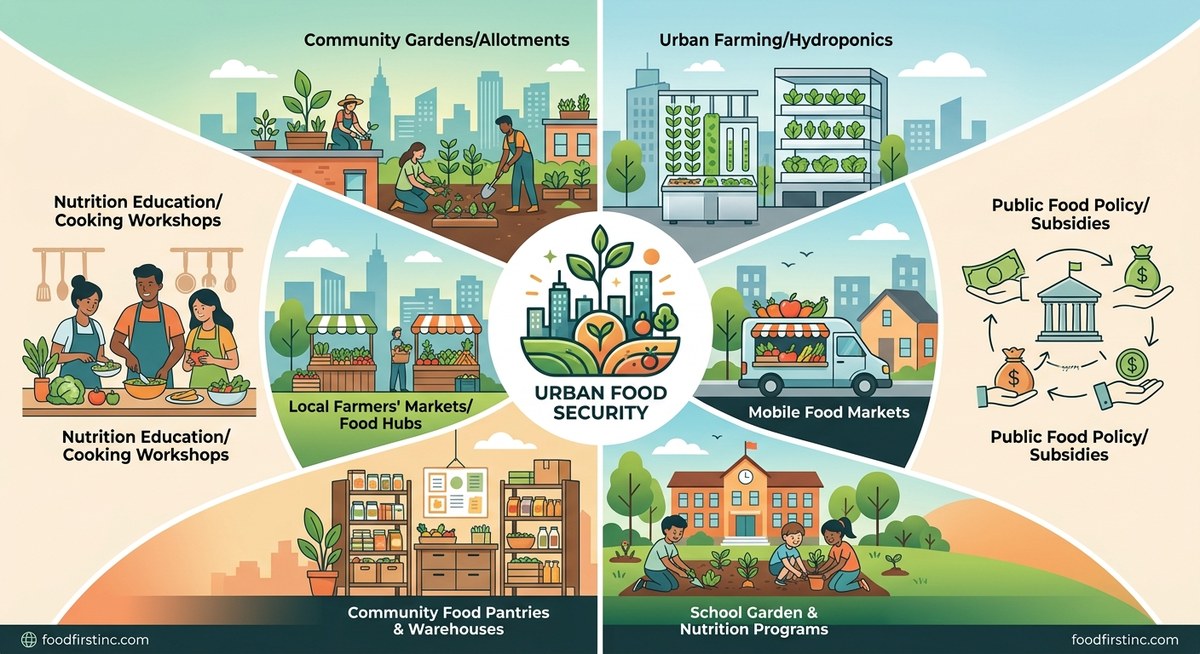
Urban food security in 2026 requires a blend of community power, policy reform, and smart technology. From urban farms to mobile markets, the eight strategies below reflect what actually works. Planners and organizers who combine food access with economic opportunity see the strongest gains. Small steps, when coordinated, create large shifts.
Start with a Community Food Assessment
Before you change anything, you need to know the lay of the land. A community food assessment maps out where food is available, where it is missing, and who is hit hardest. This first step prevents wasted resources and misdirected efforts.
Here is a simple three step process to run your own assessment:
- Gather data from zip codes and grocery store locations. Overlay them with census data on income and race. You will see the food deserts clearly.
- Talk to residents directly. Surveys and listening sessions reveal barriers that no spreadsheet can show, like lack of transportation or cultural food preferences.
- Map existing assets. Schools, churches, community gardens, and farmers markets are already doing work. Building on their momentum saves time.
One example that works comes from Detroit. When local organizers mapped the city, they found that a single bus line connected several food deserts to a full service grocery store. They used that data to advocate for a bus route extension. Something as small as fixing a transit gap can open up a whole landscape of fresh food.
“The most powerful tool we have is the community itself. When residents define the problem, the solutions last far longer than any outside program.” — LaToya Cantrell, former urban food policy advisor, New Orleans
Build Partnerships That Go Beyond Food
Food security is never just about food. It connects to housing, health care, education, and jobs. The strongest urban strategies bring together partners from different sectors.
Consider a partnership in Chicago that paired a community health center with a local farm cooperative. Doctors started writing prescriptions for fresh produce. Patients redeemed them at weekly pop up farm stands right in the clinic lobby. Results showed measurable drops in blood pressure and diabetes markers. The health center saw fewer emergency visits. The farm cooperative gained a steady customer base.
To build your own cross sector partnerships, try these:
- Invite housing authorities to host gardens and markets on their land.
- Work with school districts to turn unused cafeteria space into community kitchens.
- Team up with transportation departments to subsidize ride shares for grocery trips.
- Include local businesses that can donate space or volunteers.
Each partner brings something different. A housing authority offers land. A health center offers credibility. A grocery store offers supply chain know how. When these pieces click together, food access improves without a single new dollar.
Use Policy to Remove Barriers
Zoning laws, tax incentives, and permits can either help or hurt food security. In 2026, many cities are rewriting their codes to support urban agriculture and healthy food retail.
A few policy changes that make a big difference:
| Policy Type | What It Does | Common Mistake |
|---|---|---|
| Urban agriculture zoning | Allows gardens, greenhouses, and farm stands in residential areas | Setting minimum lot sizes that exclude small plots |
| Grocery store incentive programs | Offers tax breaks or grants to attract markets in food deserts | Focusing only on large chains instead of independent grocers |
| Mobile vending permits | Lets farmers and food trucks sell in high need neighborhoods | Charging fees that price out small vendors |
| Food waste diversion laws | Mandates grocery stores to donate edible surplus | Not providing liability protection for donors |
A city in California updated its zoning to let residents keep chickens and bees on standard residential lots. Within two years, over 2,000 new home gardens appeared. Neighbors started trading eggs and honey. That simple policy change turned backyards into food sources.
Invest in Urban Agriculture and Vertical Farming
Growing food inside the city reduces transportation costs, creates green jobs, and provides hyperlocal produce. In 2026, vertical farming has moved from experimental to mainstream. But it is not the only option.
Here is a quick guide to matching the approach with your city’s resources:
- Community gardens work best in neighborhoods with vacant lots and strong volunteer networks. They need land, water access, and basic tools.
- Rooftop farms suit dense downtown areas with flat commercial rooftops. They require structural engineering checks and a dedicated farm manager.
- Vertical farms (indoor, hydroponic) excel in cities with high real estate costs and year round demand for leafy greens. They demand upfront capital and energy, but produce consistent yields.
- Orchards and food forests fit park spaces and schoolyards. They require long term maintenance but provide free fruit for decades.
A vertical farm in Newark, New Jersey supplies over 30 grocery stores within a 10 mile radius. Its produce goes from seed to shelf in under three weeks. Because the farm is inside a former warehouse, it uses no pesticides and very little water. That model is being replicated in Baltimore, St. Louis, and Cleveland.
Address Transportation Gaps
Even when healthy food exists within city limits, people cannot always reach it. Lack of a car, long bus rides, and unsafe streets keep many residents from accessing fresh groceries.
A 2025 study in Atlanta found that over 60% of households in low income zip codes lived more than a mile from a supermarket with fresh produce. With no car, a round trip took over an hour by bus. That time cost often pushed families to corner stores with processed food.
Three strategies that close the transportation gap:
- Mobile markets bring fresh produce to apartment complexes and senior centers using retrofitted buses or vans.
- Grocery delivery partnerships with ride share services offer discounted trips to stores for low income residents.
- Walkable routes are improved by installing sidewalks, crosswalks, and lighting on the last half mile to a market.
A program in Nashville, Tennessee uses an app that lets families schedule a free ride to the nearest grocery store. Drivers are trained to help with bags. The program costs less than running a new store but serves more households per dollar.
Reduce Food Waste at Every Level
Wasted food is a direct drain on food security. An estimated 40% of food in the United States goes uneaten. In cities, much of that waste comes from grocery stores, restaurants, and households. Redirecting that food to people who need it is one of the most impactful urban food security strategies available.
Here is a list of practical waste reduction tactics:
- Grocery store recovery programs that donate near expiry items to food banks. Many cities now mandate this.
- Community composting that turns food scraps into soil for urban gardens.
- Meal planning workshops that teach families how to use leftovers and avoid overbuying.
- Food sharing apps that connect neighbors with surplus produce.
A food bank in Phoenix started a “rescue truck” that picks up produce from wholesalers within hours of being pulled from shelves. In one year, the truck saved 5 million pounds of food that would have gone to a landfill. That food fed over 12,000 families.
Empower Local Food Entrepreneurs
Food security is not just about charity. It is about economic opportunity. When local residents own food businesses, the entire community benefits. Jobs are created. Wealth stays local. And the food itself reflects the culture of the neighborhood.
Supporting entrepreneurs can take many forms:
- Kitchen incubators provide low cost commercial kitchen space for catering companies, meal prep services, and food trucks.
- Technical assistance programs help with licensing, nutrition labeling, and business planning.
- Micro grants of $5,000 to $25,000 help first time owners buy equipment and cover startup costs.
- Shop local campaigns that get grocery stores to carry products from neighborhood makers.
In Los Angeles, a kitchen incubator called “The Food Hub” trains formerly incarcerated residents to run their own food businesses. Participants learn knife skills, food safety, and accounting. Ninety percent of graduates stay employed in the food sector after one year. Some go on to supply school cafeterias.
Use Technology to Connect Supply and Demand
Data tools can match surplus food with unmet need in real time. In 2026, several platforms help route donations, track inventory, and alert residents about available food.
One system called “Feed Forward” connects grocery stores with pantries, shelters, and schools. When a store has 50 pounds of bananas about to turn, it pings the nearest pantry. A volunteer picks them up within an hour. The bananas are distributed that same day.
Technology also helps residents learn about food options. Text message alerts, community Facebook groups, and mobile maps show where free meals or fresh produce are available. For communities with limited internet access, a simple SMS service works better than a smartphone app.
You can read more about how digital tools are reshaping food aid in our piece on harnessing technology to improve food distribution.
Measuring What Works: Key Metrics
To know if your urban food security strategies are working, track these indicators before and after you implement changes:
- Percent of households experiencing very low food security (measured by USDA survey)
- Distance to nearest full service grocery store for each neighborhood
- Pounds of fresh produce distributed through pantries and markets
- Number of urban agriculture sites and their total yield
- Dollars saved by residents through food assistance or reduced food waste
A simple dashboard can help your coalition stay accountable. Share results publicly to build trust and attract funding.
Building a Food Secure Future Together
The eight strategies above are not a checklist. They are starting points. Every city has its own geography, politics, and culture. What works in a dense older city like Philadelphia may need adaptation in a sprawling Sun Belt city like Houston. But the core principles remain the same: listen to residents, remove structural barriers, and invest in long term solutions.
If you are an urban planner, start by mapping your city’s food assets. If you are a policymaker, push for zoning that allows urban agriculture. If you are a community organizer, gather your neighbors for a food assessment. Every action, no matter how small, adds to the momentum.
In 2026, we have the knowledge and the tools. Now we just need the will to apply them. Let’s get to work.