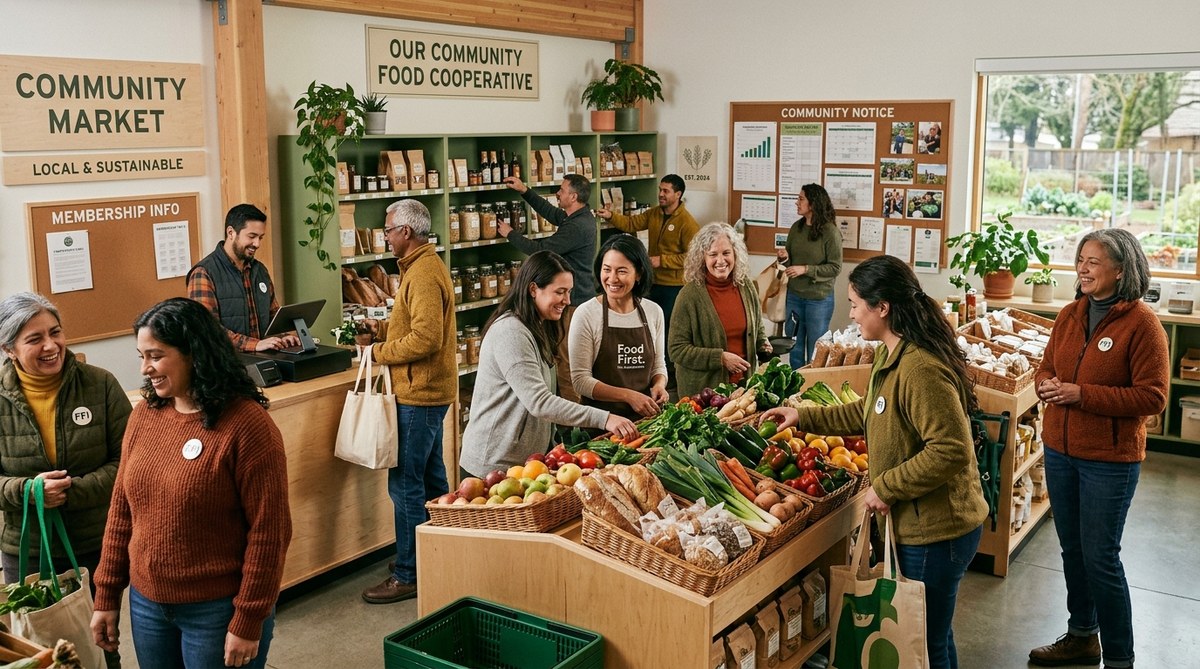
How to Launch a Community Food Cooperative That Actually Lasts
Starting a community food cooperative can feel like a huge task. You see the empty shelves at the local grocery store. You watch neighbors drive thirty miles just to buy fresh produce. The idea of opening your own store seems like the obvious solution, but where do you even begin? The good news is that hundreds of communities across the United States have already done it. They turned a food desert into a food oasis. You can do the same. This guide walks you through the exact process of how to start a food co-op that actually lasts.
A successful food co-op needs more than good intentions. You need a clear legal structure, a realistic budget, and a committed steering committee. Start with a feasibility study to understand your market. Secure funding through member loans and grants. Build a solid operations plan before you open the doors. This guide gives you the roadmap.
Gather Your Core Team
You cannot launch a co-op alone. The first step is finding five to ten people who share your vision. Look for folks with different skills. You need someone who understands money, someone who knows local politics, and someone who can talk to anyone.
- A retired teacher who handles spreadsheets.
- A local farmer who wants a reliable place to sell.
- A church leader who trusts the neighborhood.
- A young parent who knows what families need.
This group becomes your steering committee. They will make the big decisions for the next year or two. Meet once a week at first. Keep the meetings short and focused. Assign one person to take notes and send them out the same day.
Test the Idea with a Feasibility Study
Before you rent a building or buy a freezer, you need to know if your co-op can survive. A feasibility study sounds fancy, but it is really just answering three questions.
- How many people in your area would shop at a co-op?
- How much money do they spend on groceries each month?
- Can you find a location that is easy for them to reach?
You can do this yourself with a survey. Knock on doors. Set up a table at the local farmers market. Ask people to fill out a short card. You want to know their income, their shopping habits, and what they wish they could buy locally.
A great resource for this stage is the article on building resilient food systems to end global hunger. It shows how local food projects succeed when they match what the community actually needs.
Choose Your Legal Structure and Write Bylaws
A food co-op is a business, but it is not a typical business. You will register as a cooperative corporation. This means the customers are the owners. Each member gets one vote, regardless of how much money they invested.
Your steering committee needs to write bylaws. These are the rules that govern your co-op. They cover things like:
- How someone becomes a member.
- How much the membership share costs.
- How often the board of directors gets elected.
- What happens if the co-op makes a profit.
Do not skip this step. Good bylaws prevent fights later. You can find sample bylaws from the Food Co-op Initiative or from an existing co-op in a nearby town.
Raise the Startup Money
Starting a grocery store costs money. You need cash for the lease, the shelves, the refrigeration, the inventory, and the first few months of payroll. A typical small co-op needs between $200,000 and $500,000 to open its doors.
Here is how successful co-ops raise that money.
| Funding Source | Typical Amount | Best For |
|---|---|---|
| Member shares | $100 to $500 per person | Building a base of committed owners |
| Grants from local foundations | $10,000 to $100,000 | Equipment or refrigeration |
| USDA Rural Development loans | Up to $500,000 | Real estate and construction |
| Community loan funds | $20,000 to $200,000 | Working capital and inventory |
Start with member shares. Ask everyone who fills out your survey to buy a share. Even $50 helps. It shows you have real support. Once you have a list of 200 member-owners, you can apply for grants and loans with confidence.
Find the Right Location
Location can make or break a co-op. You want a spot that is easy to walk to or drive to. Look for a building that used to be a grocery store. It already has the right plumbing and electrical setup. If that is not possible, look for a former restaurant or a large retail space.
Things to check before you sign a lease:
- Is the roof in good shape? A new roof costs thousands.
- Is the parking lot big enough?
- Can a delivery truck get to the back door?
- Is the rent affordable even in the slow months?
Ask your local economic development office for help. They often have lists of empty commercial spaces. They may also offer a rent subsidy for the first year.
Build a Realistic Operations Plan
You have the team, the money, and the building. Now you need a plan for how the store will run every single day. This plan should cover:
- Hours of operation (start with six days a week, not seven).
- Staffing (one manager, two cashiers, one stocker).
- Product mix (50 percent staple groceries, 30 percent fresh produce, 20 percent local specialties).
- Pricing strategy (mark up items by 20 to 30 percent to cover costs).
Write out your first year budget in a spreadsheet. Include every expense: utilities, insurance, credit card fees, and trash pickup. Be realistic about how much you will sell in month one. Most co-ops lose money for the first six months.
For more ideas on keeping your operations lean, read about empowering communities through local support initiatives. It explains how volunteer labor can reduce your early costs.
Recruit Member-Owners and Volunteers
Your co-op will not survive without a strong base of member-owners. These are the people who shop at your store, tell their friends about it, and defend it when times get tough.
Set a goal for how many members you need before you open. A good target is one member for every $1,000 of monthly sales you expect. So if you plan to sell $100,000 per month, you need 100 member-owners.
Ways to recruit members:
- Host a potluck dinner at the local community center.
- Set up a booth at the county fair.
- Ask local churches to announce your co-op in their bulletin.
- Offer a discount on the membership fee for the first 50 people who join.
Open Your Doors with a Soft Launch
Do not throw a huge grand opening on day one. Instead, do a soft launch. Open for a few hours on a Saturday. Invite only member-owners. Let them shop, ask questions, and tell you what is missing.
This gives you a chance to fix problems before the whole town shows up. Maybe the credit card machine is not working. Maybe the produce is not selling as fast as you expected. A soft launch lets you adjust without the pressure of a crowd.
After two weeks of soft hours, plan a proper grand opening. Invite the mayor. Offer free samples. Hand out reusable bags with your co-op logo. Celebrate what you have built together.
Common Mistakes to Avoid
Every new co-op makes mistakes. Here are the most common ones, and how to avoid them.
“The biggest mistake we made was trying to do everything ourselves. We thought we could save money by not hiring a professional manager. We ended up losing more money than we saved.” — Board member of a rural co-op in Kansas
| Mistake | Why It Hurts | How to Avoid It |
|---|---|---|
| Opening without enough cash | You run out of money in three months | Raise 25 percent more than you think you need |
| Pricing items too low | You cannot pay your staff | Use a standard markup of 25 percent on all items |
| Ignoring the competition | You lose customers to the dollar store | Offer items the dollar store does not carry |
| Skipping the feasibility study | You open in the wrong location | Do the survey before you sign any lease |
Keep Growing After Year One
Your co-op is open. The first year was hard, but you made it. Now you need to keep growing. Add new products that your members ask for. Start a loyalty program. Host cooking classes to teach people how to use the ingredients you sell.
Consider partnering with other local organizations. You could work with a community garden to sell their extra produce. You could host a weekly farmers market in your parking lot during the summer. These partnerships bring in new customers and strengthen your place in the community.
For more on long term growth, check out how community-led food security programs are transforming lives worldwide. It highlights how local food projects grow into regional networks over time.
Your Co-op Is a Living Thing
A food co-op is not just a store. It is a promise that your community will always have access to fresh, healthy food. It is a place where neighbors know each other by name. It is a business that puts people before profit.
The work does not end on opening day. You will have to recruit new board members every year. You will have to raise money for repairs and upgrades. You will have to keep listening to your members and adapting to what they need.
But you already have what it takes. You have the passion. You have the community. And now you have a plan. Go ahead and take the first step. Call that first meeting. Send out that first survey. Your food co-op is waiting to be born.