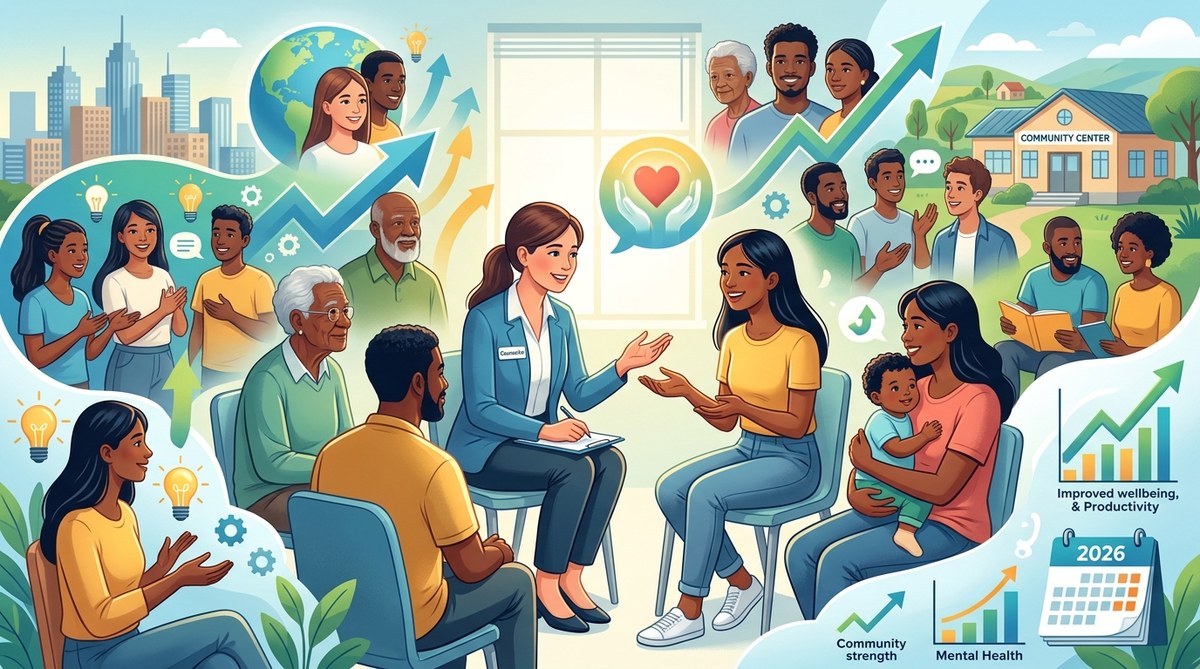
Why Investing in Mental Health Services Is Critical for Underserved Populations in 2026
Let’s talk about something that keeps a lot of us up at night.
You see the numbers. You hear the stories. A single mom in rural Alabama drives 90 minutes to find a therapist who accepts her insurance. A veteran in Detroit waits eight months for a counseling slot. A teenager in a Navajo Nation community texts a crisis line because there is no school counselor within 50 miles. These are not isolated cases. They are the daily reality for millions of Americans who need mental health support but cannot get it. The gap between those who can access care and those who cannot is not shrinking. In 2026, it is widening faster than most people realize. And the communities hit hardest are the same ones that have been overlooked for decades.
Investing in mental health services for underserved populations in 2026 is not just about closing a gap. It is about preventing a cascade of worse outcomes: homelessness, unemployment, chronic illness, and shorter life expectancy. Evidence shows that targeted funding reduces emergency room visits, improves school performance, and strengthens local economies. For policymakers and advocates, the question is no longer whether to invest. It is how to invest wisely and urgently.
The Real Cost of Doing Nothing
When communities lack access to mental health care, the price tag shows up everywhere. Emergency rooms become primary care providers. Jails become the largest mental health facilities in many counties. Children fall behind in school. Adults lose jobs. Families break apart.
A 2025 study from the National Council for Mental Wellbeing found that untreated mental health conditions cost the U.S. economy roughly $300 billion each year in lost productivity, healthcare expenses, and criminal justice involvement. That number is projected to climb in 2026 if investment does not catch up.
But the human cost is harder to measure. A mother who cannot get treatment for her depression struggles to keep steady work. A teenager with anxiety drops out of high school. A veteran with PTSD cycles through homelessness. These outcomes are not inevitable. They are the result of a system that has never fully served everyone.
Why Underserved Populations Face Steeper Barriers
Barriers to care are not random. They cluster around specific communities. Rural residents, people of color, low-income families, LGBTQ+ individuals, and people with disabilities consistently report lower access to mental health services. The reasons are layered.
- Provider shortages. More than half of U.S. counties have no practicing psychiatrist. Rural areas are hit hardest.
- Cost and insurance gaps. Even when people have insurance, high copays and limited provider networks block care.
- Cultural and language barriers. Many providers do not reflect the communities they serve. Trust suffers.
- Stigma. In some communities, seeking therapy is seen as a weakness or a betrayal of family values.
- Transportation and time. A weekly therapy appointment can mean a half-day of travel and lost wages.
These obstacles do not exist in isolation. They stack on top of each other. A low-income family in a rural area with limited Spanish-language providers faces a nearly impossible situation.
What Works: Evidence-Based Strategies for 2026
The good news is that we know what works. Research from the past decade has identified clear strategies that improve outcomes for underserved populations. The challenge is scaling them.
Integrated Care Models
When mental health services are offered inside primary care clinics, community health centers, or schools, people show up. They do not have to make a separate appointment at a different location. They do not have to navigate a confusing system. They simply talk to a provider they already trust.
This model, often called collaborative care, has been shown to reduce depression symptoms by 50 percent or more in low-income populations. It also lowers overall healthcare costs by catching problems early.
Community Health Worker Programs
People trust people they know. Training community members as mental health supporters, navigators, or peer counselors has proven effective in many settings. These workers understand the local culture, speak the language, and can meet people where they are.
Telehealth and Mobile Services
The pandemic pushed telehealth into the mainstream. In 2026, it remains a lifeline for rural and underserved communities. But it works best when paired with reliable internet access and devices. Programs that provide both technology and clinical support see the strongest results.
A Closer Look: Comparing Common Approaches
Not all interventions are equally effective for every population. Here is a breakdown of four common strategies and how they perform in underserved communities.
| Strategy | Best For | Common Mistake | Success Indicator |
|---|---|---|---|
| School-based clinics | Children and teens | Offering only crisis care instead of ongoing support | Higher attendance and lower disciplinary referrals |
| Mobile health units | Rural and homeless populations | Understaffing or irregular schedules | Consistent visit volume and patient satisfaction |
| Culturally adapted therapy | Immigrant and refugee groups | Using one-size-fits-all therapy models | Improved retention and symptom reduction |
| Crisis hotlines and text lines | Anyone in acute distress | Not connecting callers to follow-up care | Reduced repeat crisis calls |
The table makes one thing clear: context matters. A strategy that works well in an urban school district may fail in a rural farming community. Funding needs to be flexible enough to adapt.
Three Steps to Turn Investment Into Impact
If you are a policymaker, nonprofit leader, or advocate looking to make a real difference in 2026, here is a practical process to follow.
-
Map the current landscape. Before you spend a dollar, know what exists. Where are the gaps in your community? Who is already doing good work? What populations are falling through the cracks? This step prevents duplication and identifies the biggest opportunities.
-
Fund what is proven, but leave room for innovation. Evidence-based programs like collaborative care and school-based mental health should get the bulk of resources. But set aside a portion of any budget for pilot programs. Some of the best solutions come from the communities themselves.
-
Measure outcomes, not just activity. Do not track only how many people were served. Track whether their symptoms improved, whether they stayed in treatment, and whether their quality of life changed. That data tells you what is actually working.
“The most effective mental health investments are the ones that treat communities as partners, not patients. When people have a voice in designing the services they receive, those services are more likely to be used and more likely to help.” Dr. Lisa Chen, community mental health researcher and author of “Care Without Barriers”
The Connection Between Mental Health and Other Humanitarian Goals
Mental health does not exist in a vacuum. It is deeply connected to food security, housing stability, education, and economic opportunity. A person struggling with untreated depression is less likely to hold a steady job, prepare nutritious meals, or keep their children enrolled in school.
That is why organizations focused on hunger, poverty, and healthcare access are increasingly integrating mental health into their work. For example, community food programs that include mental health screenings or referrals see better outcomes for participants. School meal programs paired with counseling support help children stay engaged and learn more effectively.
If your organization works in food security or community development, adding a mental health component is not mission drift. It is mission completion. You cannot nourish a body if the mind is struggling to survive.
How to Advocate for Mental Health Funding in 2026
Talking to policymakers about mental health investment requires clear, compelling language. Here are key messages that resonate.
- It saves money. Every dollar invested in mental health treatment saves four dollars in emergency and crisis care.
- It is popular. Bipartisan majorities of voters support increased mental health funding, especially for children and veterans.
- It prevents crises. Early intervention reduces the need for expensive hospitalizations, police interventions, and long-term disability.
- It strengthens communities. People who get mental health support are more likely to work, volunteer, and care for their families.
Policymakers respond to data and stories. Bring both to every conversation.
A Path Forward That Honors Every Community
Investing in mental health services for underserved populations in 2026 is not a luxury. It is a necessity. The evidence is clear. The strategies are known. The cost of inaction is measured in human lives and community stability.
The most effective investments share a common thread: they treat underserved communities not as problems to be solved, but as partners to be empowered. They listen first. They fund what works. They measure what matters.
For anyone reading this who works in public health, runs a nonprofit, or advocates for marginalized communities, the challenge is not whether to act. It is how to act with purpose and urgency. Start where you are. Use what you have. Reach the people who have been waiting too long.
The future of mental health care in America depends on decisions made right now. Make them count.