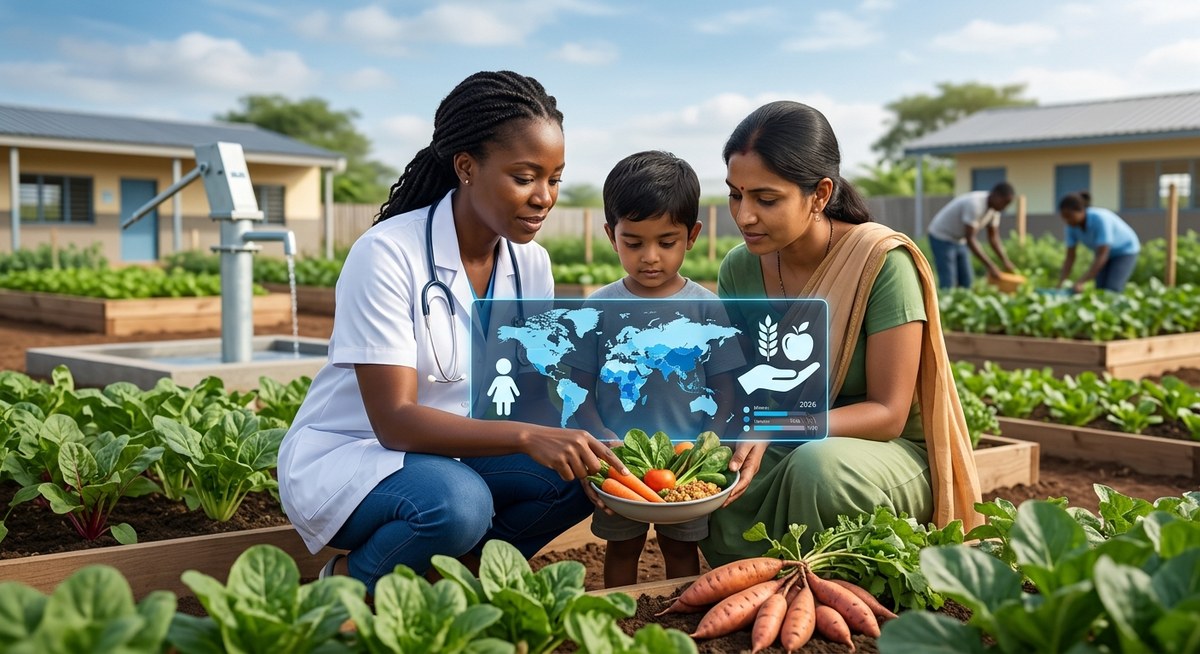
Why Micronutrient Deficiencies Are the Hidden Hunger Crisis in 2026
You have likely seen images of severe malnutrition. A child with a distended belly. A mother too weak to stand. These are the faces of hunger that make headlines. But there is a second, quieter crisis happening all around the world. It does not always show up as a shrinking waistline. It does not cause immediate starvation. Yet it saps energy, weakens immunity, and stunts the potential of more than two billion people. This crisis is called hidden hunger. And in 2026, it demands far more attention than it gets.
Hidden hunger is a chronic lack of essential vitamins and minerals that affects over two billion people worldwide, even those who eat enough calories. It causes lifelong damage to physical and cognitive health, traps communities in poverty, and remains largely invisible in standard hunger surveys. Understanding its scale and impact is the first step toward effective solutions.
What is hidden hunger and why does it stay invisible
Hidden hunger is the term health experts use to describe micronutrient malnutrition. It happens when people get enough calories to fill their stomachs but not enough vitamins and minerals to keep their bodies working well. You can eat three meals a day and still suffer from hidden hunger.
Why does it stay invisible? Because it does not look like the famines we see on the news. A child with an iron deficiency might seem a little tired, a little pale. A woman lacking iodine might feel sluggish and have trouble concentrating. These symptoms are easy to overlook. They get blamed on stress, bad sleep, or just a heavy workload. Meanwhile, the deficiency keeps doing damage.
In many parts of the world, diets have shifted toward cheap, calorie-dense staple foods like white rice, wheat, and corn. These foods fill you up, but they lack the dense micronutrients found in vegetables, fruits, legumes, and animal products. Over time, the body runs low on iron, vitamin A, zinc, folate, and iodine. That is the paradox of hidden hunger in an age of abundance.
The true cost of micronutrient gaps
Micronutrient deficiencies do not just make someone feel tired. They have real, measurable consequences that ripple across generations.
Iron deficiency anemia weakens the immune system and makes it harder for the body to fight infections. In pregnancy, it increases the risk of maternal death and leads to babies born with low birth weight. Vitamin A deficiency is the leading cause of preventable blindness in children. It also makes common childhood illnesses like measles far more dangerous. Zinc deficiency stunts growth and causes more diarrhea, which is a major killer of young kids. Iodine deficiency during pregnancy can cause permanent brain damage in the developing fetus.
The economic toll is enormous. The World Bank estimates that micronutrient deficiencies cost low and middle income countries up to 5 percent of their gross domestic product every year. That happens through lost productivity, higher healthcare costs, and reduced earning potential for people whose development was impaired early in life.
Hidden hunger is not a faraway problem either. In the United States, populations with limited access to fresh produce, such as people living in food deserts or low income neighborhoods, often battle the same deficiencies. A 2026 report from the CDC highlighted that nearly 10 percent of American women of childbearing age are iron deficient. The figures are higher for Black and Hispanic women.
How we measure hidden hunger
Health professionals rely on a mix of dietary surveys, blood tests, and clinical signs to estimate hidden hunger. The table below shows the four most widespread deficiencies and their telltale markers.
| Micronutrient | Estimated people affected globally | Key health impacts |
|---|---|---|
| Iron | 1.6 billion | Anemia, fatigue, impaired cognitive development, maternal mortality |
| Zinc | 1.2 billion | Stunted growth, weakened immunity, more diarrhea and pneumonia |
| Vitamin A | 250 million preschool children | Night blindness, higher death from measles and malaria |
| Iodine | 2 billion (with insufficient intake) | Goiter, cretinism, lower IQ in children |
These numbers come from the 2026 Global Nutrition Report and the latest estimates from the Micronutrient Forum. They show that hidden hunger is not a small problem. It is the most widespread form of malnutrition on the planet.
Why 2026 demands renewed focus
You might think we would have solved this by now. After all, we know what foods contain the missing nutrients. We know how to fortify staples. We know how to supplement at risk groups. So what is stopping us?
Three main barriers remain in 2026.
First, funding for nutrition programs has not kept pace with need. The COVID 19 pandemic and the global economic shocks that followed pushed many governments to cut back on nutrition budgets. Second, conflict and climate change disrupt food systems in places that already struggle with poor diets. Third, the focus on calorie counting in food aid often overshadows the quality of those calories.
That is why health professionals and researchers are the key. You already see the hidden hunger in your clinics and your data. Your voice can push policymakers to treat nutrition quality as seriously as food quantity. Your research can uncover the most effective interventions for specific communities. Your advocacy can ensure that a plate of rice is no longer considered a full meal.
Proven strategies to fight hidden hunger
There is no single solution, but a combination of approaches works. Here is a step by step process that many global health organizations use in 2026.
-
Screen at risk populations. Use simple blood tests or dietary recall surveys to identify who is deficient and in which nutrients. Pregnant women, young children, and adolescent girls should be the first priority.
-
Deploy targeted supplementation. Give high dose vitamin A capsules to children twice a year in regions where deficiency is common. Provide iron-folate tablets to pregnant women. Zinc and oral rehydration salts together can cut childhood diarrhea deaths significantly.
-
Fortify staple foods at scale. Add iron and folic acid to wheat flour. Add iodine to salt. Add vitamin A to cooking oil and sugar. Fortification is cheap and reaches whole populations without requiring behavior change.
-
Promote dietary diversity. Work with local communities to grow and eat a wider variety of foods. Home gardens, small livestock, and education on complementary feeding for infants can improve micronutrient intake naturally.
-
Integrate nutrition into health systems. Train community health workers to counsel families on diet, monitor growth, and refer cases of severe deficiency to clinics. Make nutrition a standard part of every prenatal and child health visit.
These steps are not theoretical. They have been proven in dozens of countries from Nepal to Kenya to Guatemala. The challenge is scaling them up to cover the populations that still miss out.
The role of food fortification versus supplementation
Both fortification and supplementation are essential tools, but they work best in different situations. Here is a comparison.
-
Supplementation is ideal for reaching specific groups during short windows of high need. Example: iron tablets for pregnant women. It is relatively expensive per person and requires a functioning distribution system.
-
Fortification is better for reaching whole populations over the long term. Example: iodized salt. It costs pennies per person per year and does not depend on people remembering to take a pill.
-
Biofortification is a newer strategy. It involves breeding staple crops to have higher levels of micronutrients. For instance, orange sweet potatoes rich in vitamin A, or iron fortified beans. This approach works well in rural areas where fortified processed foods are hard to get.
A balanced plan uses all three. Health professionals can decide the right mix based on the local diet, infrastructure, and budget.
There is a common mistake that programs make. They focus on just one nutrient, often iron, and forget that hidden hunger rarely comes alone. People who lack iron are also likely to lack zinc, vitamin A, and others. Single nutrient approaches can leave the bigger picture unaddressed.
“We used to think that if we fixed iron deficiency, we had solved the problem. But hidden hunger is a team of deficiencies working together. You have to tackle them as a system, not one at a time.”
Dr. Amara Okafor, nutrition researcher at the University of Ibadan, speaking at the 2026 Global Nutrition Summit
A call to action for researchers and health professionals
You already know the numbers. You already see the consequences. What is missing is the urgency.
Hidden hunger does not make the evening news. It does not cause mass mobilization like an earthquake or a flood. But it kills more people slowly, year after year, than many headline disasters. It robs children of their full intelligence. It keeps families trapped in poverty because a mother who is anemic cannot work at full capacity, and a child who is stunted will earn less as an adult.
There are concrete ways you can help right now in 2026.
If you are a researcher, publish your findings in open access journals and make sure they reach the front line health workers who need them. If you are a clinician, ask about diet during every appointment. A simple question like “What did you eat yesterday?” can reveal a lot. If you are a program manager, measure not just food security but micronutrient adequacy. If you are an educator, include hidden hunger in your curriculum. It is a topic that deserves more classroom time.
We also need to connect the dots between hunger and other global crises. Hidden hunger makes people more vulnerable to infectious diseases, including new variants and future pandemics. Hidden hunger is both a cause and a consequence of poverty. Programs that address one often help the other.
Food First continues to work with local partners to build resilient food systems that deliver both calories and nutrients. We also support innovative strategies to combat hunger that put the quality of food at the center.
Making hidden hunger visible in every conversation
Hidden hunger has been called the quiet emergency for decades. In 2026, we have the tools, the knowledge, and the data to eliminate it. What we need is the collective will to act.
Start wherever you are. Bring up micronutrient quality in your next staff meeting. Ask your local food bank whether the items they distribute include fortified foods or fresh produce. Write to your representative about supporting international nutrition programs. Every conversation is a chance to make hidden hunger less invisible.
The two billion people affected by this crisis do not need pity. They need better policies, smarter programs, and a world that understands the difference between a full stomach and a nourished body. That understanding begins with people like you.
Thank you for taking the time to learn about hidden hunger. The next step is to share what you know and put it into practice. Let us make 2026 the year hidden hunger finally gets the attention it deserves.