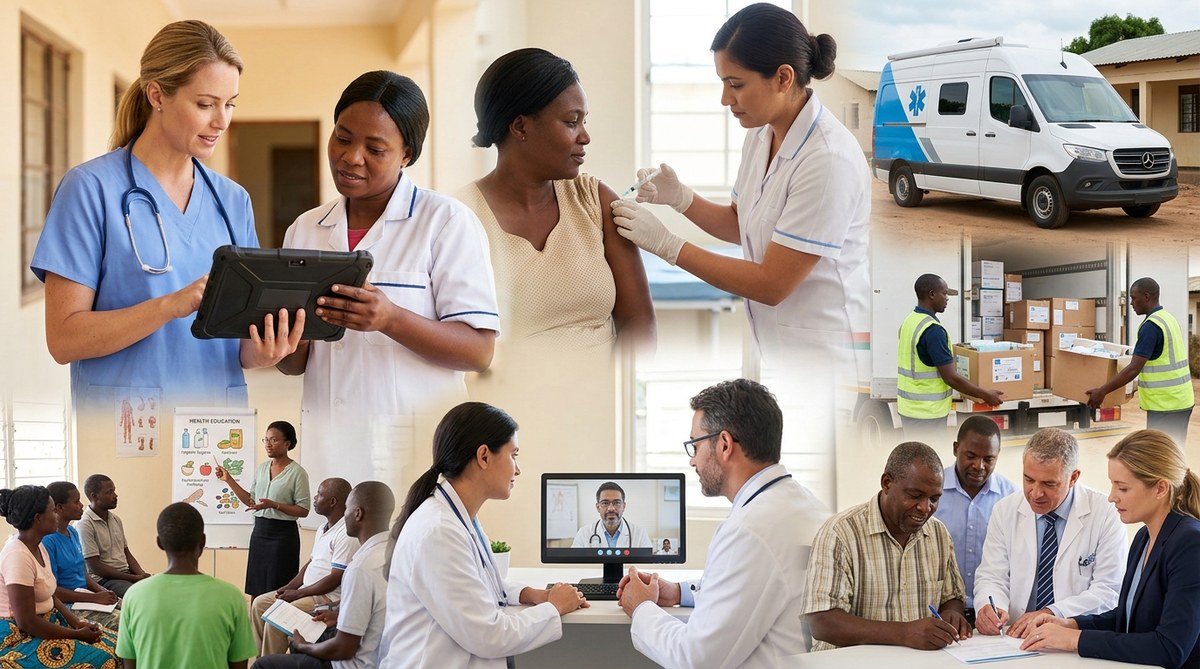
Getting quality healthcare should not depend on your zip code. Yet in communities across the United States, millions of people still face barriers that keep them from seeing a doctor when they need one. Whether it is a long drive to the nearest clinic, a shortage of providers, or simply not knowing where to turn, these gaps in care lead to worse health outcomes and deeper inequality. For public health professionals and policymakers, the challenge is real but so are the solutions. By 2026, we have an opportunity to make meaningful progress on healthcare access underserved communities.
Improving healthcare access underserved communities requires a mix of mobile units, telehealth, community health workers, policy reform, transportation partnerships, school based clinics, and data driven outreach. These seven strategies are actionable now and can close care gaps by 2026, but only if we commit to funding, community input, and long term follow through.
## Know Where the Gaps Are Before You Act
Before you roll out any program, you need a clear picture of the barriers people face. Data from local health departments, hospital systems, and community surveys can reveal which neighborhoods lack a primary care provider, which populations skip preventive screenings, and why. For example, in many rural counties, the closest obstetric unit is over an hour away. In urban areas, wait times for a specialist can stretch for months. Mapping these gaps helps leaders target resources effectively.
Without good data, even well intentioned efforts can miss the mark. A mobile clinic might park in the wrong spot. A telehealth program might not consider that many households lack broadband. Start by compiling the numbers. Then talk to the people who live there. That combination gives you a roadmap that actually matches reality.
## Strategy 1: Deploy Mobile Health Units Where They Are Needed Most
Mobile clinics are not a new idea, but they have improved a lot in recent years. A van equipped with exam rooms, lab equipment, and even telemedicine capabilities can serve multiple locations each week. In 2026, many communities are using these units to bring routine checkups, vaccinations, and chronic disease management directly to neighborhoods that have no permanent clinic nearby.
Mobile units work especially well for reaching migrant farmworkers, homeless populations, and people in housing insecure situations. They meet people where they already gather. And they build trust over time, because the same staff return every week. For a closer look at how this model is scaling, check out our article on [how mobile health units are improving healthcare access for rural America in 2026](https://foodfirstinc.com/how-mobile-health-units-are-improving-healthcare-access-for-rural-america-in-2026/).
## Strategy 2: Scale Telemedicine with a Focus on Equity
Telemedicine exploded during the pandemic, but it also exposed a digital divide. Many patients in underserved areas do not have reliable internet or a device for video visits. The solution is not to abandon telehealth, but to adapt it. Community health centers can set up kiosks in libraries, laundromats, or faith based centers where patients can connect to a provider with a nurse present.
Also, keep phone only visits as an option. Not every consultation needs video. In 2026, the most effective telemedicine programs offer multiple ways to connect and include digital literacy training. To understand the bigger picture, see [how technology is revolutionizing healthcare access in underserved communities by 2026](https://foodfirstinc.com/how-technology-is-revolutionizing-healthcare-access-in-underserved-communities-by-2026/).
## Strategy 3: Invest in Community Health Workers
Community health workers (CHWs) are frontline staff who come from the communities they serve. They speak the same language, understand local culture, and help people navigate the health system. A CHW might assist someone with signing up for Medicaid, remind them about a screening appointment, or accompany them to a specialist visit.
Programs that employ CHWs show higher rates of cancer screening, better blood pressure control, and lower hospital readmission rates. This is one of the most cost effective interventions available. If your organization does not have a CHW program, start small with a pilot in one neighborhood. For more insights, read about [how community health workers are transforming healthcare access in underserved areas](https://foodfirstinc.com/how-community-health-workers-are-transforming-healthcare-access-in-underserved-areas/).
## Strategy 4: Reform Payment and Insurance Models
Even the best designed programs fail if patients cannot afford care. Many underserved communities have high uninsured rates or face steep copays for specialist visits. Policymakers can expand Medicaid, simplify enrollment, and increase reimbursement for primary care services. Value based payment models that reward outcomes instead of volume can also encourage providers to invest in preventive care.
Insurance alone does not guarantee access, but it removes a huge barrier. Pair coverage expansion with efforts to make sure newly insured patients can actually find a doctor who accepts their plan. That means recruiting providers to shortage areas and offering loan forgiveness or bonuses.
## Strategy 5: Build Transportation Partnerships
Transportation is one of the most commonly cited barriers to care. In rural areas, public transit is sparse. In cities, a bus ride can take two hours to reach a hospital. Healthcare organizations can partner with ride sharing services, local transit authorities, or volunteer driver programs to provide free or low cost rides to appointments.
Some clinics now offer shuttle service on certain days. Others give gas cards or bus passes. When you remove the transportation hurdle, no show rates drop dramatically, and chronic conditions get managed earlier. For a broader look at creative solutions, see our piece on [bridging healthcare gaps in underserved communities with telemedicine solutions](https://foodfirstinc.com/bridging-healthcare-gaps-in-underserved-communities-with-telemedicine-solutions/).
## Strategy 6: Place Services in Schools and Community Centers
Schools are natural hubs for reaching children and their families. A school based health center can provide checkups, immunizations, mental health counseling, and even dental care. Because kids are already there, parents do not miss work to take them to a separate appointment. Similarly, community centers in public housing or senior centers can host weekly clinics.
These locations reduce the stigma of seeking care. People feel comfortable walking into a familiar place. They also allow for integration with other services like food assistance or social work. If you are looking for a model, many states have established school based health center networks that show strong results.
## Strategy 7: Use Data to Continuously Improve Outreach
No single strategy works everywhere. That is why continuous quality improvement matters. Use patient registration data, appointment records, and community surveys to track who is still falling through the cracks. For example, if your mobile clinic sees mostly women, you might need to adjust hours or location to reach men.
Create a feedback loop with community advisory boards. Ask people directly what is working and what is not. Then tweak your approach. In 2026, many organizations are using geospatial mapping to identify hotspots of unmet need. This data driven mindset ensures resources go where they are most effective.
## Common Mistakes and How to Avoid Them
Even experienced teams can stumble. Here is a table of common pitfalls and the correct approaches.
| Mistake | Correct Approach |
|———|——————|
| Launching a program without community input | Hold listening sessions before designing anything |
| Ignoring language and cultural barriers | Hire bilingual staff and use culturally tailored materials |
| Overlooking transportation needs | Partner with local ride services or offer vouchers |
| Telehealth without broadband access | Set up community kiosks or offer phone only visits |
| Focusing only on acute care | Emphasize preventive services and chronic disease management |
| One size fits all scheduling | Offer evening and weekend hours to match work schedules |
> “You cannot parachute into a community with a solution you designed in a boardroom. The people who live there know their own barriers. Our job is to listen first and then co design programs that fit their reality.” — Dr. Amara Osei, Director of Community Health Partnerships, National Rural Health Association
## A Practical Action Plan for 2026
If you are ready to strengthen healthcare access underserved communities, here is a simple process to follow:
1. **Audit** your current services and collect data on who is being missed.
2. **Engage** community leaders and residents through focus groups or surveys.
3. **Select** two or three strategies from the list above that address your biggest gaps.
4. **Pilot** one program in a small area, measure results, and adjust.
5. **Scale** what works and share your findings with other organizations.
6. **Advocate** for policy changes that support sustainable funding.
7. **Repeat** the cycle every year to keep improving.
## Building a Healthier Future Together
These seven strategies are not theoretical. They are being used right now in communities across the United States, and they are making a difference. Whether you are a county health director, a nonprofit leader, or a state policymaker, you have the power to move the needle on healthcare access underserved communities. Start with one change. Measure it. Learn from it. Then take the next step.
The goal? By the end of 2026, every person in your community should know exactly where to go for affordable, respectful care when they need it most. That is the future we can build together.