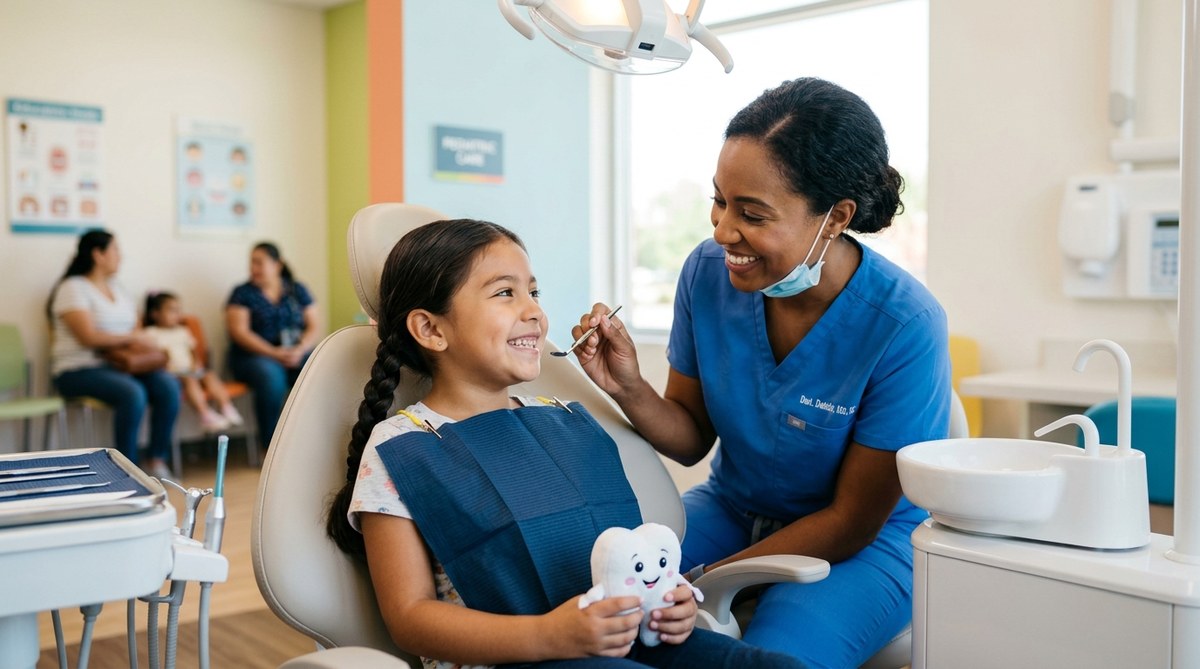
Why Expanding Pediatric Dental Care Is a Lifesaving Investment for Low-Income Families
Every 28 seconds, a child walks into an emergency room with a dental problem that could have been prevented. That is not a rare tragedy. It is a daily reality for millions of American families who cannot access routine checkups. For low-income households, a tiny cavity can spiral into a life threatening infection, missed school days, and a lifetime of chronic health battles. We often talk about food insecurity and hunger as the great equalizers of poverty, but oral health sits right beside them, quietly stealing futures. Expanding access to pediatric dental care is not just about fixing teeth. It is about saving lives, boosting school performance, and breaking generational poverty. This is the investment that pays dividends we rarely measure but always feel.
Expanding pediatric dental care for low-income families in 2026 is a lifeline that prevents deadly infections, improves school attendance, and cuts emergency healthcare costs. For every dollar spent on preventive dental care, communities save up to $50 in treatment costs. This article breaks down the social, economic, and health benefits that make this investment non-negotiable.
The Hidden Crisis Behind the Smile
Dental decay is the most common chronic childhood disease in the United States. It is five times more common than asthma and seven times more common than hay fever. Yet, we treat it like a cosmetic issue. When a child from a low-income family has a toothache, they cannot concentrate in class. They cannot eat an apple. They cannot sleep through the night. Their parents miss work to take them to the emergency room, where they will likely receive antibiotics and painkillers, not actual dental treatment.
The numbers are staggering. According to the Centers for Disease Control and Prevention, nearly one in five children aged 5 to 11 has at least one untreated decayed tooth. For families on Medicaid, the situation is worse. Many pediatric dentists do not accept Medicaid because of low reimbursement rates and high administrative burdens. This leaves parents with two choices: pay out of pocket for expensive care, or let the problem fester until it becomes an emergency.
Why a Toothache Is Never Just a Toothache
We need to stop thinking of the mouth as separate from the rest of the body. The mouth is the gateway to overall health. Untreated oral infections can lead to sepsis, a life threatening condition where the infection spreads through the bloodstream. Children have died from tooth infections that started as small cavities. It is not rare. It is a public health emergency hiding in plain sight.
When we expand access to pediatric dental care for low-income families, we are not just preventing cavities. We are preventing:
- Systemic infections that can damage the heart and brain.
- Malnutrition caused by the inability to chew properly.
- Speech delays that affect social and academic development.
- Chronic pain that disrupts sleep and cognitive function.
The mouth is not a separate entity. It is connected to everything. A child with gum disease has higher levels of inflammatory markers that are linked to diabetes and cardiovascular disease later in life. By investing early, we reduce the burden on the entire healthcare system.
The Economic Argument: Every Dollar Counts
Here is where the conversation gets interesting. Expanding pediatric dental care is not a cost. It is a savings plan. A study from the American Academy of Pediatric Dentistry found that for every $1 spent on preventive dental care, you save between $8 and $50 in restorative and emergency treatments. For low-income families, these savings are the difference between paying rent and going into debt.
Consider the broader economic impact:
| Metric | Without Preventive Care | With Preventive Care |
|---|---|---|
| Emergency room visits | 3 times more likely | Rare |
| Hospitalizations per child | $4,000+ per visit | Near zero |
| Missed school days | 2.1 days per year | 0.5 days |
| Parental work loss | 3+ days per year | Less than 1 day |
| Lifetime dental costs | Significantly higher | 40% lower |
The table above shows a clear pattern. Prevention is not a luxury. It is the most efficient way to deliver healthcare. When we expand access for low-income families, we reduce the financial strain on Medicaid, hospitals, and employers.
The School Connection: Attendance, Grades, and Future Earnings
There is a direct line between a healthy smile and a high school diploma. Children with oral pain are three times more likely to miss school. They are also more likely to be distracted when they are present. Imagine trying to learn algebra when your jaw is throbbing. It is impossible.
In 2026, school attendance is a major focus for public health officials. Chronic absenteeism is linked to dropout rates, which in turn are linked to poverty. By expanding pediatric dental care for low-income families, we are essentially improving educational outcomes without touching a single textbook. Kids who can chew, sleep, and focus are kids who can learn.
This is not just theory. States like North Carolina have implemented school based dental sealant programs. The results were dramatic. Schools with sealant programs saw a 60% reduction in cavities among participating children. These programs are cheap to run and reach children where they already are: in the classroom.
The Social and Emotional Toll
We cannot ignore the psychological impact of dental disease. Children with visible tooth decay often face bullying. They are teased for their appearance. They may smile less, talk less, and withdraw from social interactions. This can lead to anxiety, depression, and low self esteem. For a child, a smile is a tool for making friends. When that tool is taken away, the social consequences can last a lifetime.
Expanding access is also a matter of equity. Low-income families and children of color bear the brunt of dental disease. According to the Health Resources and Services Administration, Black and Hispanic children are twice as likely to have untreated cavities as their white counterparts. This is not a genetic issue. It is a structural one. Lack of access to dentists, lack of transportation, and lack of insurance all play a role. By investing in community health centers and mobile dental clinics, we can start to close this gap.
How We Can Expand Access in 2026
We know what works. The problem is that we do not fund it enough. Here are the most effective strategies for expanding pediatric dental care for low-income families:
- Increase Medicaid reimbursement rates for pediatric dental providers. When dentists are paid fairly, they are more likely to accept Medicaid patients.
- Fund school based health centers that offer dental screenings, sealants, and fluoride varnish applications on site.
- Expand the dental workforce by allowing dental therapists to perform basic procedures. These are licensed midlevel providers who can fill cavities and place crowns, much like physician assistants in medicine.
- Invest in teledentistry to connect families in rural areas with specialists for consultations and follow up care.
- Integrate dental care into primary care visits. Pediatricians already see children multiple times in their first year. Training them to apply fluoride varnish and spot early decay is a low cost, high impact intervention.
These strategies are not mutually exclusive. They work best when combined into a comprehensive system.
The Role of Community Health Centers
Community health centers are the backbone of care for low-income families. They provide primary care, behavioral health, and increasingly, dental services. In 2026, these centers serve 1 in 5 Medicaid beneficiaries. They are trusted local institutions that understand the communities they serve.
However, many community health centers struggle to recruit and retain dental staff. The pay is often lower than private practice, and the patient load is heavy. This is where philanthropy and federal funding come in. By supporting these centers, we are not just providing a service. We are building infrastructure. We are creating a safety net that catches children before they fall through the cracks.
If you are looking for ways to support this mission, consider how community health centers are the backbone of equitable healthcare access. They are often the only source of dental care for miles in underserved areas.
The Ripple Effect on Nutrition and Hunger
We cannot talk about dental care without talking about food. The connection between oral health and nutrition is a two way street. Poor nutrition causes tooth decay, and tooth decay causes poor nutrition. When children cannot chew, they avoid healthy foods like fruits, vegetables, and whole grains. Instead, they gravitate toward soft, processed foods that are high in sugar and low in nutrients. This creates a cycle of obesity and malnutrition that is hard to break.
This is why our work at Food First is so closely tied to healthcare. A child cannot be food secure if they cannot eat the food we provide. By expanding access to dental care, we are also protecting our investment in food assistance programs. It is a holistic approach that recognizes the body as a complex system. For more on how we address these interconnected challenges, explore how we are strengthening food security in marginalized communities by 2026.
What Policymakers Need to Hear
If you are a policy analyst or a public health advocate, you already know the data. But here is the message you need to amplify: pediatric dental care is not optional. It is a mandatory component of any comprehensive healthcare reform package. In 2026, we have the tools, the workforce, and the knowledge to eliminate pediatric dental disease as a public health threat. What we lack is the political will.
We need to move beyond the “silent epidemic” and start treating this like the crisis it is. This means:
- Mandating dental coverage in all public insurance plans.
- Holding insurance companies accountable for maintaining adequate provider networks.
- Funding public awareness campaigns that teach parents about the importance of baby teeth.
- Supporting research into new preventive treatments, including vaccines against cavities.
The science is clear. The cost is manageable. The time is now.
A Practical Guide for Advocates and Families
For those on the front lines, whether you are a parent, a social worker, or a community organizer, here is a practical list of actions you can take today:
- Find a dental home: Help families establish a dental home by age one, not age three. Call your local health department for referrals.
- Use teledentistry: Many providers now offer virtual consultations. This is especially helpful for working parents who cannot take time off.
- Apply for CHIP: The Children’s Health Insurance Program covers dental care for families who earn too much for Medicaid but still cannot afford private insurance.
- Advocate for school programs: Ask your school board to implement dental sealant programs. They are evidence based and cost effective.
- Support mobile clinics: Donate to or volunteer with organizations that bring dental care to homeless shelters and community centers.
For more insights on how technology is changing the landscape, read about how telemedicine is closing the healthcare gap for rural communities in 2026.
The Ripple Effect on the American Economy
We have talked about the individual benefits, but what about the macro level? When children grow up with healthy teeth, they are more likely to get jobs, earn higher wages, and contribute to the economy. They are less likely to rely on public assistance. They are less likely to be hospitalized for preventable conditions.
A 2026 report from the National Bureau of Economic Research estimated that untreated dental disease costs the U.S. economy over $45 billion in lost productivity each year. That is money that could be spent on housing, food, and education. When we invest in pediatric dental care for low-income families, we are not just spending money. We are investing in the future workforce.
This is not a partisan issue. It is a fiscal responsibility. Every dollar spent on prevention saves multiple dollars in treatment. It is one of the few investments that both conservatives and liberals can agree on.
Overcoming the Barriers: Transportation, Language, and Fear
Even when services are available, families face significant barriers. Transportation is a major issue in rural areas where the nearest dentist might be an hour away. Language barriers prevent non English speaking parents from navigating the system. And dental anxiety is real, not just for children, but for adults too.
To overcome these barriers, we need to think creatively:
- Mobile dental vans can travel to schools, Head Start programs, and community events.
- Bilingual staff and translated materials are essential for serving diverse populations.
- Sedation dentistry and behavioral guidance techniques can help anxious children receive the care they need without trauma.
The goal is to make getting dental care as easy as getting a vaccine. It should be routine, painless, and available to everyone regardless of zip code.
Why This Matters for Global Humanitarian Efforts
The lessons we learn in the United States can be applied globally. Many of the organizations we work with at Food First operate in developing countries where dental care is virtually non existent. By developing scalable models here, we can export them abroad. This is not just about charity. It is about building resilient health systems that can withstand shocks.
For example, the use of dental therapists, which we mentioned earlier, was pioneered in New Zealand and has been adopted in over 50 countries. It is a proven model that addresses the workforce shortage. By expanding these programs in the U.S., we can also influence global policy. We can show the world that prevention is possible, even in resource limited settings.
To see how we approach these challenges holistically, check out how we are building resilient food systems to end global hunger. The same principles of prevention, access, and equity apply.
The Role of Technology in 2026
Artificial intelligence is now being used to detect cavities earlier than ever before. Handheld scanners can create 3D images of teeth in seconds, making the process more comfortable for children. Telehealth platforms are connecting rural clinics with pediatric specialists in urban hospitals. These are not futuristic concepts. They are available today.
We should also consider the role of data. By tracking dental disease rates at the community level, we can target resources where they are needed most. We can identify hotspots and intervene before outbreaks occur. This is public health at its finest.
If you are interested in the intersection of technology and healthcare, you might want to read about how 3D-printed medical devices are improving emergency care in remote areas. While this is about medical devices, the principle of using technology to bridge gaps applies directly to dentistry.
A Call to Action for 2026
We are at a crossroads. We can continue to ignore the silent epidemic of pediatric dental disease, or we can invest in solutions that work. The choice is clear. Expanding pediatric dental care for low-income families is one of the most effective ways to improve public health, reduce poverty, and strengthen the economy.
But we cannot do it alone. It requires a coalition of parents, educators, healthcare providers, and policymakers. It requires us to look beyond our own families and care for our neighbors. It requires us to be our brother’s keeper.
Building a Future Without Preventable Pain
Imagine a world where no child cries in pain because they cannot afford a dentist. Imagine a world where a toothache does not mean a trip to the emergency room. Imagine a world where every child can smile, eat, and learn without shame. That world is within our reach. It is not a dream. It is a goal that we can achieve if we work together.
We have the knowledge. We have the tools. We have the resources. The only question is whether we have the will. Let us choose to be a nation that values the health of its children above all else. Let us choose to invest in prevention over treatment. Let us choose to expand access to pediatric dental care for low-income families in 2026 and beyond.
A Warm Final Word
Thank you for taking the time to understand this issue. It is easy to overlook dental health, especially when there are so many other pressing problems in the world. But I hope this article has shown you that oral health is not a niche concern. It is a fundamental human right. It is the foundation upon which we build healthy, productive, and happy lives. So, the next time you see a child smile, remember that behind that smile is a complex system of bones, gums, and teeth that needs care. Let us make sure every child has access to that care. Let us build a future where a healthy smile is not a privilege, but a promise.