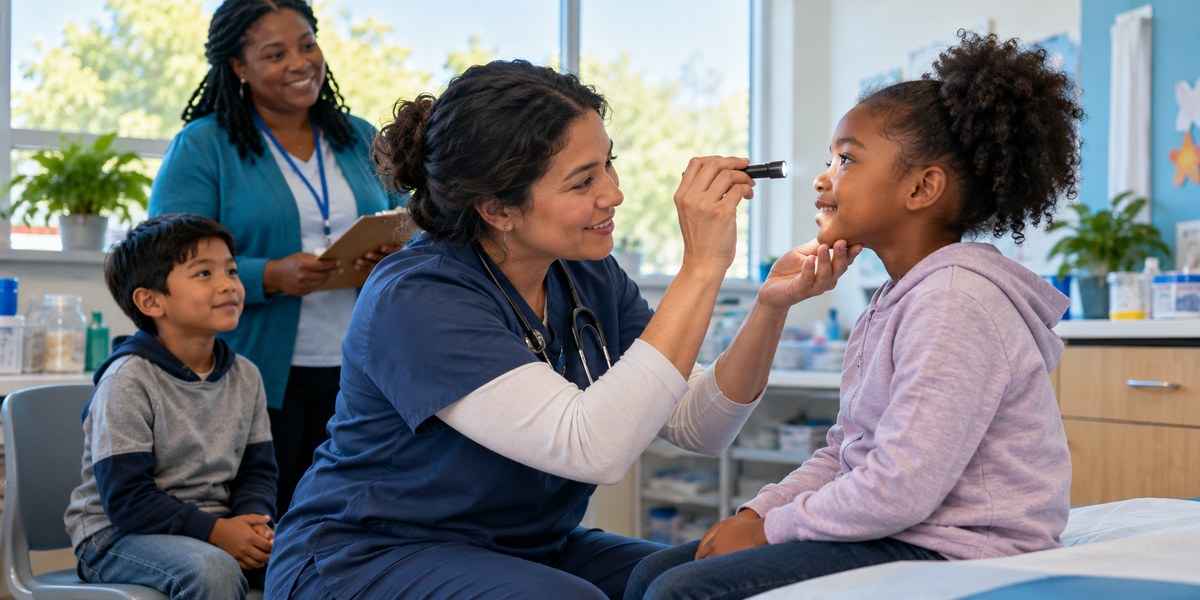
Every morning, millions of children across the United States walk through school doors carrying more than just backpacks. Many carry untreated asthma, undiagnosed vision problems, or the weight of anxiety with no one to talk to. For families in low-income and rural communities, a trip to the doctor often means missing a day of work, paying for gas they cannot spare, or sitting in a waiting room for hours. That is where school-based health centers step in. They bring care directly to the place where children already spend most of their day. In 2026, these centers are not just a convenience. They are a lifeline for underserved children who would otherwise fall through the cracks of a fragmented healthcare system.
School-based health centers are one of the most effective tools for closing the healthcare gap for underserved children. By placing medical, mental, and preventive services inside schools, they remove barriers like transportation, cost, and lost work hours. Success depends on strong partnerships, sustainable funding, community trust, and data-driven outreach. This guide walks through each step to build or expand a center that truly serves.
## Why School-Based Health Centers Matter More Than Ever
The numbers tell a clear story. According to the latest data from the School-Based Health Alliance, more than 2,500 school-based health centers operate across the country. Yet millions of children living in health professional shortage areas still lack access to basic care. For public health administrators and school district leaders, the question is not whether to invest in these centers. It is how to make them work for the children who need them most.
School-based health centers do more than treat strep throat or hand out bandages. They provide comprehensive primary care, mental health counseling, dental screenings, nutrition education, and sometimes even vision services. When a center is placed in a school, absenteeism drops. Academic performance improves. Families no longer have to choose between paying a medical bill and buying groceries.
> “A child cannot learn if they are hungry, sick, or scared. School-based health centers treat the whole child so they can show up ready to succeed.” – Dr. Maria Santos, pediatric director at a rural SBHC in New Mexico
## The Core Components of an Effective School-Based Health Center
Building a center that actually reaches underserved children requires more than a room with a cot and a thermometer. It demands intentional design. Here are the essential pieces that make a center work.
– **Full-time nurse practitioner or physician assistant**: These providers can prescribe medication, diagnose common illnesses, and manage chronic conditions like diabetes or asthma.
– **Licensed mental health professional**: Anxiety, depression, and trauma are common among children in low-income communities. Having a therapist on staff changes lives.
– **Care coordination**: A staff member who helps families sign up for Medicaid, find a dentist, or access food assistance programs.
– **Telehealth capacity**: Not every school can host a full clinic. Telemedicine extends the reach of a single provider across multiple sites.
– **Community advisory board**: Parents, teachers, and local health leaders should have a voice in how the center operates.
## A Step-by-Step Process to Launch or Expand Your Center
Starting a school-based health center can feel overwhelming. Breaking it into clear steps makes the process manageable. Use this numbered list as your roadmap.
1. **Assess the need in your community**. Look at local data on uninsured children, chronic disease rates, and mental health referrals. Talk to parents and teachers. Find out what barriers families face when trying to get care.
2. **Build a coalition of partners**. You cannot do this alone. Reach out to local hospitals, community health centers, the county health department, and nonprofit organizations focused on child well-being. Each partner brings resources and expertise.
3. **Secure sustainable funding**. School-based health centers often rely on a mix of Medicaid reimbursements, federal grants, state funding, and private donations. Look into the Health Resources and Services Administration (HRSA) grants and the Children’s Health Insurance Program (CHIP) outreach funds.
4. **Choose the right location**. The center should be inside a school or within walking distance. Consider which schools in your district have the highest concentration of underserved children. Start there.
5. **Hire culturally competent staff**. Families will not use a center if they feel judged or misunderstood. Hire providers and support staff who reflect the community they serve. Offer training on trauma-informed care and language access.
6. **Promote the center to families**. Send home flyers in multiple languages. Host a back-to-school night where parents can meet the staff. Partner with teachers to send reminders through parent-teacher communication apps.
7. **Track outcomes and adjust**. Measure how many children are seen, what conditions are treated, and how attendance changes. Use that data to improve services and report back to funders.
## Common Mistakes That Undermine School-Based Health Centers
Even well-intentioned centers can fall short. Knowing what to avoid is just as important as knowing what to do. The table below outlines common pitfalls and how to steer clear of them.
| Mistake | Why It Hurts | Better Approach |
| :— | :— | :— |
| Opening without community input | Low utilization; families do not trust the center | Hold listening sessions before designing services |
| Relying on a single funding source | Center closes when grant ends | Diversify funding from federal, state, and local sources |
| Ignoring mental health needs | Physical health improves but kids still struggle | Integrate mental health screening into every visit |
| Not offering evening or weekend hours | Working parents cannot bring children in | Extend hours at least one evening per week |
| Failing to coordinate with local doctors | Duplication of services and wasted resources | Establish referral agreements with nearby clinics |
## How to Measure Impact and Build Long-Term Support
Funders and school boards want to see results. Tracking the right metrics helps you prove the value of your center and secure ongoing funding. Focus on these key indicators.
– Number of students who receive a well-child exam each year
– Reduction in asthma-related emergency room visits
– Improvement in school attendance rates among frequent visitors
– Percentage of students screened for depression or anxiety
– Number of families connected to health insurance or food assistance
Share these numbers in a simple annual report. Use stories alongside data. A chart showing a 15 percent drop in absenteeism is powerful. A parent testimonial about how the center caught their child’s vision problem before third grade is unforgettable.
## Funding Your School-Based Health Center in 2026
Money is often the biggest hurdle. But the landscape is shifting. In 2026, more states are using Medicaid managed care dollars to support school-based services. The federal government has expanded reimbursement for telehealth visits, which makes it easier for rural schools to participate. Look into these specific funding streams.
– Medicaid direct reimbursement for services provided at school
– State children’s health insurance program (CHIP) outreach and enrollment grants
– Federal Title I funds for schools with high poverty rates
– Private foundation grants focused on child health and equity
– Local hospital community benefit dollars
Do not forget about in-kind support. A local clinic might donate a part-time nurse. A university could provide graduate students in social work or public health. Every partnership reduces the financial load.
## Integrating Nutrition and Food Security into Your Center
Children cannot thrive on healthcare alone. Hunger and food insecurity are health issues. Many school-based health centers now screen families for food needs during every visit. If a parent reports running out of food before the end of the month, the center can connect them to SNAP benefits or a local food pantry.
Some centers go further. They host after-school cooking classes for families or start a small food pantry inside the clinic. This holistic approach treats the root causes of poor health, not just the symptoms. For more on this connection, read about [innovative strategies to combat hunger in vulnerable communities](https://foodfirstinc.com/innovative-strategies-to-combat-hunger-in-vulnerable-communities/). A child who eats breakfast and gets their asthma medication at school is far more likely to graduate on time.
## The Role of Telemedicine in Expanding Reach
Not every school district can afford a full brick-and-mortar clinic. Telemedicine changes that. A single nurse practitioner can serve three or four schools in a rural county by seeing students through a secure video connection. The school nurse or a trained aide handles the physical exam basics, and the provider diagnoses and prescribes remotely.
This model works especially well for mental health. A child can meet with a therapist from a private room at school without missing a full day of classes. Telemedicine also helps with specialist access. A dermatologist or psychiatrist based in a city can consult with a student in a small town without traveling.
## Building Trust with Families and Communities
Trust is the invisible currency of school-based health centers. Without it, families will not sign consent forms or show up for appointments. Building trust takes time and intention.
– Hire staff who live in or come from the community.
– Offer services regardless of immigration status.
– Never share a child’s health information without parental permission.
– Translate all forms and signage into the languages families speak at home.
– Attend community events like back-to-school fairs and parent-teacher conferences.
When families see that the center respects their privacy and understands their struggles, they become the strongest advocates for keeping it open.
## A Vision for the Future of School-Based Health
The best school-based health centers do not just treat illness. They create a culture of wellness that spreads through the entire school. Teachers notice fewer disruptions in class. Parents feel supported. Children learn that taking care of their body and mind is normal.
Imagine a school where every child gets a vision screening in kindergarten, so they can see the blackboard from day one. Where a teenager struggling with depression can walk down the hall to talk to a counselor instead of suffering in silence. Where a parent can pick up a free backpack of healthy food for the weekend when they pick up their child’s prescription.
That future is possible. It starts with one center, one partnership, and one child at a time. For school district leaders and public health administrators, the path forward is clear. Assess the need. Build the coalition. Secure the funding. Open the doors. And never stop listening to the families you serve.
Now is the time to act. The children in your community are waiting.