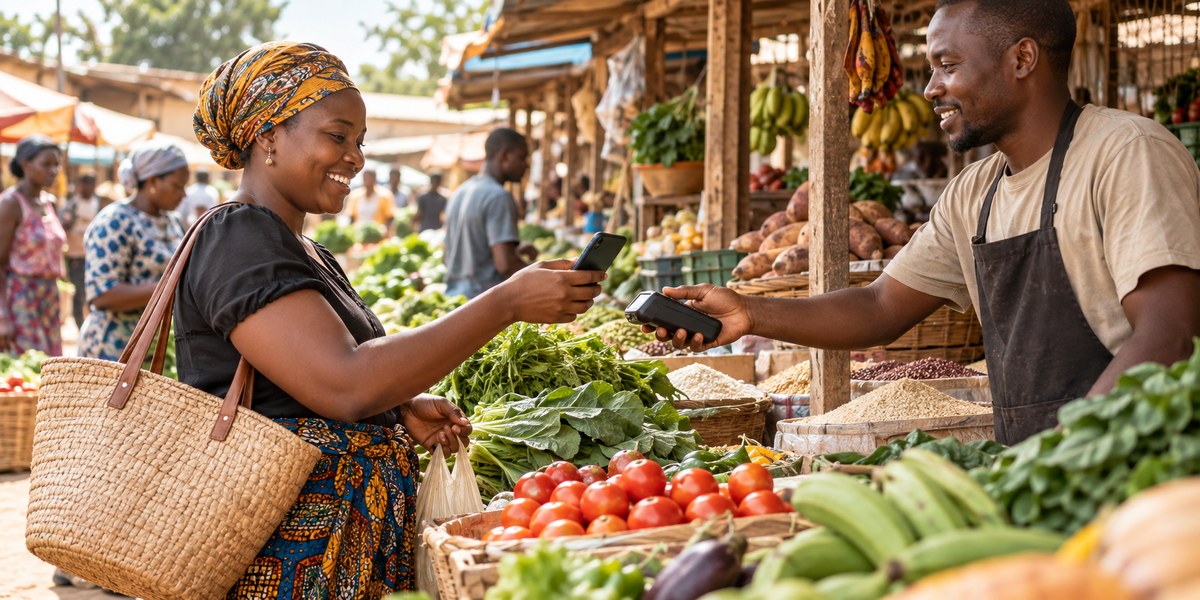
From Aid to Autonomy: How Cash Transfers Are Redefining Food Security in 2026
For decades, the image of food aid was a bag of grain dropped from a truck. But in 2026, a quieter, more radical shift is reshaping how we fight hunger. Cash transfers are no longer a pilot project or a niche experiment. They are a central pillar of global food security strategy. The question is no longer if cash works, but how we design it to build lasting autonomy.
Cash transfers outperform traditional food aid in most settings by offering choice, stimulating local markets, and reducing logistical waste. The evidence in 2026 shows that combining unconditional cash with robust social protection systems leads to better nutritional outcomes and longer-term food security. The biggest challenge left is designing programs that bridge the gap between emergency relief and sustainable graduation.
Why Cash Transfers Are Winning the Day
The evidence base for cash transfers has grown dramatically. A 2026 meta-analysis of programs across sub-Saharan Africa and South Asia shows that households receiving cash see a 15 to 20 percent larger improvement in dietary diversity compared to those receiving in-kind food aid. Why does this happen? Because cash gives people agency.
A family knows if they need medicine more than rice. A mother knows if her child needs eggs instead of lentils. Cash lets them act on that knowledge. It also keeps local markets alive. When people buy food from a local vendor, that vendor can restock. The whole community benefits. Traditional food aid, by contrast, often disrupts local prices and creates dependency on external supply chains.
“Cash transfers are not just about putting money in pockets. They are about restoring the dignity of choice. When we treat people as decision-makers, not passive recipients, food security becomes a shared project.” – Dr. Amina Sow, Senior Economist at the Institute for Development Studies
The 2026 Policy Landscape: From Pilot to Scale
In 2026, the conversation has shifted. We are no longer asking for proof of concept. We are asking how to scale smartly. The World Food Programme now channels over 40 percent of its assistance as cash or vouchers. The US Agency for International Development (USAID) has integrated cash-based interventions into its core emergency protocols.
But scaling brings new challenges. Inflation, market volatility, and the risk of elite capture are real. The most successful programs in 2026 share a few key features.
What the Top Programs Do Differently
- They pair cash with nutrition education. Simply giving money is not enough. Households need to know how to use it for balanced meals.
- They use digital payments. Mobile money reduces leakage and gives women more control over household spending.
- They link to health services. Conditional cash for clinic visits improves child growth outcomes more than cash alone.
- They plan for graduation. The best programs connect recipients to vocational training or microfinance after 12 to 24 months.
A Practical Framework for Program Design
If you are a policy analyst or program officer designing a cash transfer initiative in 2026, here is a straightforward process to follow.
- Assess the market. Is there a functioning market within a reasonable distance? If yes, cash works. If no, you may need in-kind aid or a voucher system tied to a specific supplier.
- Choose the transfer mechanism. Mobile money is fastest. Smart cards offer better tracking. Physical cash works where digital infrastructure is weak.
- Set the transfer value. Base it on the cost of a minimum calorie basket plus a buffer for non-food needs. Update it quarterly for inflation.
- Integrate a monitoring loop. Track not just consumption, but also prices, market health, and recipient satisfaction.
- Plan the exit strategy from day one. Link recipients to longer-term social safety nets or livelihood programs.
Cash vs. In-Kind: When to Use Each
No single tool works everywhere. Here is a practical comparison based on 2026 field data.
| Factor | Cash Transfers | In-Kind Food Aid |
|---|---|---|
| Cost effectiveness | Lower delivery cost (up to 30% less) | Higher due to transport and storage |
| Nutritional impact | Better for dietary diversity | Better in severe famine zones |
| Market impact | Stimulates local economies | Can depress local prices |
| Security risk | Theft and inflation risk | Diversion and spoilage risk |
| Speed of delivery | Days with digital systems | Weeks to months |
| Recipient preference | Overwhelmingly preferred | Seen as last resort |
The table shows a clear pattern. Cash wins in most stable or recovering contexts. In-kind aid still has a role in acute emergencies where markets have collapsed.
Common Design Mistakes and How to Avoid Them
Even well-funded programs can stumble. Here are the most frequent errors seen in 2026 evaluations.
- Setting the transfer value too low. A partial transfer does not solve food insecurity. It just adds stress. Families end up selling part of the transfer to cover other needs.
- Ignoring gender dynamics. Cash given to the male head of household often does not reach children’s nutrition. Targeting women or using joint accounts improves outcomes.
- Failing to coordinate with local government. Programs that operate in a vacuum create parallel systems. They should strengthen existing social protection, not replace it.
- Not planning for shocks. Droughts and floods hit when markets are already stressed. Programs need a top-up mechanism for crisis months.
The Path Forward in 2026 and Beyond
The shift from aid to autonomy is real. But it is not automatic. Cash transfers are a tool, not a solution. They work best when embedded in a broader strategy that includes health, education, and economic opportunity. The countries making the most progress in 2026 are those that treat cash transfers as part of a social contract, not a handout.
For example, Kenya’s national cash transfer program now covers over 2 million households. It is linked to free primary healthcare and school feeding. The result is a measurable drop in stunting and a rise in local market activity. That is the model for the next decade.
For more on how community-led approaches are reshaping food systems, see our piece on how community-led food security programs are transforming lives worldwide. You might also find value in our breakdown of 7 food security innovations that are saving lives in 2026.
Building Autonomy, One Transfer at a Time
Cash transfers are not a silver bullet. But they are the most effective tool we have for treating people as partners in their own food security. The evidence is clear. The policy momentum is real. The next step is for program designers, economists, and donors to work together on the hard details of implementation. Start with the market. Listen to recipients. And always plan for the day the transfers end. That is how we move from aid to autonomy.