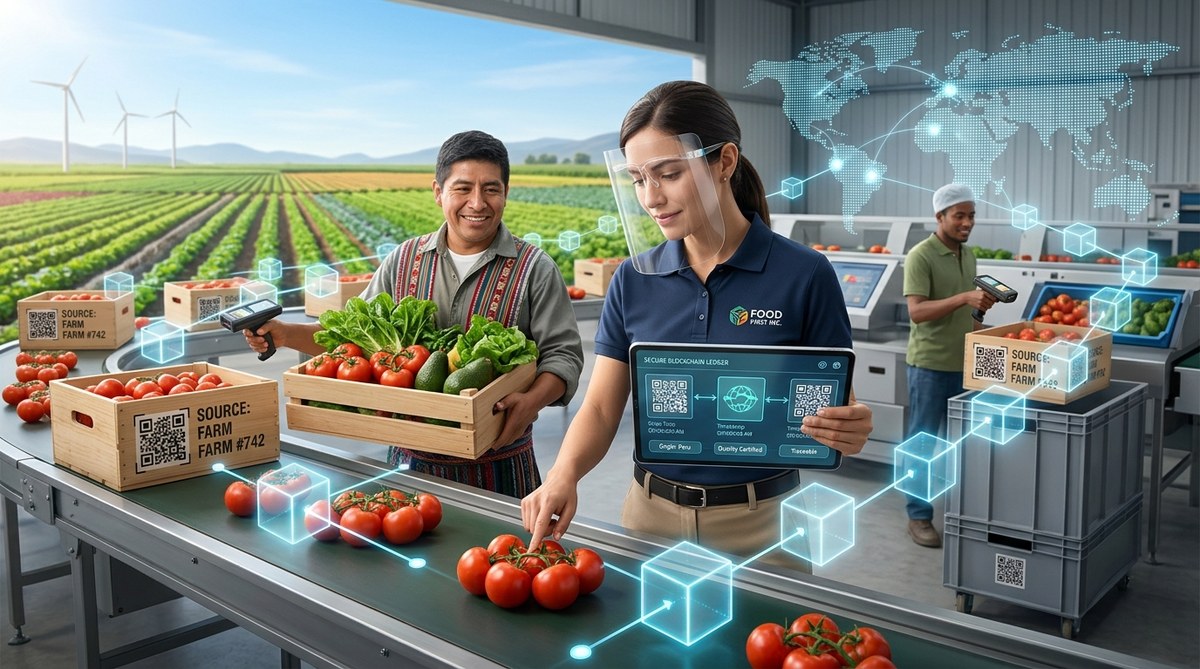
How Blockchain is Bringing Transparency to Global Food Supply Chains in 2026
Imagine a head of lettuce. It traveled from a farm in California to a distribution center in Texas, then to a grocery store in Ohio. If someone gets sick from that lettuce today, finding the exact source can take weeks. In 2026, that delay is no longer acceptable. New regulations and consumer demand are pushing the food industry toward full visibility. That is where blockchain food supply chain transparency comes in. It is not just a tech upgrade. It is becoming the backbone of trust between growers, distributors, retailers, and the people eating the food.
Blockchain technology is reshaping how the global food industry tracks products from farm to table. By creating an unchangeable digital ledger, it stops fraud, cuts recall times from weeks to seconds, and helps companies meet strict 2026 compliance standards. This guide explains how supply chain managers and auditors can start using it today.
Why 2026 Is the Year for Food Supply Chains
The Food Safety Modernization Act (FSMA) Rule 204 went into full effect this year. It requires every actor in the supply chain to maintain traceability records for certain foods. Paper logs and siloed spreadsheets cannot keep up. Blockchain food supply chain transparency offers a single source of truth that regulators can trust.
The benefits go beyond compliance. When a recall happens, the financial hit can be massive. In 2025, the average recall cost a midsize food company over $10 million. With blockchain, you can pinpoint the exact batch, farm, and shipment in seconds. That means fewer products pulled from shelves and less waste.
How Blockchain Brings Transparency to the Table
Think of a blockchain as a shared notebook. Every time a product changes hands, a new page is added. No one can rip out a page or change a past entry. That is the core idea behind distributed ledger technology (DLT) supply chain networks.
Here is what changes when you move from a traditional system to a blockchain based one:
- Every participant sees the same data. Growers, shippers, processors, and retailers all look at the same record.
- Data cannot be altered after entry. This stops fraud like mislabeling organic products or hiding a product’s origin.
- Smart contracts automate payments. When a shipment arrives and the temperature sensors confirm it stayed cold, the payment releases automatically.
A Real World Example
A large berry cooperative in Florida started using blockchain in early 2026. Before, they had a 14 day delay between shipping a pallet and confirming it arrived safely. Now, the moment a truck reaches the warehouse, the blockchain updates. The retailer can see the harvest date, the wash station logs, and the cold chain data. If a problem appears, they know exactly which field the berries came from.
Comparing Traditional Traceability and Blockchain
| Feature | Traditional System | Blockchain System |
|---|---|---|
| Data storage | Paper or local databases | Shared digital ledger |
| Update speed | Hours or days | Real time |
| Fraud resistance | Low (records can be altered) | High (immutable entries) |
| Recall response | Weeks of investigation | Minutes of searching |
| Cost to implement | Lower upfront, higher long term | Higher upfront, lower long term |
A Step by Step Process to Start Using Blockchain
If you are a supply chain manager or a food safety auditor, you do not need to rebuild your entire operation overnight. Here is a practical path forward.
-
Identify your high risk products. Focus on items that have caused recalls in your company’s history. Leafy greens, dairy, and seafood are common starting points.
-
Pick a permissioned blockchain platform. Public blockchains like Bitcoin are not designed for supply chains. Look for platforms built for enterprise use, such as IBM Food Trust or SAP’s blockchain module. These allow you to control who can read and write data.
-
Integrate your IoT sensors. Temperature, humidity, and GPS data from shipping containers can feed directly into the blockchain. This creates a tamper proof record of the product’s journey.
-
Train your partners. The system only works if everyone participates. Run a pilot with your top three suppliers. Show them how it reduces their liability and speeds up their payments.
-
Run a mock recall. Test the system by simulating a contamination event. See how fast you can trace a single pallet back to its source. Aim for under 60 seconds.
“The biggest mistake I see is companies trying to track everything at once. Start with one product line. Get it right. Then expand.” — Maria Santos, food safety director for a national grocery chain
Common Mistakes to Avoid
Even with the best intentions, implementation can go wrong. Watch for these pitfalls.
- Treating blockchain as a magic fix. If your data entry is sloppy on the farm, blockchain will not clean it up. Garbage in, garbage out still applies.
- Ignoring interoperability. Your blockchain needs to talk to your warehouse management system and your ERP. Check API compatibility before you sign a contract.
- Forgetting about the human side. Workers in packing houses and on fishing boats need simple tools. A mobile app with a barcode scanner works better than a complex dashboard.
Smart Contracts: Where the ROI Shows Up
Smart contracts are self executing agreements written into the blockchain. They transform supply chain logistics in 2026. Here is how they work in practice.
A distributor ships a pallet of salmon. The contract says: “If the temperature stays between 32 and 38 degrees Fahrenheit for the entire trip, release payment of $5,000.” Sensors on the truck log the temperature every 10 minutes. If the temperature spikes, the contract flags the issue. The buyer does not pay until they inspect the goods.
This automation cuts down on disputes. It also frees up your accounts payable team to focus on bigger problems. Many companies see a 20 to 30 percent reduction in invoice disputes within the first year.
The Role of IoT and AI in 2026
Blockchain alone is powerful. When you combine it with IoT sensors and artificial intelligence, the system becomes predictive rather than reactive.
- IoT sensors capture real world data like temperature, humidity, and shock. That data is written to the blockchain instantly.
- AI models analyze the data for patterns. If a certain truck route consistently causes temperature spikes, the system suggests an alternative.
- Dashboards give auditors a single view of the entire supply chain. They can see alerts in real time, not after a weekly report.
This combination is especially useful for humanitarian food aid. Organizations like Food First use these tools to make sure food reaches vulnerable communities safely. You can read more about how these efforts work in our piece on innovative strategies to combat hunger in vulnerable communities.
How to Meet FSMA 204 Compliance with Blockchain
FSMA 204 requires you to provide traceability records within 24 hours of a request. With a paper system, that is almost impossible. With blockchain, it is trivial.
Here is what auditors look for:
- A unique identifier for each lot or batch
- Records of every transfer of custody
- Temperature and storage condition logs
- A clear chain of ownership from farm to retail
Blockchain covers all of these. The key is making sure every partner in your chain uses the same system. If one link in the chain uses a different method, you have a gap.
Building a More Resilient Food System
Transparency is not just about avoiding fines. It is about building trust. When consumers can scan a QR code on a package of chicken and see the farm it came from, they feel more confident. When a retailer can prove its beef is grass fed, it can charge a premium.
For global humanitarian programs, this transparency is lifesaving. It ensures that food aid does not get diverted or spoiled. Our article on building resilient food systems to end global hunger shows how technology and community effort go hand in hand.
What the Next Five Years Look Like
By 2030, blockchain will likely be standard for most perishable foods. Smaller farms will use shared blockchain networks to compete with large agribusinesses. Consumers will expect traceability the same way they expect a nutrition label.
But the foundation is being laid now. The companies that adopt blockchain food supply chain transparency in 2026 will have a head start. They will have cleaner data, fewer recalls, and stronger relationships with their buyers.
Your Next Step Toward a Transparent Supply Chain
You do not need to be a tech expert to get started. Talk to your software provider about blockchain integration. Ask your largest customer what traceability tools they are using. Chances are, they are looking for partners who can share data seamlessly.
Start small. Pick one product. Run a pilot. Measure the results. Then scale. That is how real change happens in the food industry. One step at a time, with a clear record of every step along the way.