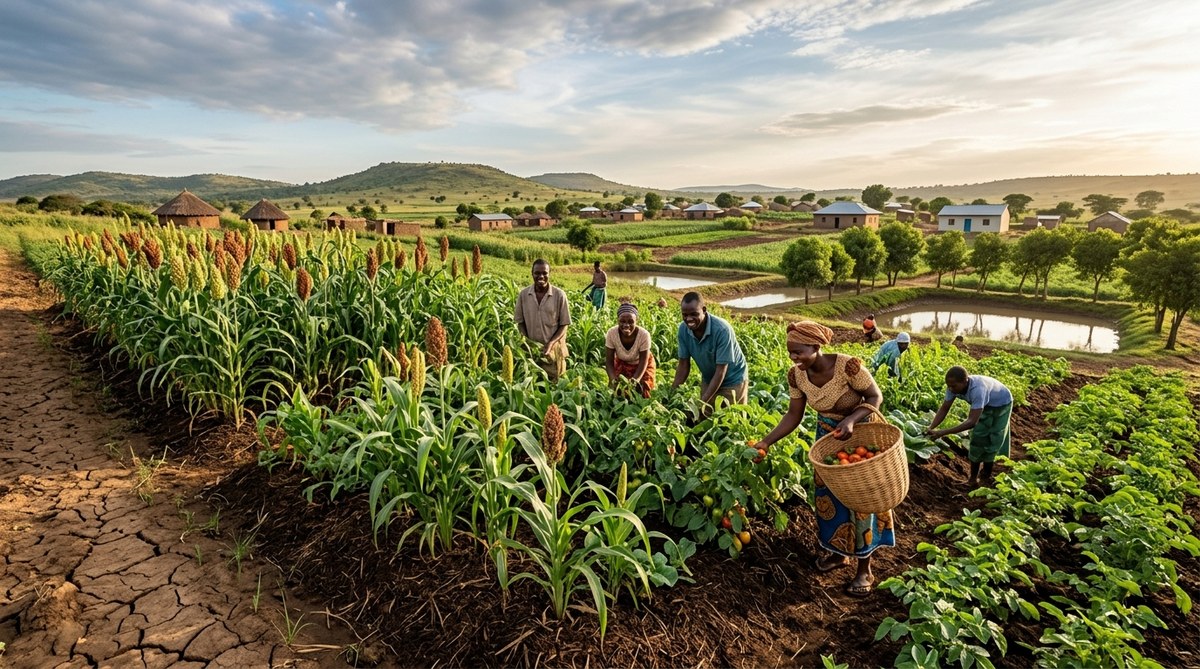
How Regenerative Agriculture Is Restoring Soil and Feeding Drought-Prone Communities
The first time I watched a cover crop of hairy vetch and cereal rye get mowed down on a bone-dry Kansas afternoon, I thought the farmer had lost his mind. It hadn’t rained in weeks. Why would anyone plant something just to kill it? But a few months later, after a two-inch downpour, his field didn’t run off. It soaked in. The neighboring conventionally tilled field sent muddy water straight into the creek. That contrast is the heart of what we’re talking about here: how regenerative agriculture is quietly becoming one of the most effective tools for surviving drought.
Regenerative agriculture rebuilds soil’s natural ability to capture and store water, making farms more resilient during drought. Techniques like no-till farming, cover cropping, and managed grazing increase organic matter and improve soil structure. This approach doesn’t just help crops survive dry spells; it also restores local water cycles and feeds communities in vulnerable regions.
Why Conventional Farming Makes Drought Worse
Most modern farms rely on bare soil. After harvest, the ground sits exposed to the sun and wind. Without plant cover, the soil’s surface bakes into a hard crust. When rain finally comes, most of it runs off instead of soaking in. That runoff carries away topsoil, fertilizer, and pesticides. It also means the water isn’t available for crops later.
Tillage is a major culprit. Every time a farmer plows or disks a field, they break apart the natural aggregates that hold soil together. Those aggregates are like tiny sponges. When they’re destroyed, the soil can’t hold as much moisture. A study from the USDA’s Natural Resources Conservation Service found that no-till fields can hold up to 20 percent more water than tilled fields during a dry year. That’s the difference between a crop that survives and one that gets written off.
The Science of Water Storage in Living Soil
Healthy soil is packed with organic matter. Think of it as a bank account for water. Each one percent increase in soil organic matter can hold an extra 20,000 gallons of water per acre. That’s enough to cover a football field with six inches of water. When you build organic matter from one percent to three percent, you’re adding serious water storage capacity without building a single reservoir.
Roots are the unsung heroes here. Deep-rooted cover crops like daikon radish or sunn hemp punch through compacted layers. They create channels for water to infiltrate. When those roots die, they leave behind pores that air and water can travel through. This is why fields with diverse cover crop mixes often stay green longer during a dry spell.
A Practical 4-Step Process for Building Drought Resilience
Here is a straightforward sequence that any farmer or land manager can follow. It works on a 40-acre vegetable farm in California’s Central Valley or a 2,000-acre grain operation in Nebraska.
-
Stop tilling. This is the hardest step for many farmers because it requires new equipment and a mental shift. But no-till planting keeps the soil structure intact. Use a no-till drill to plant cash crops directly into the residue from last season. The leftover stubble shades the soil and reduces evaporation.
-
Plant cover crops every chance you get. Never leave soil bare. After harvest, seed a mix of grasses, legumes, and brassicas. A good blend for the Midwest might include oats, crimson clover, and tillage radish. In the South, try sorghum-sudan with cowpeas. The goal is to keep living roots in the ground for as many months of the year as possible.
-
Integrate livestock. Grazing animals can accelerate soil building if managed correctly. Use high-density, short-duration grazing. Move cattle, sheep, or goats frequently so they trample plant material into the soil, add manure, and then move off before they overgraze. The rest period is critical for plant recovery.
-
Add compost or other organic amendments. If your soil is severely depleted, a one-time application of compost can jump-start the process. Spread a half-inch layer and let the biology take over. Worms and microbes will pull that organic matter down into the soil profile.
Common Mistakes to Avoid
Even well-intentioned farmers can slip up. Here is a table that contrasts effective regenerative practices with common errors.
| Technique | Effective Practice | Common Mistake |
|---|---|---|
| Cover cropping | Diverse species mix planted at the right time | Single species like straight rye, planted too late |
| No-till | Using a roller-crimper or no-till drill | Trying no-till without adjusting planter settings |
| Grazing | Moving animals every 1-3 days | Leaving animals on one paddock for weeks |
| Compost application | Spreading evenly and incorporating biologically | Burying compost with a plow |
| Crop rotation | Four or more crop families in rotation | Corn and soybeans back and forth |
Real Results from Drought-Prone Regions
Farmers in the Texas Panhandle have been using regenerative methods for the last decade. The Ogallala Aquifer is dropping fast, so irrigation is becoming less reliable. One rancher I spoke with near Amarillo switched to no-till and cover crops on his dryland wheat. He told me his soil now holds moisture for three weeks longer between rains than his neighbor’s conventionally farmed ground. That extra three weeks can mean the difference between a harvest and a total loss.
In California, almond growers are experimenting with cover crops between tree rows. The standard practice is to keep a clean, bare orchard floor. But growers who plant a mix of clover and fescue are seeing less runoff and fewer irrigation cycles. The cover crop uses some water, but the improved infiltration more than makes up for it.
“The biggest lie we’ve been told is that bare soil is clean soil. Bare soil is dead soil. Once you understand that soil is a living community, you start treating it differently. And it rewards you with water when you need it most.” — Gabe Brown, North Dakota rancher and pioneer of regenerative agriculture
Comparing Regenerative Methods to Conventional Approaches
Let’s look at the numbers side by side. These are averages from multiple long-term trials across the Great Plains.
| Metric | Conventional | Regenerative |
|---|---|---|
| Water infiltration rate (inches per hour) | 0.5 – 1.0 | 4.0 – 8.0 |
| Soil organic matter (%) | 1.0 – 1.5 | 3.0 – 5.0 |
| Water holding capacity (inches per foot of soil) | 1.0 | 2.5 |
| Yield during moderate drought (% of normal) | 50 – 60 | 80 – 90 |
| Fertilizer cost per acre | $80 – $120 | $30 – $60 |
The regenerative system doesn’t just survive drought better. It also costs less to operate. Fewer inputs mean less financial risk when commodity prices drop.
How This Feeds Vulnerable Communities
The connection between soil health and food security is direct. When a community’s farms can produce food during a drought, people don’t go hungry. In places like sub-Saharan Africa and the drylands of India, organizations are teaching regenerative techniques to smallholder farmers. They’re seeing remarkable results.
One project in Zimbabwe trained farmers to use no-till planting basins and intercropping with legumes. After three years, participating households had enough food to eat year-round, while neighboring villages still relied on food aid. The same principles apply in the United States. Tribal communities in the Southwest are reviving traditional practices like three-sisters planting (corn, beans, and squash) combined with modern no-till methods. These techniques are building soil that can withstand the region’s increasingly severe droughts.
If you want to see how these ideas scale up, read about building resilient food systems to end global hunger. The same soil-building strategies that work on an Iowa corn farm also work on a half-acre plot in Kenya.
Tools and Resources to Get Started
You don’t need a massive budget to begin. Here are some free or low-cost resources:
- Your local USDA Natural Resources Conservation Service office offers technical guidance and sometimes cost-sharing for cover crops and no-till equipment.
- The Savory Institute provides free online courses on holistic grazing management.
- Many state extension services now have soil health demonstration farms where you can see practices in action.
- Online forums like the “No-Till Farmers” group on Facebook have thousands of experienced growers who answer questions daily.
For those looking at the bigger picture of food access, check out how community-led food security programs are transforming lives worldwide. These programs often include training in regenerative techniques as a core component.
The Path Forward for Drought-Prone Land
Regenerative agriculture isn’t a silver bullet. It won’t make it rain. But it gives the land a fighting chance when the rain doesn’t come. By focusing on soil health, we can store more water in the ground where it belongs. We can keep farms productive during dry years. And we can ensure that communities in drought-prone regions have access to the food they need.
The best part? You can start today. Pick one field. Plant a cover crop. Stop tilling that one piece of ground. Watch what happens the next time a dry spell hits. The soil will tell you if you’re on the right track. And if you want to support these efforts on a larger scale, consider getting involved with empowering local food initiatives to end hunger worldwide. Every acre healed is a step toward a more food-secure future.