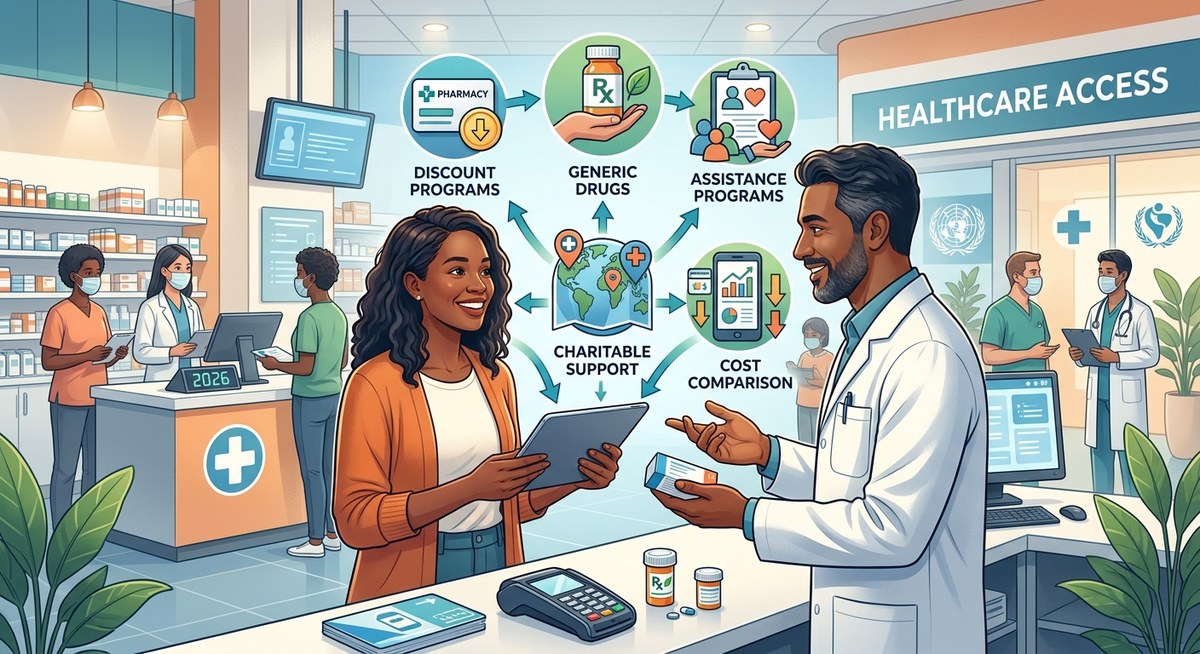
5 Ways to Reduce Prescription Drug Costs for Uninsured Patients in 2026
If you are one of the millions of Americans without health insurance, you know the feeling of dread that comes when the pharmacist rings up a prescription. The total can be shocking. Sometimes it feels like you have to choose between filling a necessary medication and paying for groceries. That is a terrible position to be in. The good news is that you have more power than you think. You do not need an insurance card to find affordable medication. There are real, proven strategies that can bring your costs down dramatically.
Even without insurance, you can cut your prescription drug costs by using patient assistance programs, discount drug cards, and price comparison tools. Generic alternatives and mail-order pharmacies also offer major savings. The key is knowing which programs exist and how to apply. This guide walks you through five proven methods to lower your out-of-pocket expenses in 2026.
Start with Patient Assistance Programs
Many people do not realize that drug manufacturers themselves offer free or low-cost medications. These are called Patient Assistance Programs, or PAPs. Almost every major pharmaceutical company has one. The catch is that you have to apply directly, and you usually need to meet income guidelines.
For a single person in 2026, many PAPs cover individuals earning up to 250% or even 400% of the federal poverty level. That means a single person earning around $35,000 a year could still qualify for free medication from certain companies. The process can feel overwhelming, but it is worth the effort.
Here is how to get started with a PAP:
- Go to the website of the drug manufacturer that makes your medication. Look for a section called “Patient Assistance” or “Savings & Support.”
- Download the application form. You will typically need to provide proof of income, a recent tax return or pay stubs, and a doctor’s signature confirming your prescription.
- Fill out the form completely. Missing information is the most common reason applications get rejected.
- Mail or fax the application to the address provided. Some companies now accept online submissions.
- Wait for a response. This can take two to four weeks. If approved, you will receive your medication by mail or at a participating pharmacy for little to no cost.
Expert advice: Do not assume you make too much money to qualify. Many programs have higher income limits than you expect. It never hurts to apply. The worst they can say is no.
Use a Prescription Discount Card
If you do not qualify for a PAP, a prescription discount card can be a lifesaver. These are not insurance. They are discount programs that negotiate lower prices with pharmacies. You can often get them for free.
Places like GoodRx, SingleCare, and Optum Perks offer cards that work at most major chains including CVS, Walgreens, and Walmart. You simply show the card or the app at the pharmacy counter. The savings can be significant. Some generic drugs that normally cost $50 might drop to $10 or $15.
A few things to keep in mind:
- These cards do not work with Medicare or Medicaid. They are designed for people without insurance.
- Prices vary by pharmacy. A drug that costs $20 at Walmart with a GoodRx coupon might cost $35 at Walgreens with the same coupon.
- You can usually stack a discount card with a manufacturer coupon for even more savings.
Ask for the Generic Version Every Time
This is the single easiest way to save money. Brand-name drugs can cost ten times more than their generic counterparts. The active ingredients are exactly the same. The FDA requires generics to be just as effective.
When your doctor writes a prescription, ask them to prescribe the generic version if one exists. If they write the brand name, ask the pharmacist if a generic is available. In most states, the pharmacist can switch you to a generic unless the doctor specifically marks “dispense as written.”
Here is a simple breakdown of how much you can save by choosing generic:
| Drug Type | Average Brand Price (30-day supply) | Average Generic Price (30-day supply) | Potential Savings |
|---|---|---|---|
| Cholesterol medication | $350 | $15 | $335 |
| Blood pressure medication | $200 | $12 | $188 |
| Antidepressant | $300 | $10 | $290 |
| Allergy medication | $150 | $8 | $142 |
The numbers speak for themselves. In almost every case, the generic version is the better financial choice.
Compare Prices at Different Pharmacies
You would not buy a car without shopping around. The same logic applies to prescriptions. Prices for the exact same drug can vary wildly from one pharmacy to another. A medication that costs $100 at a big chain might be $45 at a grocery store pharmacy or a big-box retailer like Costco.
You do not need a membership to use the Costco pharmacy. That is a common myth. Their pharmacy is open to the public. The same is true for Sam’s Club.
Use a price comparison tool online before you fill your prescription. Websites like GoodRx and RxSaver let you type in the drug name and your zip code. They show you the cash price at every pharmacy near you. You can also call around. Pharmacists are usually happy to give you a price over the phone.
A few tips for comparing prices:
- Check independent pharmacies. They sometimes have lower overhead and better prices.
- Look at pharmacy chains that offer their own discount programs. For example, Walmart’s $4 list covers many common generics.
- Consider using a mail-order pharmacy. They often have lower prices because they buy in bulk.
Look into Community Health Center Pharmacies
Community health centers are a hidden gem for uninsured patients. These centers are designed to serve low-income and underserved populations. Many of them have in-house pharmacies that offer sliding-scale fees based on your income.
The staff at these clinics understand your situation. They are used to helping people without insurance find affordable options. They can often connect you with additional resources like state assistance programs or local charity care.
If you have a community health center nearby, call them and ask about their pharmacy services. Even if you do not get your medical care there, you might still be able to use their pharmacy. They can also help you apply for PAPs and other savings programs.
For more on how local support systems can make a difference, check out our article on innovative strategies to combat hunger in vulnerable communities. The same community networks that provide food assistance often have connections to healthcare resources too.
Putting It All Together for 2026
The prescription drug market changes every year. New generics come to market. Discount programs update their lists. Patient assistance programs adjust their income limits. That is why it pays to re-evaluate your strategy every few months.
Start with the steps above. Apply for a PAP if you think you might qualify. Pick up a free discount card. Always ask for the generic. Compare prices before you buy. And do not forget about community health centers.
You do not have to do everything at once. Pick one step and try it this week. If you save even $20 on one prescription, that is a win. Over time, these small wins add up to hundreds of dollars in savings.
Remember, you are not alone in this. Millions of people in the United States face the same struggle. The systems are not always easy to navigate, but they exist. You just need to know where to look. For more on how technology is changing the landscape of care, read about how technology is revolutionizing healthcare access in underserved communities by 2026.
Take a deep breath. Grab your prescription bottle. Start with one phone call or one website visit. You have the tools now. Go save some money.